
Kaufman questions ICC ruling: 'Where’s the evidence?'

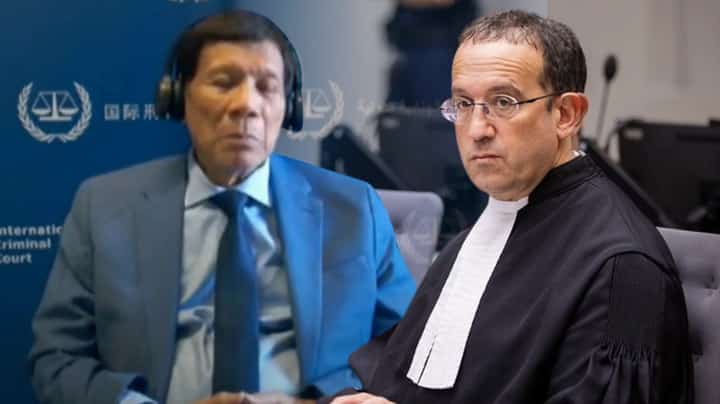
The defense team of former president Rodrigo Duterte is questioning the basis of the International Criminal Court’s (International Criminal Court) decision to confirm charges against him.
In an interview following the tribunal’s confirmation decision, defense counsel Nicholas Kaufman said Duterte himself raised the question after being informed of the ruling.
“He did ask me… what’s the evidence?” Kaufman said. “What’s the evidence to show that I actually committed these murders which they say I committed?”
Kaufman said he reviewed the pre-trial chamber’s decision but claimed it failed to cite specific proof supporting the charges.
“I had a look through this decision and I can’t even see one piece of evidence cited in the footnotes,” he said.
“The pretrial chamber judges haven’t even cited one piece of evidence… to justify their decision,” he added.
The ICC earlier confirmed three counts of crimes against humanity against Duterte, linked to killings tied to his anti-drug campaign from November 2011 to March 2019.
Duterte may be held criminally liable as an indirect co-perpetrator, or for ordering, inducing, aiding, or abetting the crimes.
The confirmation moves the case forward to trial, where prosecutors must present evidence and witnesses to substantiate the charges.
Kaufman described the decision as “rather bizarre and strange,” saying the defense had spent days challenging the prosecution’s evidence during hearings.
“We argued for at least two and a half days. We went into details about the evidence,” he said. “That the chamber didn’t find it necessary to cite any evidence” raises serious concerns for the defense.
He also criticized the tribunal’s approach to detailing the charges, pointing to portions of the ruling that allowed “flexible” descriptions of key elements such as timing, location, and identities of victims.
“The whole purpose of a confirmation hearing is to determine the exact nature of the charges so that the suspect knows what he has to defend at trial,” Kaufman said, questioning whether the lack of specificity could disadvantage the accused.
Despite objections, Kaufman acknowledged the case will proceed, with the defense preparing for trial and planning to seek permission to appeal the confirmation ruling.
“We have to be realistic and we’re facing a trial,” he said.
He added that the defense strategy will focus on challenging prosecution witnesses, whom he described as “cooperating criminal witnesses of the most vicious nature.”
Kaufman also downplayed the legal impact of petitions or advocacy efforts brought before other international bodies, such as the United Nations Human Rights Council.
“These petitions are very welcome… they have extreme moral support value,” he said, but added they are unlikely to influence ICC judges’ decisions.
He further claimed the Philippine government under Ferdinand Marcos Jr. would not assist Duterte’s defense, alleging it had instead supported the prosecution.
Once the trial begins, Duterte will be required to attend the proceedings. Whether he appears physically in court or through a virtual platform will depend on the court’s decision if he seeks an alternative arrangement.
Duterte must also first secure authorization before he can file an appeal before the Court.
“Trials in the ICC are fair and impartial and the defense would have sufficient time to prepare its case while respecting the rights of victims,” said ICC spokesperson Oriane Maliet.