
Hot vs cold oats: Rumba chef explains the difference


For breakfast, who could resist the charm and warmth of hot-off-the-pot oats? Filling and nostalgic, oats are fiber-rich, providing health benefits ranging from lower cholesterol to blood sugar management and enhanced heart health.
Yes, oats are highly nutritious, but there is a “big difference” in its nutritional content when served at different temperatures, executive sous chef Pablo Ramirez told DAILY TRIBUNE and other press at a media launch in Makati early this week.
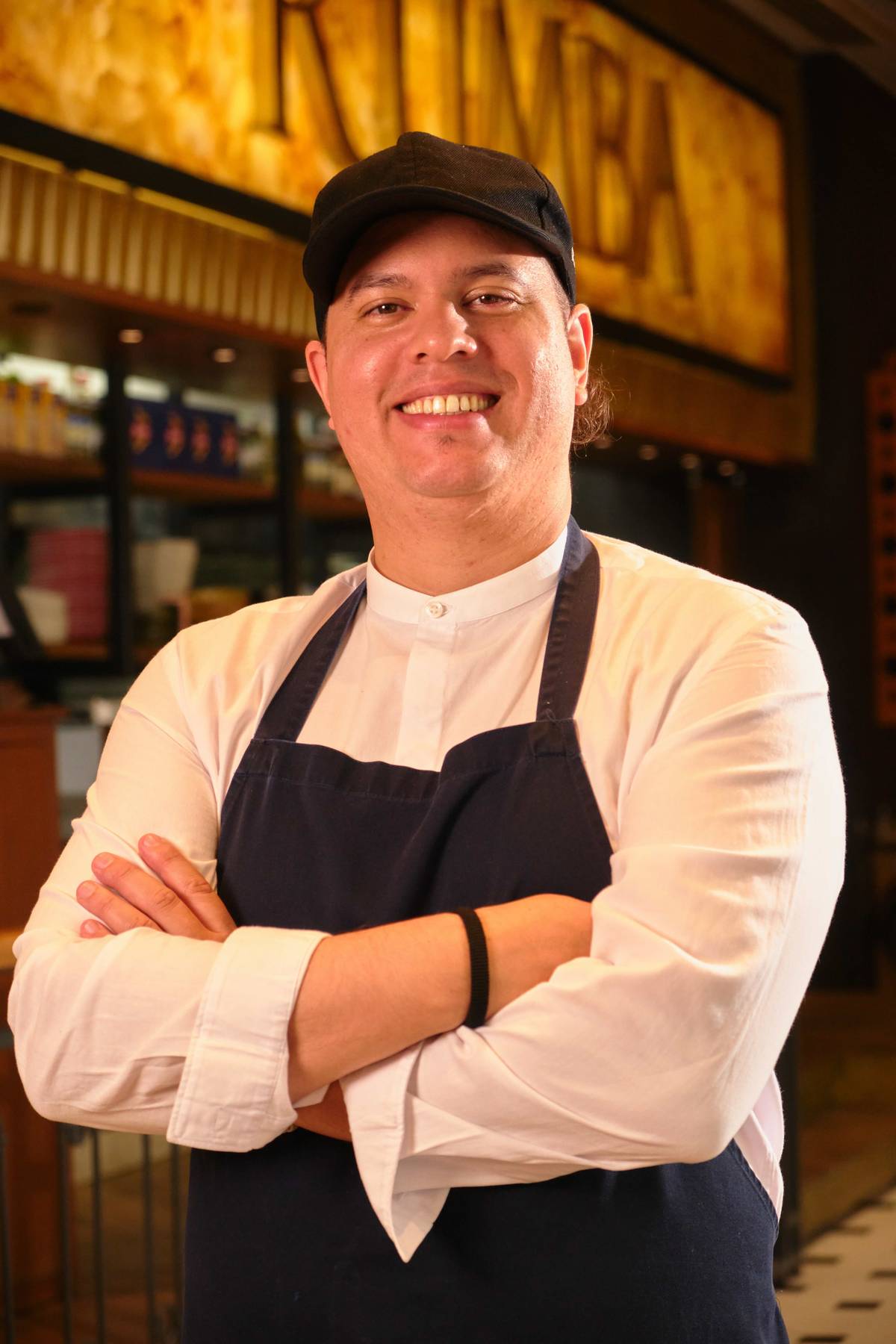
EXECUTIVE sous chef Pablo Ramirez.
“If you eat oats in the morning while they’re hot, your (blood) sugar would spike,” he warned. “If you eat them cold, your sugar would remain stable throughout the day. You’d feel fuller in your stomach.”
Thus, when eating oats, the chef recommended waiting until it cools or to make it cool in the refrigerator overnight.
This explains why in the new breakfast menu of Rumba, Bistronomia Group’s restaurant chain reputed for Spanish flavors with Mediterranean flair, Chef Pablo and his team has prepared new menu entry Swiss Overnight Oats as cold rather than hot. To add some textures into the chilled Swiss-style oatmeal, Chef Pablo tosses in julienned apples and crushed lightly toasted nuts.
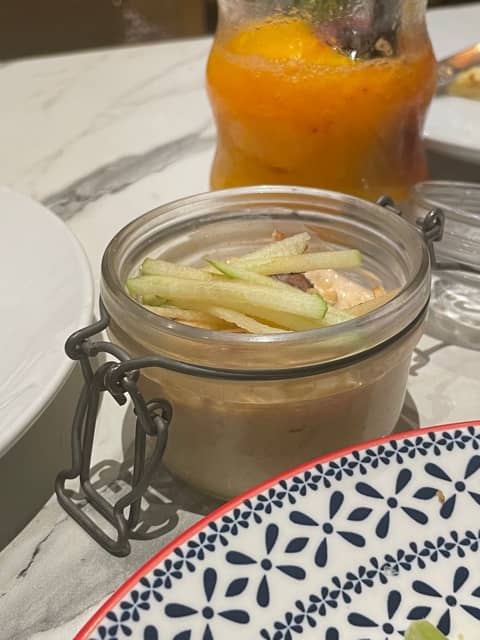
SWISS Overnight Oats.
The new breakfast menu, available daily from 7 a.m. to 11 p.m., offers both hot and cold, sinful and guilt-free — something for everyone.
“It’s a fresh morning menu created with Mediterranean flavors and a little bit of awesome local flavors,” Bistronomia Group brand ambassador Cristina Garcia-Villalba Marba shared.
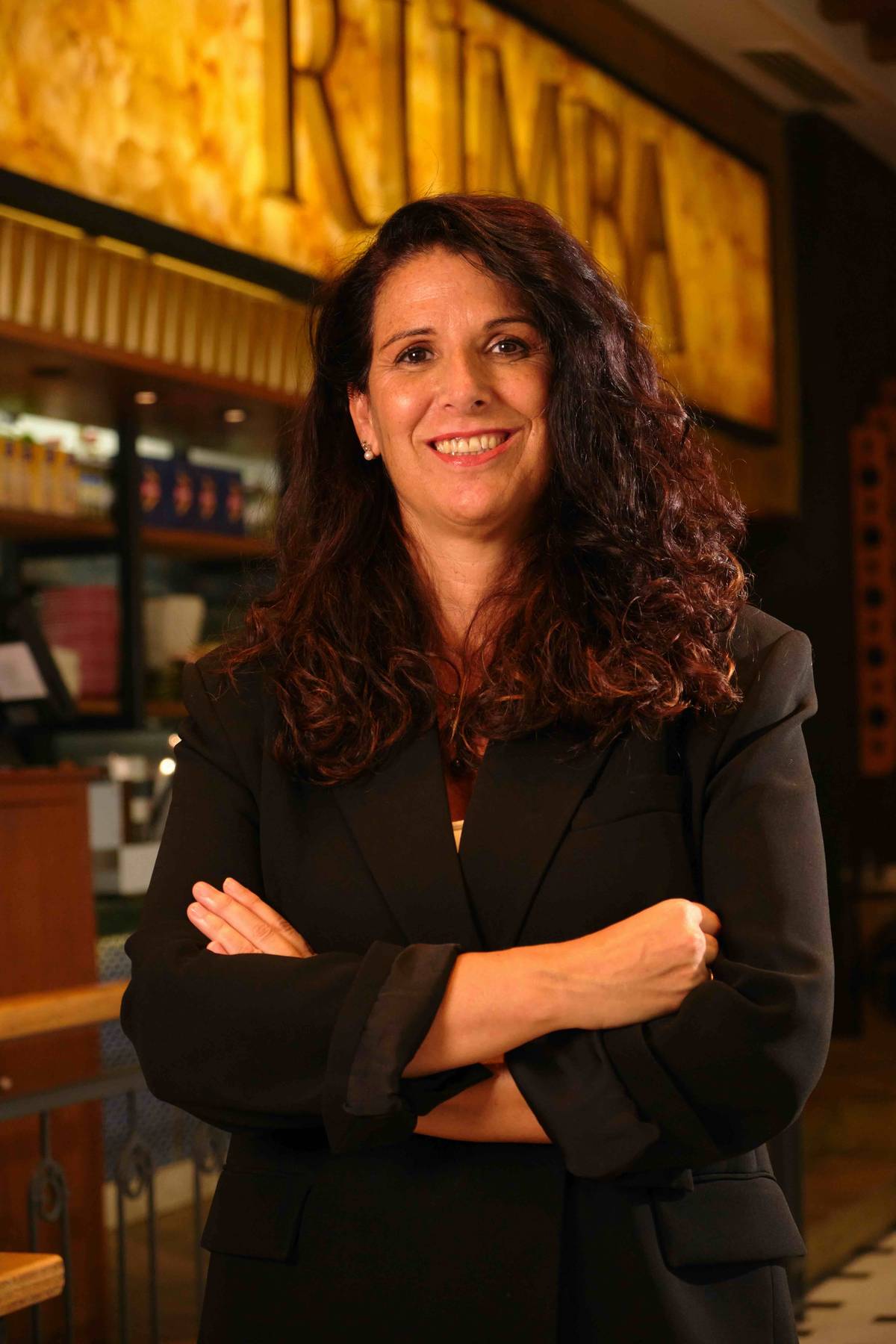
BISTRONOMIA Group brand ambassador Cristina Garcia-Villalba Marba.
From the Mediterranean part of France is Quiche Lorraine, buttery crust filled with rich custard, topped with fresh romaine and a drizzle of extra virgin olive oil.
The quiche, said Chef Pablo, is flaky, with bacon and should be a little salty. But if it is too salty, for one’s taste, he advised biting into the unseasoned lettuce on the side to balance.
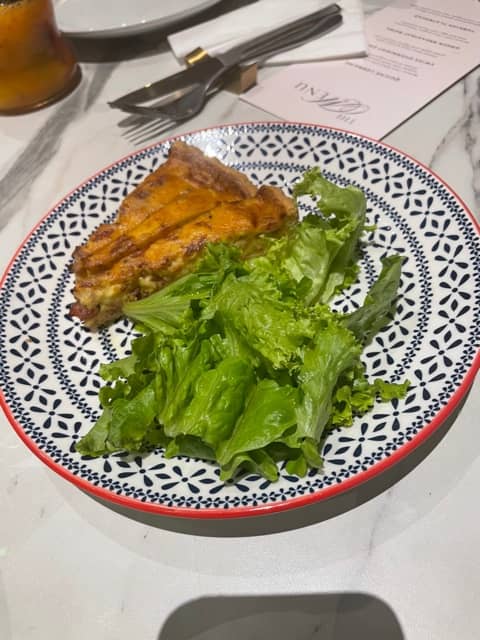
QUICHE Lorraine.
Another Mediterranean twist is Turkish Flatbread, crisp flatbread with spiced Turkish flavors, fresh romaine and aragula and vegan garlic sauce. According to Chef Pablo, in Turkiye, the flatbread typically complements ground meat and lemon juice, but Rumba’s take is a healthier “simulation of pizza” — topped with big lettuce leaves.
An additional healthy option is Green Breakfast Bowl, quinoa with citrus yogurt, fresh greens, poached egg and cherry tomatoes.
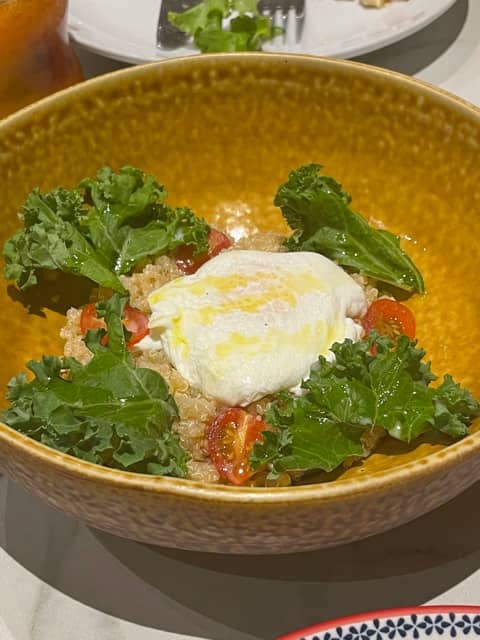
GREEN Breakfast Bowl.
Guests can enjoy comforting pastas like classic Potato Gnocchi, Butacin Amatriciana and Spaghetti Lobster. Rumba has fresh takes on the Deep Dish Pizza, with new offerings of Nduja and Burrata, Pesto and Pepperoni. Fresh additions to the salad selection are Fresh Salmon and Slaw and Andalusian Potato Salad.
But for those wanting to start their day with something naughty, Rumba serves waffles “with up to 700 calories.” While usual waffles are made of powder, Rumba’s is “different,” assured Chef Pablo, since they start with egg and sugar and beat the egg whites like in making cake until it foams. Once the waffle becomes a little hard from being out of the oven, they shoot in the foam — making the little crunchy waffle juxtapose against with the very soft foam — and the contrast makes it a party in the mouth.
Rumba’s heavy breakfast menu also includes Filipino fare such as the Three-meat Silog: Filipino-style breakfast of sunny-side-up eggs, garlic fried rice together with slices of pork adobo, tocino and tapa.
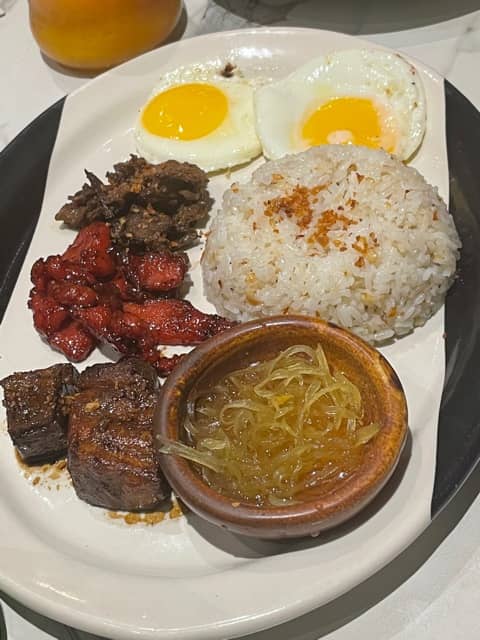
THREE-meat silog.
“No change. You can’t change what’s Filipino,” Chef Pablo said how he attacked the traditional Filipino silog (sinangag and itlog) dish. “Now that we also have Michelin, I can’t change,” he added, referring to the Michelin stars and Michelin Selected honors that The Bistro Group shares with their corporate chef, Josh Boutwood.
If there is some Spanish or Mediterranean twist one can inject into the traditional Filipino breakfast menu, it is to pair it with a Rumba signature Spritz, mocktail, cocktail or spirit.

MANGO and Blueberries drink.
“So this is breakfast time. But if you want to have some alcohol, why not?” Chef Pablo urged.
For breakfast in Spain, the Barcelona-born Cristina said they drink beer or red wine. “But not always. Just only when we’re in the mood,” she clarified.
Her grandparents and parents used to have a mini bar at home and drink together in the morning.
“We’re never drunk. Because it’s just for pairing. Actually, better this (wine) than something sweet (juice) in the morning,” she said.
“So I think it’s more of a cultural thing. People think the Spanish drink a lot, but no, we don’t drink a lot. It’s for pairing with the food, not just for the sake of drinking.”