
Solar-powered irrigation aids drought-hit Leyte farmers
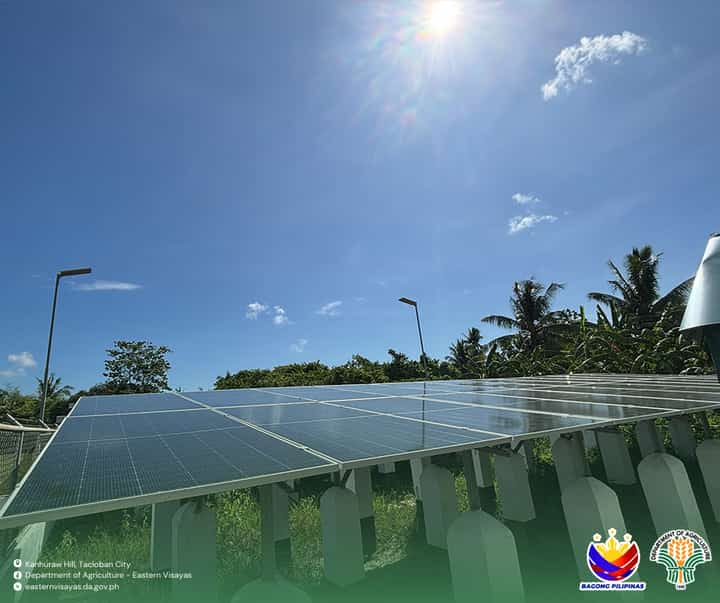
LEYTE, Leyte – The prolonged rainless weeks have been a big source of growing anxiety for rice farmer Felimon Rico Licaylicay – prices of inputs continue to rise but the yield from his parched rice field is going down.
“This past cropping season, our harvests suffered because of the drought,” he said. Even on normal days, water from the irrigation canal comes in trickles, not sufficient for the contiguous rice fields, especially for a town where rice farming is the primary source of livelihood for most.
Michael Cabillo, Leyte’s municipal agriculturist, confirms the problem with the insufficiency of water, a problem that is shared by the rice farmers here.
“This past cropping season, our harvests suffered because of the drought,” he said, echoing Licaylicay’s concern.
But Cabillo is optimistic that things are expected to change soon. “I am confident they can plant every season, resulting in two harvests per year and a significant increase in production and income,” he said.
The optimism comes after the Department of Agriculture turned over to the Sitio Tambis Farmers Association a Solar Power Irrigation System (SPIS).
The P7-million irrigation system, a program under the Small-Scale Irrigation Projects (SSIPs) with funding from the agency’s Rice Program, utilizes renewable energy to pump water efficiently, making it especially valuable in off-grid and remote farming areas.
DA-8 said that by eliminating fuel dependency, it significantly lowers production costs while ensuring consistent irrigation, thus allowing the farmers to diversify crops, increase planting frequency, and improve overall yield quality.
“This irrigation system is a huge help to our farmers. This will benefit not only our members but also non-members whose farm lots are near the system,” says Remedios Garces, president of the farmers’ association.
Cabillo said the local government unit will conduct capacity building to ensure that the system is properly managed and maintained by the farmer-beneficiaries.
He added that the farmers will also undergo trainings by the Bureau of Soils and Water Management and DA regional office on water management and on the handling of the facility.
“Having this system will help me make up for the losses on my farm,” says Licaylicay.