
Time to call RSA’s bluff
Fitch Solutions unit, CreditSights, said in a recent report that the benefits of a government buyback decisively outweigh the risks.

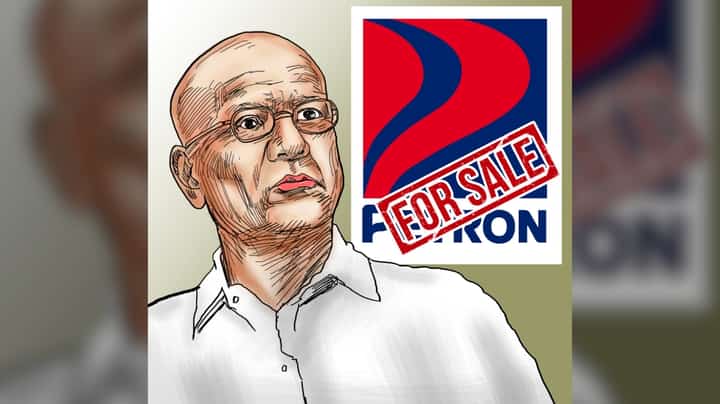
Tycoon Ramon S. Ang’s (RSA) latest offer to sell Petron Corp. back to the government should be considered a challenge the Marcos administration should take seriously.
As San Miguel Corporation president and CEO, Ang has repeatedly declared that if the state believes it can run the country’s only oil refinery better for the public, especially amid the Middle East-driven energy emergency, he is ready to sit down and make the deal happen.
In normal times, Ang’s bluster would be dismissed as corporate theater, but President Ferdinand Marcos Jr. should treat it as a chance to restore a degree of sovereign control over the energy business that private hands have turned into a license for profiteering.
For years, Petron’s monopoly as the sole refiner has been exploited to keep pump prices among the highest in Asia.
When global crude surged during the current Middle East crisis, local prices rose across the region.
Filipinos watched in disbelief as diesel and gasoline prices climbed faster and farther than neighboring countries with multiple refiners and stricter oversight.
It was the predictable result of concentrated power in a single corporate boardroom, without meaningful competition or state leverage.
The situation was tailor-made to maximize the profits of the sole refiner in a purportedly deregulated market under the Downstream Oil Industry Deregulation Act of 1998.
The law removed the government’s power to set or approve pump prices and introduced an automatic pricing mechanism tied to international benchmarks, primarily the Mean of Platts Singapore.
The law was intended to open the market to new players, end state price controls, attract investments and let competition drive prices down.
It, however, produced the opposite outcome, as the Philippines now has among the highest fuel prices in Asia and Southeast Asia.
Without domestic refining competition or the ability to process cheaper crude at scale, the country buys mostly finished products at premium prices plus freight, insurance and logistics costs.
Under the deregulated system, companies price fuel based on the higher cost of replacing inventory rather than the actual cost of the fuel already in storage. Global price spikes are passed on immediately to consumers.
Unlike Malaysia, Indonesia and Thailand, which use subsidies, price caps, and state oil companies to cushion price hike impacts on consumers, the Philippines has almost no intervention tools in the fuel market.
Petron could pass on every global shock — and then some — directly to jeepney drivers, farmers, commuters and small businesses already squeezed by inflation.
Worse, the familiar “rocket-and-feather” phenomenon has been on ugly display. Prices shoot up like rockets the moment international benchmarks or the peso weaken, yet they drift down like feathers when costs ease.
Refiners and retailers bank the windfall on the way up, while dragging their feet on the way down, citing inventory costs, prudence and the need to protect margins.
Fitch Solutions unit, CreditSights, said in a recent report that the benefits of a government buyback decisively outweigh the risks. In a detailed assessment, the firm noted that state ownership would be “modestly credit positive” for Petron over the long term.
The government’s stronger credit rating would backstop operations and debt, open cheaper financing channels, and provide the stability a strategic national asset demands.
Near-term frictions, possible price caps, export curbs and fresh capital spending for self-sufficiency are real but ultimately manageable.
The upside, according to the report, includes reliable supply security and reduced vulnerability to private-sector pricing games.
RSA has been airing the usual scare stories about government inefficiency, yet the record shows that leaving the fuel supply entirely to private discretion has delivered neither stable prices nor energy security.
A re-nationalized Petron, that is listed in the stock market, need not mean bureaucratic bloat since it will operate as a commercially run but publicly accountable corporation, guided by a clear mandate to moderate prices, maintain strategic stocks and shield the economy from external shocks. Other Asian nations with state-linked refiners have used that leverage to dampen volatility without sacrificing efficiency.
RSA’s offer arrives at the perfect moment. Instead of patchwork regulation that invites legal challenges and market distortions, the cleaner path is direct ownership.
The transaction could be structured in tranches at fair market value, preserving Petron’s listed status while shifting ultimate control to the state. The savings for Filipino households and businesses would compound quickly, lower transport costs and make goods cheaper.
Earnest negotiations must start before another round of price spikes reminds us, yet again, who really pays when a monopoly exploits global turbulence.