
DFA: Phl-Iran pact for safe passage via Strait of Hormuz remains in force despite US blockade plan
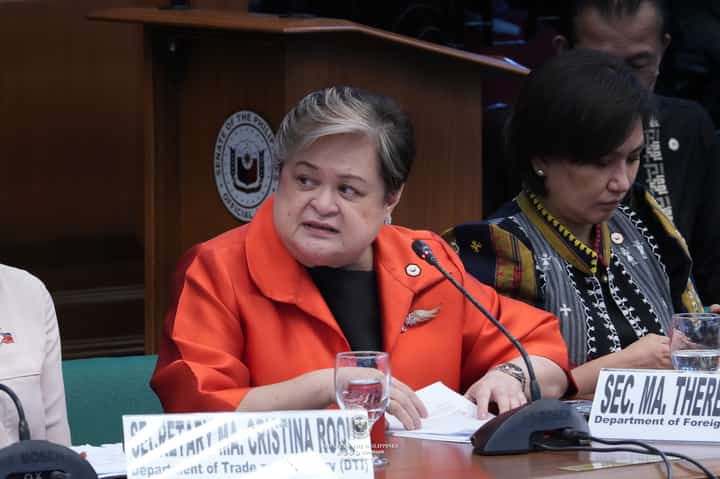
DFA Secretary Ma. Theresa Lazaro briefs the Senate PROTECT Committee on Monday, 13 April, regarding the Philippines' deal with Iran, allowing the safe passage of Manila-bound oil vessels and Filipino seafarers through the Strait of Hormuz.
Voltaire Fernandez Domingo
The recent agreement between the Philippines and Iran, allowing the safe and unhampered passage of Manila-bound oil vessels through the Strait of Hormuz, remains in effect despite the United States’ plan to blockade the vital waterway.
Department of Foreign Affairs Secretary Ma. Theresa Lazaro told reporters in a briefing on Monday that Manila’s arrangement with Tehran “remains the same,” citing a recent assurance from Iranian Ambassador to Manila Yousef Esmaeilzadeh to permit the transit of Philippine-flagged vessels, energy shipments, and Filipino seafarers through the Strait.
“In fact, just last Saturday, the Iranian ambassador called me up in view of the two or three Philippine-flag vessels that hopefully will be able to pass the Strait,” she said. “So as of now, based on the discussions, the agreement between the Philippines and Iran remains.”
In a Senate hearing earlier on the same day, Lazaro said Iran still considers the Philippines a “non-hostile” country, alongside China, Japan, Russia, Malaysia, Thailand, Sri Lanka, Bangladesh, India, Pakistan, and Iraq.
According to Lazaro, most of the agreements these countries have with Iran concern ensuring the safe passage of their vessels through the Strait of Hormuz, while only the deal with the Philippines includes provisions for seafarers.
As of 31 March, there are at least 20,000 seafarers who remain stranded in the Strait of Hormuz, said Lazaro, citing an estimate by the United Nations.
As for Filipino seafarers, the figure stands at 4,862, who are onboard 463 vessels as of 11 April, Lazaro added.
The arrangement between the Philippines and Iran was reached on 1 April, one week before Iran agreed to a two-week ceasefire with Washington, on the condition of reopening the Strait of Hormuz amid global oil supply disruption.
However, US President Donald Trump’s marching orders to block the Strait leave the fragile truce pact in doubt following Iran’s reported refusal to surrender its nuclear ambitions during a peace talk in Pakistan.
Since the US-Israel war on Iran erupted on 28 February, the latter has blocked the Strait—a critical route through which about 20 percent of the world’s oil transits—disrupting global shipments and jacking up fuel prices.
Lazaro, however, told the senators that Iran assured Manila that it would clear the safe passage of four Philippine-flagged vessels, subject to the Philippines’ request, in a “matter of time.” Although she added that the DFA expects tensions to escalate following Trump's pronouncement.