
Villar Foundation Promotes Organic Fertilizer as the Way Forward
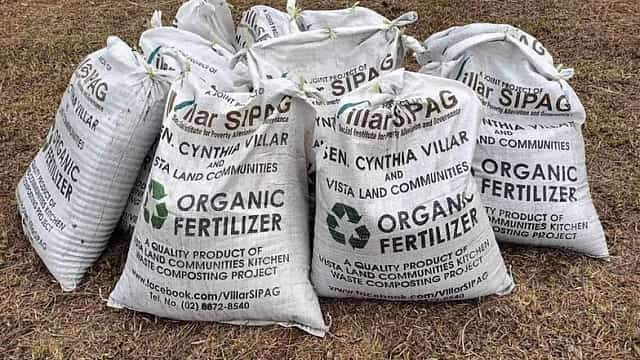
While global geopolitical tensions send fertilizer prices soaring and threaten to shrink Philippine rice and vegetable outputs, a domestic antidote has been decades in the making.
As the region’s most import-dependent nation, the Philippines is uniquely exposed to $800-per-ton urea prices according to the Department of Agriculture. Yet, amid these warnings of agricultural decline, Villar Foundation’s more than 20 years of commitment to self-sufficiency is finally taking center stage.
Against this backdrop, the Villar Foundation in Las Piñas City has long been running a program that offers a practical alternative, one built not on imports, but on kitchen and garden wastes.
In 2002, Villar Foundation started a project called the Las Piñas Kitchen and Garden Waste Composting Project.
Streamline waste segregation
Born from the necessity to streamline waste segregation and sanitation through its Las Piñas-Zapote River Rehabilitation Project, the Kitchen and Garden Waste Composting Project has evolved into a cornerstone of community sustainability.
By recycling kitchen and garden wastes into organic fertilizer, and diverting these biodegradable materials from landfills and returning them to the soil, Villar Foundation has successfully integrated waste management with the promotion of organic farming.