
Sound of faith stands test of time
The Bamboo Organ stands as a quiet witness to all of these. more than an instrument, It is a symbol of continuity, holding within it the patience of its maker, the resilience of a town and the enduring desire to make faith something that can be both heard and felt.


Throughout history, faith has taken many forms, shaped by how people seek to understand and express their devotion. It lives in quiet acts of giving, in service to others, and in art that preserves sacred stories across generations.
Yet among these, music holds a singular place. It gives voice to what words alone cannot carry, allowing prayers to rise not only in silence but in song, carried by instruments that seem to reach toward the heavens.
For those devoted to faith, such as priests, ministers and sisters, there has always been a need to make teachings more accessible to the communities they serve. Scripture offers depth, but the challenge lies in making it felt and understood.
In 1819, Father Diego Ciera, the first parish priest of Las Piñas, responded to this calling by establishing St. Joseph Parish and beginning work on an instrument that would leave a lasting mark on Philippine cultural history. By 1824, the Bamboo Organ was complete.

THE original bamboo pipes, preserved from before the restoration, carry the quiet memory of the organ’s earliest voice.
Composed of 1,031 pipes, 902 of which are made from bamboo, the organ reflects both innovation and environment. Bamboo, a material deeply rooted in local life, became the vessel through which music would flow within the church. It was an unusual choice that demanded patience and precision. Father Ciera built each pipe by hand, creating not just an instrument but a quiet convergence of nature, devotion and sound.
Its character lies in its details. Among them is the Pajarito, a mechanism that produces bird-like sounds when played, adding a sense of life to the music. When the organ fills the church, the sound moves with a softness that feels almost alive, as if it breathes alongside those who listen.
The years would test both the church and the instrument. In 1880, a series of earthquakes caused heavy damage, leading to the rebuilding of the structure. What was once made of bamboo and nipa was reconstructed using adobe in the earthquake Baroque style, a design that would later define the visual identity of Las Piñas. Through it all, the Bamboo Organ endured.
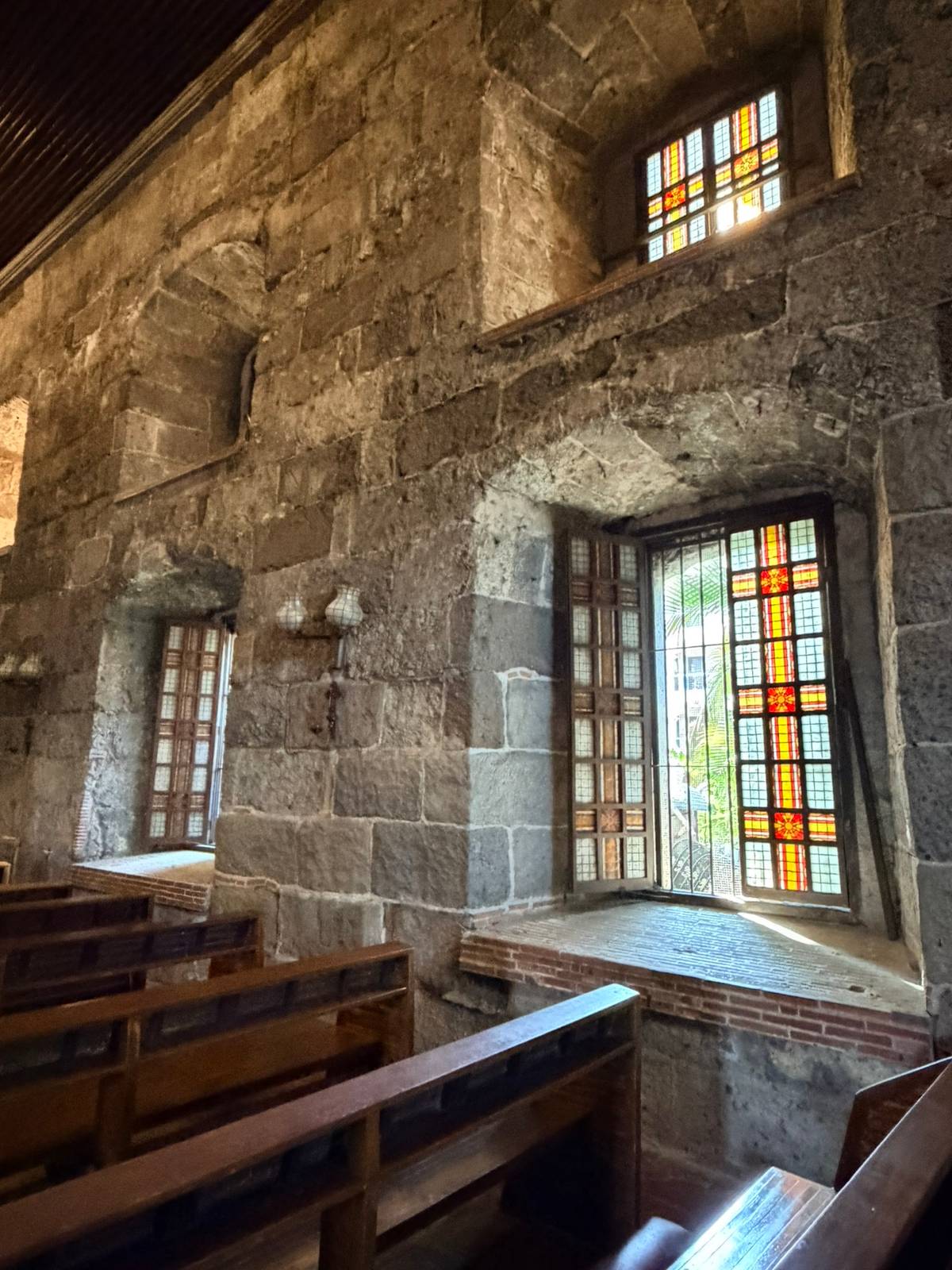
EARTHQUAKE Baroque adobe walls meet stained glass windows, blending strength and light in a timeless sacred space.
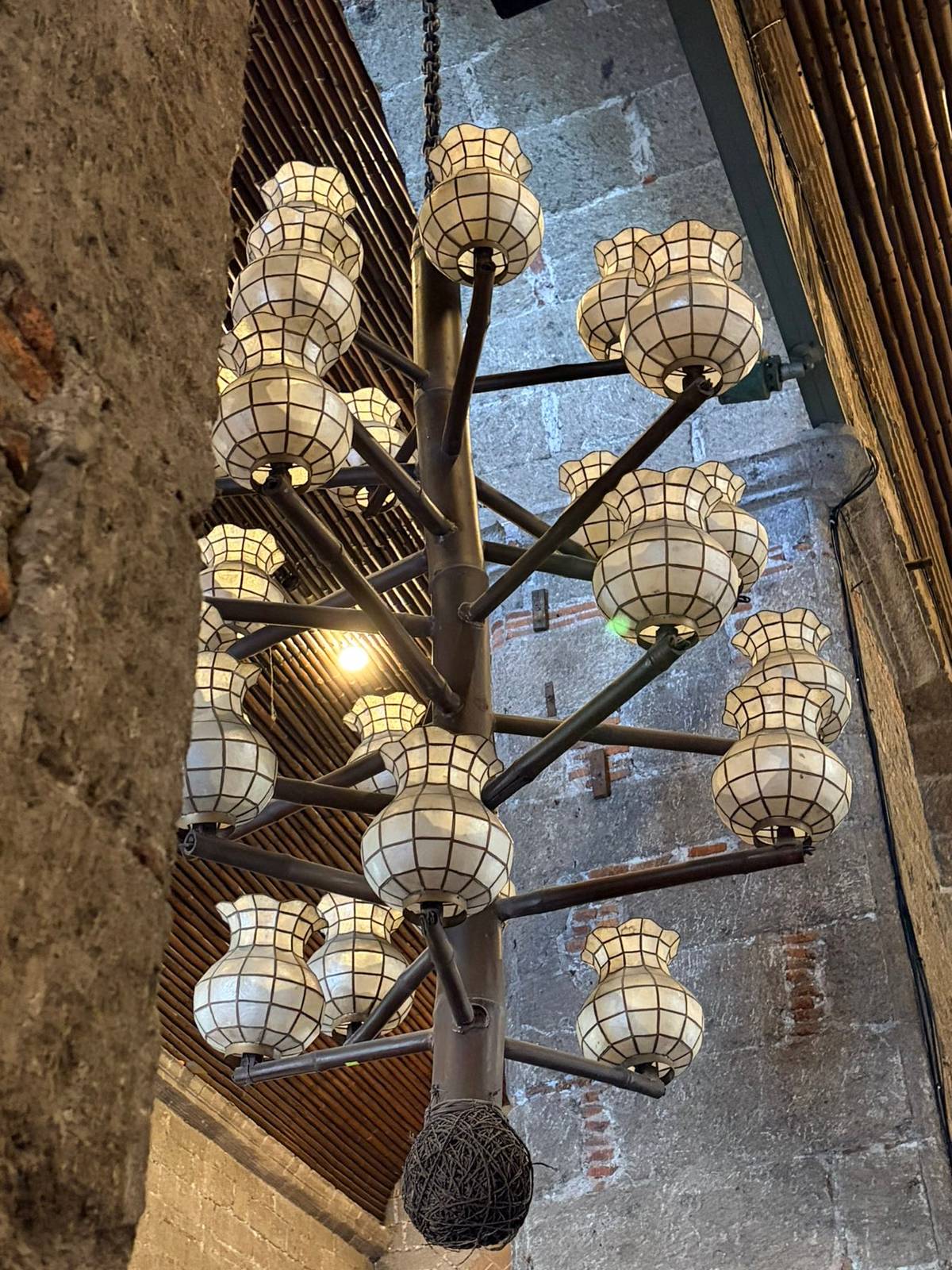
BAMBOO chandeliers paired with capiz lanterns cast a warm, natural glow inside the church.
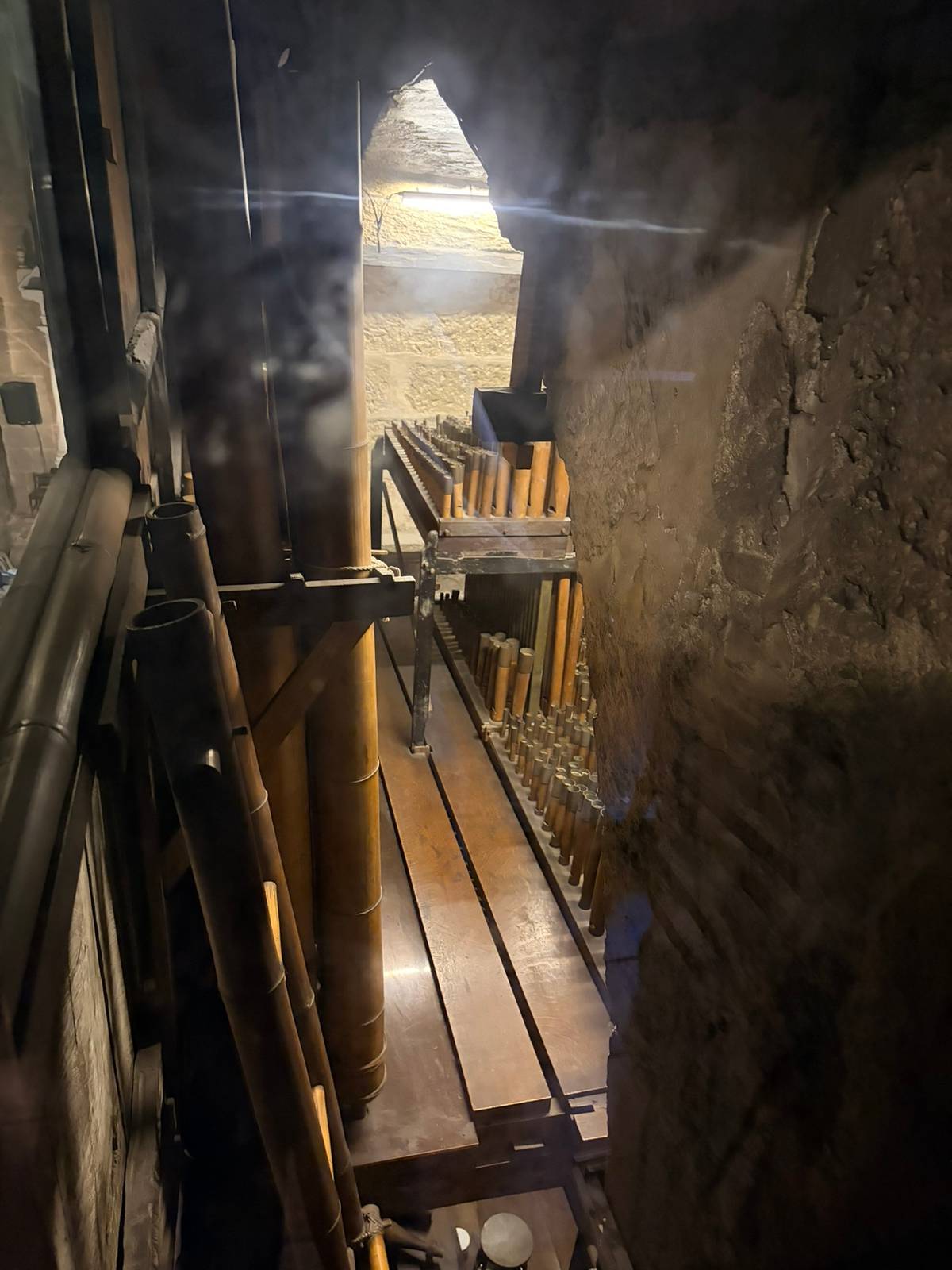
INSIDE the Bamboo Organ, rows of carefully crafted pipes stand in quiet harmony.
By the mid-20th century, however, time had taken its toll. Despite partial repairs, the organ became unplayable. Its silence stood as a reminder of how fragile even the most carefully crafted works can be. In 1972, it was sent to Germany for restoration under Johannes Klais Orgelbau. It was not simply an instrument that traveled, but a piece of history entrusted to be brought back to life.
The organ returned in 1975, its voice restored. That same year marked the beginning of the International Bamboo Organ Festival, held every February and organized by the Bamboo Organ Foundation Inc. in cooperation with the people of Las Piñas, with the Villar Foundation as one of its patrons. The festival gathers local and international artists, drawing visitors and music enthusiasts who come to witness how a centuries-old instrument continues to resonate in the present.
The experience of the Bamboo Organ begins even before the first note is heard. Within the church grounds stands the Antillan House, once a Spanish-era convent, now serving as the entry point to the Bamboo Organ Foundation. It houses a museum, a souvenir shop and the Parish Adoration Chapel, guiding visitors through the story behind the instrument. The visit unfolds through an audio-visual presentation of its origins and mechanics, followed by exhibits preserving its original parts and historical artifacts tied to St. Joseph Parish. The journey leads to the choir loft, where the Bamboo Organ can be seen up close, revealing both its intricate structure and its commanding presence.

THE Parish of St. Joseph, home to the historic Bamboo Organ, stands as a timeless symbol of faith, craftsmanship, and cultural heritage in Las Piñas.
Today, guided tours allow visitors to experience this living heritage, especially during scheduled playing hours in the morning and afternoon. It becomes more than a visit. It is an immersion where history, sound and space meet.
Preservation did not end with restoration. Over time, artisans were trained in Europe to ensure that the knowledge needed to care for the organ would remain alive. This shared responsibility reflects an understanding that heritage must be continuously nurtured. In 2003, the Bamboo Organ was declared a National Cultural Treasure, securing its place in the country’s cultural identity.
The story of the Bamboo Organ is inseparable from the community that sustains it. The people of Las Piñas have long supported its preservation, ensuring that its music continues to be heard. The Villar Foundation’s role as a patron reflects a deeper commitment that extends beyond cultural support, helping sustain traditions while creating opportunities for future generations.
This vision aligns with the work of Villar SIPAG, which focuses on opening pathways for learning and development, particularly for the youth. By encouraging responsibility, initiative and strong values, the foundation aims to shape individuals who can actively contribute to society. In many ways, this mirrors the story of the Bamboo Organ itself, where knowledge is passed on, skills are nurtured and heritage continues to evolve.
That same spirit can be traced back to another Las Piñas parish priest from 1876, whose efforts supported farmers through irrigation and livelihood initiatives. Later canonized as Saint Ezekiel Moreno, his work addressed the everyday needs of the community. Today, that legacy lives on through the Villar family’s advocacies in education, entrepreneurship, livelihood, culture, the arts and environmental protection, all aimed at providing long-term solutions to communities.
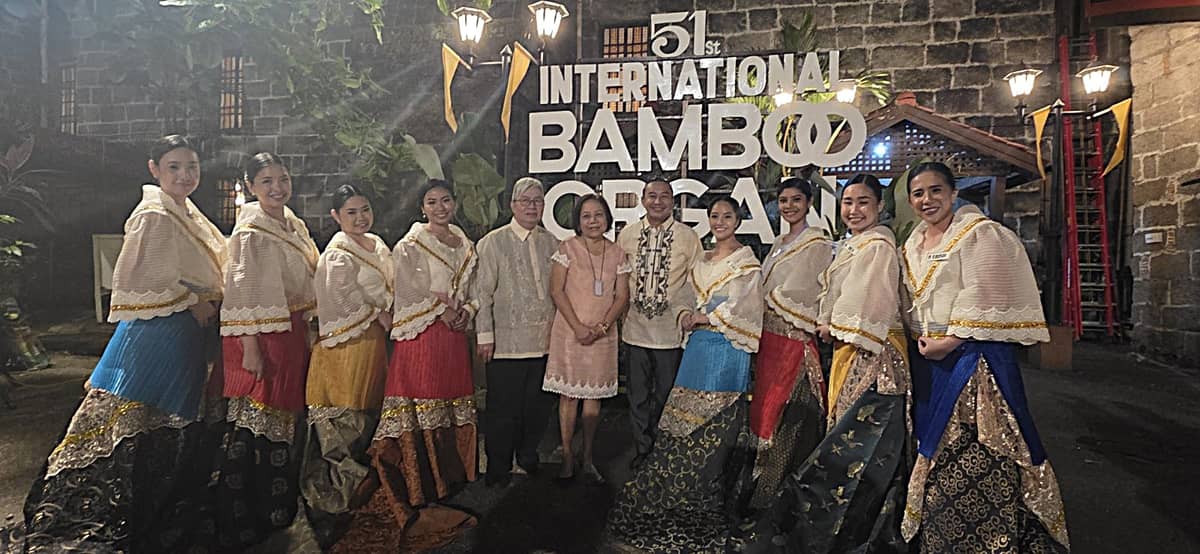
FORMER Senator and Villar Foundation managing director Cynthia Villar attends the annual International Bamboo Organ Festival in Las Piñas.
In many ways, the Bamboo Organ stands as a quiet witness to all of these. It is more than an instrument. It is a symbol of continuity, holding within it the patience of its maker, the resilience of a town and the enduring desire to make faith something that can be both heard and felt. Each time it is played, it does more than fill a space with music. It brings together history, devotion and community in a single, resonant moment.