
Tim Rone Villanueva’s Ode to Childhood
Tim Rone Villanueva, whose deeply personal works — shaped by memory, family and loss — traces an ongoing search for identity, while reflecting his journey from aspiring storyteller to award-winning voice in contemporary Philippine cinema.


There was a disarming charm how Tim Rone Villanueva introduced himself: a “religious child, a Libra, an old soul, food lover, crazy writer, and passionate filmmaker.” It sounded casual, almost off-the-cuff. But as I delved into his obras, the pattern moved from confusion to comprehension and soon became rather obvious and evident. The films are personal, often restless and always searching. They circle around family, memory and the queries and questions, which somehow tend to linger on.
Tim traces his roots to Barangay Santa Isabel in Kawit, Cavite, shaped by two prominent family clans — the Bagnas and the Santonil. The essential sense of lineage — of knowing where one comes from —surfaces repeatedly in his narratives. It continues to be a lens through which he examines identity and the fragile threads which bind individuals together — and even grief.
His first brush with storytelling was in high school. Tasked to write and direct a short play for the Drug Awareness Month, he discovered a knack for both writing and performance. The experience stuck with him.
During his pre-collegiate days, a decision that would define his path was made: to focus on film. So, he enrolled at De La Salle-College of Saint Benilde, and eventually graduated with a degree in Bachelor of Arts in Digital Filmmaking — with an honorable mention.
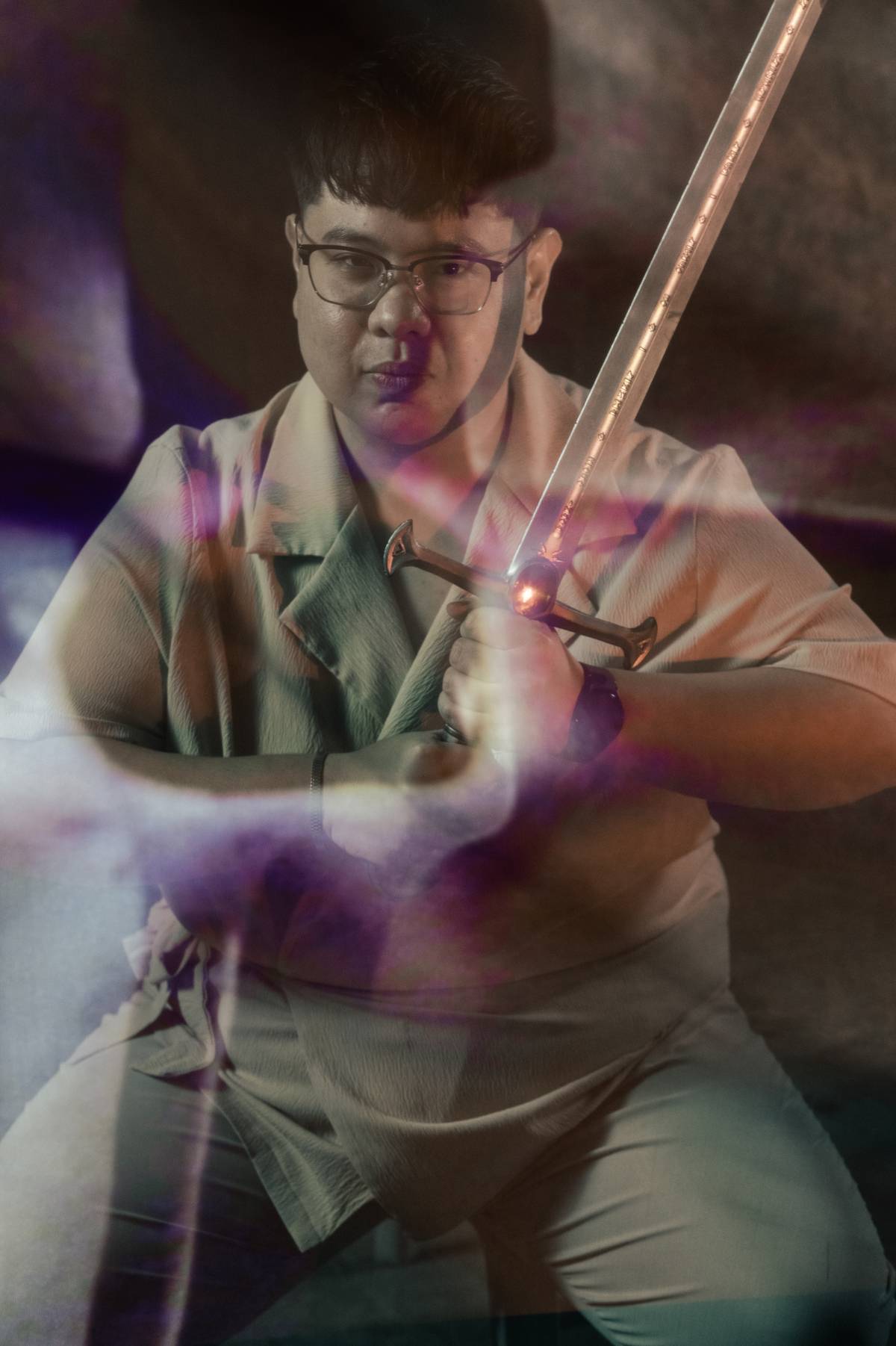
WRITER-director Tim Rone Villanueva.
Photographs courtesy of Tim Rone Villanueva
His first real exposure to a film set came in 2014, as part of Cinema One Originals Film Festival entry The Babysitters, directed by Paolo O’Hara. “Though I worked as a production associate, handling the coordination of logistics, and as a clapper boy, I was personally trained by the veteran actor, writer, assistant director and producer Jerry O’Hara, who taught me the principles, discipline and system of filmmaking,” he recalled.
But sitting into the director’s chair brought a different reality. “As a first time director, I really felt the heaviness and pressure of executing my own, because all creative decisions and approvals were in my hands. The whole production and creative teams depended on my direction. Extra preparation, great planning, a brilliant film crew and intuition were the key in sparking and sustaining that movie magic,” he revealed.
All that tension between wonder and responsibility came to a head in his breakout work, his entry to Cinemalaya Philippine Independent Film Festival 2025, Child No. 82: Anak ni Boy Kana.
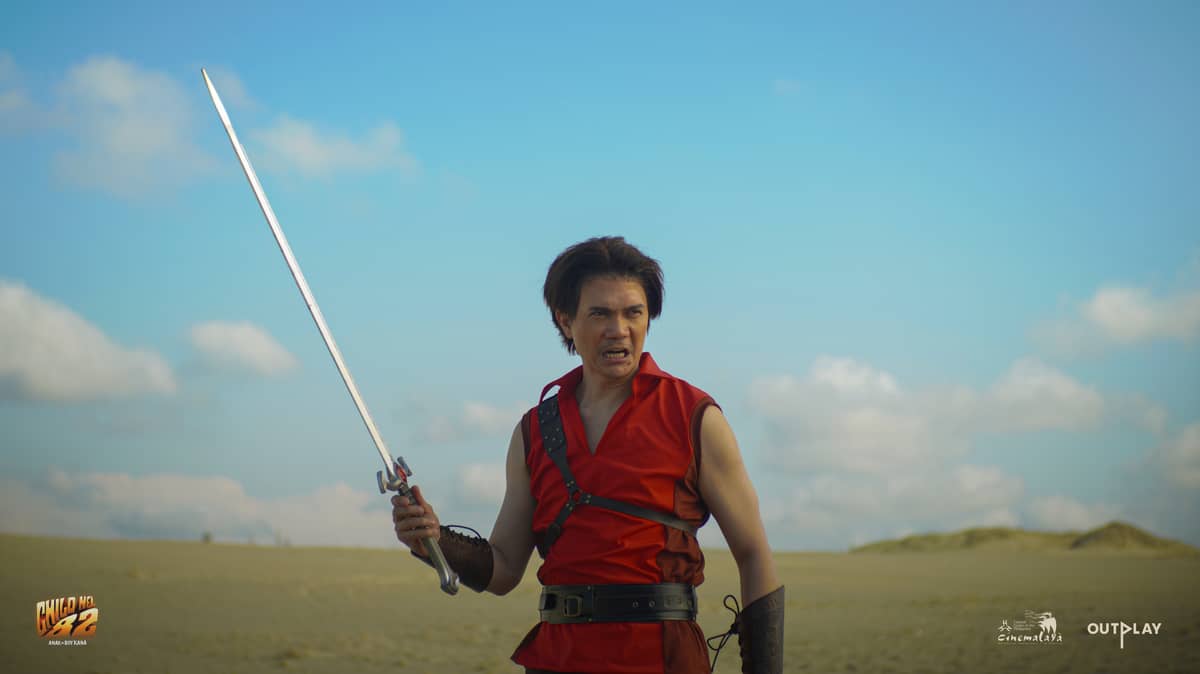
WHONG Navarro (Maximo ‘Boy Kana’ Maniego Sr.).
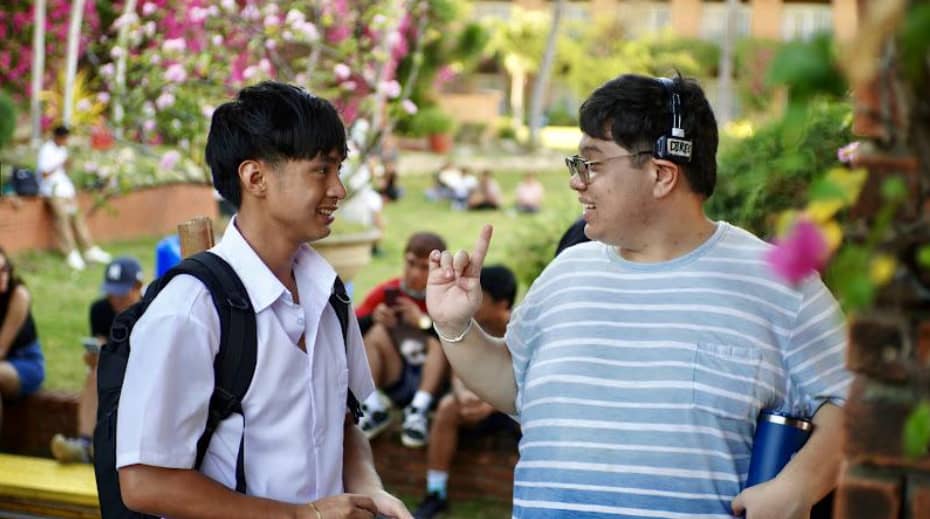
THE actor with writer-director on the set of Cinemalaya fantasy family dramedy film ‘Child No. 82: Anak ni Boy Kana.’

A festive shot.
The premise was deceptively simple. At a wake, a determined high school student relentlessly tries to prove he is the 82nd child of a legendary action-fantasy star, as he hopes for a share at the inheritance.
The film draws heavily from Villanueva’s own life. Just days after his graduation march at the PICC, his father passed on. The loss left behind unanswered questions, unresolved mysteries — thus complicating the grieving process. In creating the film, he found himself retracing that emotional landscape.
Child No. 82: Anak ni Boy Kana earned Best Screenplay, Best Supporting Actress for SexBomb founding member Rochelle Panglinan-Solinap, and the Audience Choice Award at the film fest!
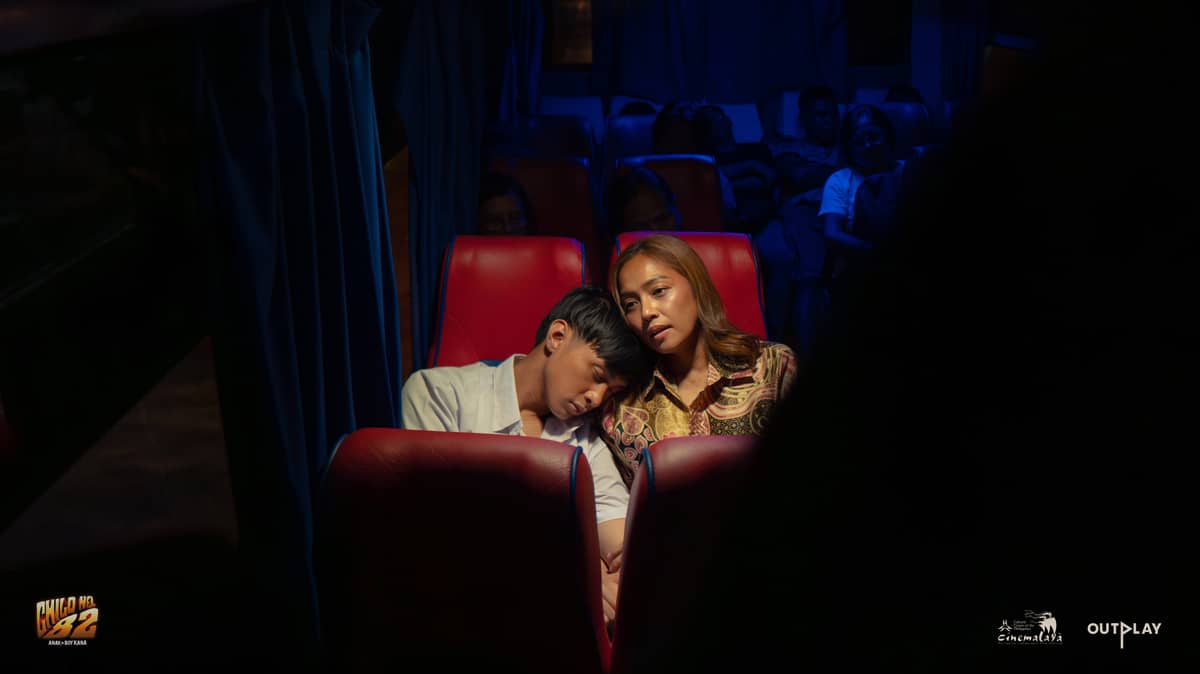
JM Ibarra (Maximo ‘Max’ Maniego Jr.) with Rochelle Pangilinan-Solinap (Ali).
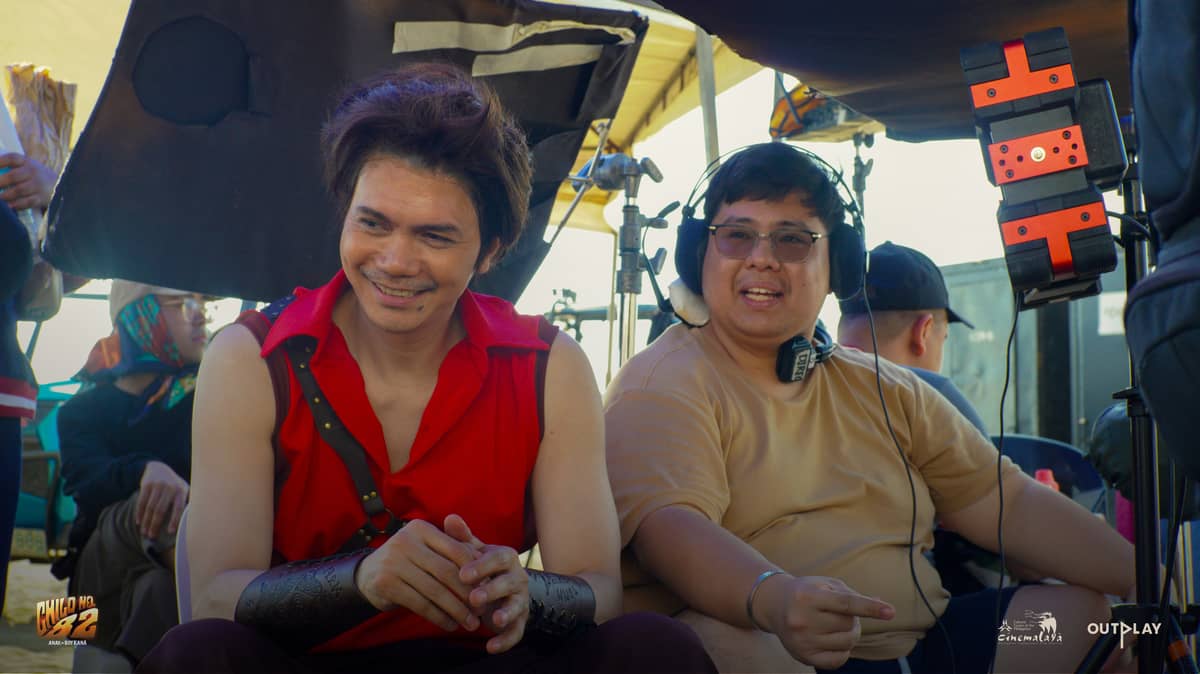
VHONG Navarro with the director.
His earlier works likewise hinted at success. Santa Nena! (2017), which he wrote and directed, collected honors from the Viddsee Juree Awards Philippines, CineFilipino and the Gawad CCP. Paano Bihisan ang Isang Ina? (2018) captivated audiences at the Durban International Film Festival. Even his ventures into theater, like Mga Nakasusuyang Putahe, was hailed as one of the best plays of the year.
As a producer, he has also been part of projects that traveled beyond borders. My Mother’s Bicycle (2021) was declared as the Overall Best Picture at the Sundayag Film Festival and was an official selection at the Tashkent International Film Festival in Uzbekistan. #bagets (2023) — a UNICEF project and developed in the labs of Sundance Collab and the Drama International Short Film Festival — has been included in various film fest lineups.
Mentorship has played a steady role in his journey. Names like Denise O’Hara, Zig Dulay, Richard Legaspi, Seymour Sanchez and Carlo Catu form part of his creative circle.
He has likewise expressed he would have desired to observe the late Peque Gallaga at work, and to one day direct John Lloyd Cruz.
Outside the set, Villanueva keeps things simple. He writes, watches films, spends time with friends over coffee or at KTV bars. Oftentimes, he gladly retreats into the routines of home life. When pressure builds up, he turns to prayer, pauses to breathe and occasionally reaches for comfort food.
More recently, he has been involved with the North Luzon Cinema Guild, assisting to organize festivals such as the Kultura Film Festival, the Hundred Islands Film Festival and the Tuguegarao Film Festival. The focus is clear — to support emerging filmmakers, champion regional cinema and enhance a culture of film literacy across the country.
Let’s listen to more of his reflections:
On ‘Child No. 82’s’ inspiration
“At first, I intended to use this film to express my untold feelings or insights for my late father, a love and farewell letter to his memory. However, when I finished my film, I realized it was my love letter to my inner child who sought answers and asked for a relationship with him we never had.”
On learnings during the shoot
“I realized it is harder to create films nowadays because of inflation. We really thought it would be impossible to shoot this fantasy film in an indie-style approach — with a limited budget and limited time. But it was possible due to family and friends’ support, LGU (local government unit) and community collaboration, and the production team’s passionate work.”
On top four films
“Shrek 2 (2004), for its humor and creativity with a powerful statement about love. Call Me by Your Name (2017), for bringing me to an unforgettable summer somewhere in Italy with Elio and Oliver. Bridge to Terabithia (2007), for inviting me to a world where creativity and fantasy are limitless. Ang Tanging Ina (2003), for teaching me how to do comedy with Filipino truth.”
On importance of film fests
“It is the only platform where filmmakers are free to express their artistry with courage. This is a space where we can experiment with our art style and voices, explore the boundaries of the medium, and for the audiences to experience what we want to say, loud and sound, through visuals.”
On wishes for the film industry
“I wish that the government would provide more programs and projects to support film workers and assist us to bring back movie theater attendances.”
On advice to aspiring filmmakers
“If you have a dream, fight for it really hard — even if it hurts.”