The state weather agency Philippine Atmospheric, Geophysical and Astronomical Services Administration forecasted a 55 percent probability of an El Niño developing within the next six months during the 194th National Climate Forum on 25 March. That natural climate phenomenon brings severe droughts, heatwaves and increased risk of wildfires in the Asian region and Australia.
Severe droughts impact farmers as the agriculture sector is often affected by El Niño. This calls for farming adaptation strategies to minimize its effect on countryside livelihoods. One solution is planting drought-resistant crops that can withstand the extreme temperatures. Crops that can tolerate El Niño heat are upland rice varieties, cassava, peanuts, sweet potatoes and sorghum. These crops thrive under limited water supply and can still grow under dry conditions which could help Filipino farmers maintain productivity when water is scarce.
In the Philippines, sorghum production is relatively limited. Among its few fans is former agriculture secretary Manny Piñol.
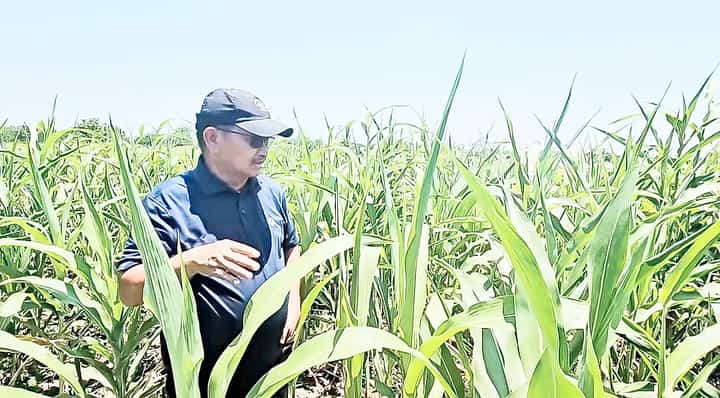
During a visit to sorghum fields in Barangay Silway 7, Polomolok, South Cotabato on 29 March, Pinol observed that the crop remains green after two weeks without rain.
This is what makes sorghum an ideal crop for unirrigated areas.
“It needs only 25 percent of the water requirement of corn and it could withstand weeks of dry spell,” Piñol said in a Facebook post.
Sorghum farming supports cattle, sheep and goat raising, according to Pinol.
At the Farmers’ Orientation on the Profitability of Sorghum Farming for Silage and Marketing Contract Signing that the former secretary attended on 23 March in Glamang, Polomolok, he met with farmers who wanted to plant sorghum for cattle feeding.
At the Umingan Sorghum Forum in Pangasinan on 27 March, he engaged with 100 landowners and farmers who expressed their interest in planting sorghum to help supply the silage requirements of approximately 14,000 heads of cattle before the end of the year.
“The sorghum development, which will be undertaken with the support of our small company, Southseas Agri-Aqua Ventures Inc., is expected to extend beyond the political boundaries of Umingan and benefit farmers in other towns as well,” Piñol said.
He added that First Atkins Farms will serve as the end user of the silage to be produced by Pangasinan farmers, a program that is expected to benefit the community and improve the economy of Umingan town.
Overall, the initiative highlights sorghum as a promising climate-resilient crop that is aligned with the United Nations Sustainable Development Goals #13 (Climate Action) and #8 (Decent Work and Economic Growth) for supporting both sustainable agriculture and improved livelihoods for Filipino farmers.