
Sinag Maynila Review: Del Mundo (2025)
Milo Tolentino's documentary presents a heartfelt and genuine study of Del Mundo’s work, balanced by thoughtful insight and critical distance.


Del Mundo, which won Best Documentary at this year’s Sinag Maynila Film Festival, explores the life and contributions of Clodualdo "Doy" del Mundo Jr. It is a cohesive and well-paced work that focuses on the essentials of who he is and what he has given to Philippine cinema. For anyone who admires him—or is simply curious about his place in Philippine cinema—this documentary is both engaging and deeply informative.
From the title alone, the film establishes its intent: this is Del Mundo’s world. In today’s landscape, where Philippine cinema continues to evolve, it feels refreshing to look back at its foundations through the lens of someone who genuinely loved the art form. Del Mundo emerges not only as a respected figure, but as someone whose devotion to cinema—particularly as a medium for storytelling and social consciousness—earned him the admiration of the industry.
While the documentary briefly touches on his personal life—his family and how he met his wife Deng—the bulk of the film is devoted to his beginnings and his work. Like many great artists, Del Mundo is portrayed as someone deeply obsessed with film. Through this, the documentary reveals his mindset and values: a belief that cinema should go beyond entertainment and function as a form of social commentary and cultural reflection.
Director Milo Tolentino effectively frames Del Mundo’s work within the broader condition of the Filipino people, showing how lived realities are reflected in the films he helped create. As a screenwriter for directors like Mike de Leon, Del Mundo contributed to iconic films such as Kisapmata, Batch ’81, and Maynila: Sa mga Kuko ng Liwanag. These works define what many consider the golden age of Philippine cinema—when storytelling took precedence over celebrity, and even well-known actors were grounded in substance.
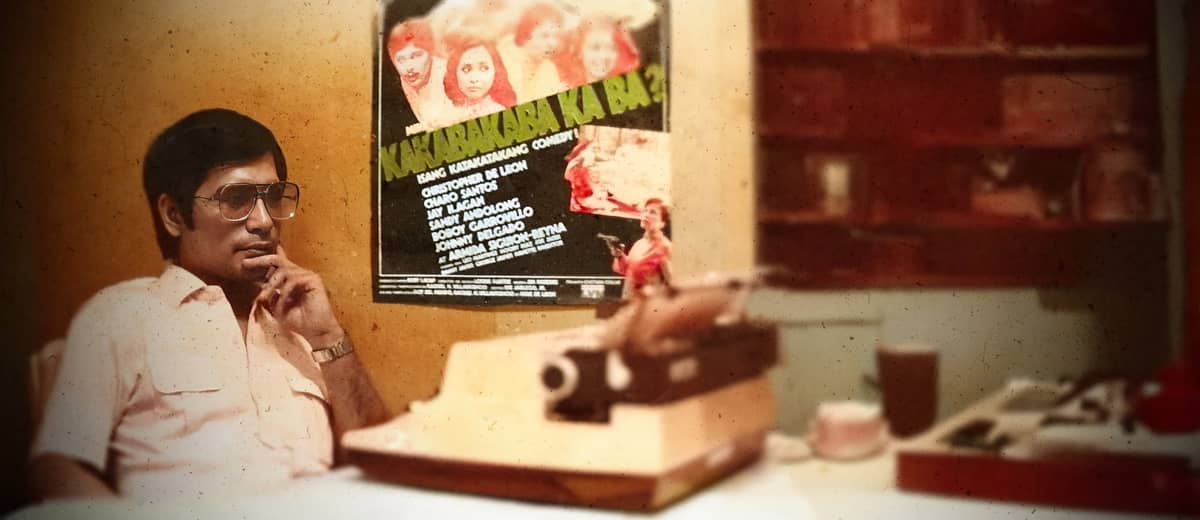
The film avoids becoming a mere tribute piece.
Milo Tolentino
The documentary makes use of talking heads, in black and white, of those who worked with Del Mundo, as well as scholars like Patrick Campos. Meanwhile, restored and enhanced clips from classic films bring these works back to life.
Importantly, the film avoids becoming a mere tribute piece. It does not feel fanatical or blindly reverent. Instead, it presents a heartfelt and genuine study of Del Mundo’s work. While Tolentino’s admiration for his subject is evident, it is balanced by thoughtful insight and critical distance.
The documentary also touches on long-standing issues within Philippine cinema, including the resistance to criticism—something that existed even during Del Mundo’s time and persists today. It highlights the importance of film preservation, as these films are not just artistic outputs but vital cultural records that must be protected.
Despite its intellectual depth, the documentary is not heavy-handed. It has moments of humor, and its pacing keeps it engaging throughout. More importantly, it carries a clear advocacy: that film is a crucial document of Filipino identity, culture, and history.
In a time when the Philippine film industry—particularly mainstream cinema—appears to be struggling, Del Mundoserves as both a reminder and a call to action. It encourages filmmakers, artists, and audiences to take cinema seriously—not as a path to fame, but as a meaningful artistic and cultural endeavor.
Ultimately, the documentary places Del Mundo’s legacy within the history of Philippine cinema, tracing its evolution through his work and showing that his path was driven by purpose, not accident. Even today, Del Mundo remains a figure who shuns the spotlight, focusing instead on what truly matters: the enduring value of Philippine cinema.
Screenings are scheduled on Tuesday, 31 March, at 1:00 PM at Uptown Mall BGC Cinema 4, and on Wednesday, 1 April, at 1:00 PM at Venice Grand Canal Taguig Cinema 1.
The festival has been extended until 1 April. Follow Sinag Maynila for schedule updates.