
Useless optics over substance
The Constitution has zero mention of a ‘state of national energy emergency’ or any energy-specific emergency declaration.

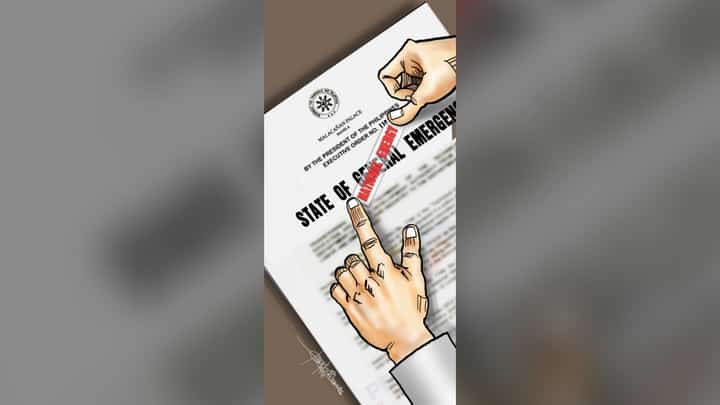
The administration cannot provide Filipinos relief from their worsening ordeal brought on by surging fuel prices driven by the Middle East conflict, relying as it does on cosmetic solutions.
Uncertainty is evident in the so-called state of energy emergency and the ongoing guessing game over potential fuel tax measures, both of which underscore a lack of leadership.
The declaration under Executive Order (EO) 110 falls short of a true national state of emergency.
It occupies an ambiguous middle ground, and it is unclear whether the president’s powers under this energy emergency would withstand legal scrutiny.
It has no direct basis in the 1987 Philippine Constitution, and it was obviously meant to buy time to show action while hoping that the situation in the Gulf states improves and a semblance of normalcy returns.
The Constitution has zero mention of a “state of national energy emergency” or any energy-specific emergency declaration.
EO 110 instead used Republic Act (RA) 7638 or the Department of Energy (DoE) Act of 1992 as the basis. The law gives the DoE and the President authority to manage energy crises through conservation, allocation, and supply stabilization.
The order also invokes the President’s general power to issue executive orders coordinating the executive branch.
An “emergency” under that law allows coordination and regulatory tweaks but does not cover the legality of forming of the Unified Package for Livelihoods, Industry, Food and Transport (UPLIFT) which a legal expert said may risk questions of overreach since the Constitution does not let the executive convert a narrow energy regulatory statute into a substitute for congressional appropriations or broad fiscal programs.
“This makes it feel improvised rather than a robust response,” the expert said of the declaration.
President Ferdinand Marcos Jr. was too careful to take a step that could be mistaken for moving towards strong-handed governance, even as he emphasized this distinction the day after signing EO 110.
“Declaring a state of national energy emergency should not be a cause of alarm as it does not place the country in a general emergency,” Marcos differentiated.
EO 110 is sector-specific and limited to energy supply risks from the Middle East conflict. No nationwide price controls, mandatory rationing, or suspension of laws, just prioritization of fuel, conservation measures, and inter-agency coordination, which makes it superficial.
The administration appears to have avoided declaring a general emergency to sidestep political backlash, thereby limiting its available tools.
Economists like Sonny Africa of IBON Foundation labeled it “largely performative.” The relief package and oil-supply management will have little effect in meaningfully shielding the public from rising fuel prices or the inflation that is projected to triple in the coming months.
The pain is coming from global markets decisions and maintaining domestic oil company profits, which are not addressed in the energy-only EO.
The token measures did not strengthen enforcement beyond the usual. It warned against hoarding and profiteering and directs fuel prioritization, but these steps were already possible under RA 7638 and the Price Act.
The Palace brandished EO 110 as a trophy since “the Philippines is the first nation to act,” but the directive was mainly for optics, more of signaling than decisive intervention.
The emergency state lasts one year unless the President lifts or extends it, with no objective benchmarks for policy.
It opens up bureaucratic discretion without strong accountability, raising fears of a repeat of abuses in the flood-control scandal.