Rhizophora or Avicennia?
Rhizophora thrive in muddy, low-intertidal zones with prop roots that anchor firmly in soft sediments.

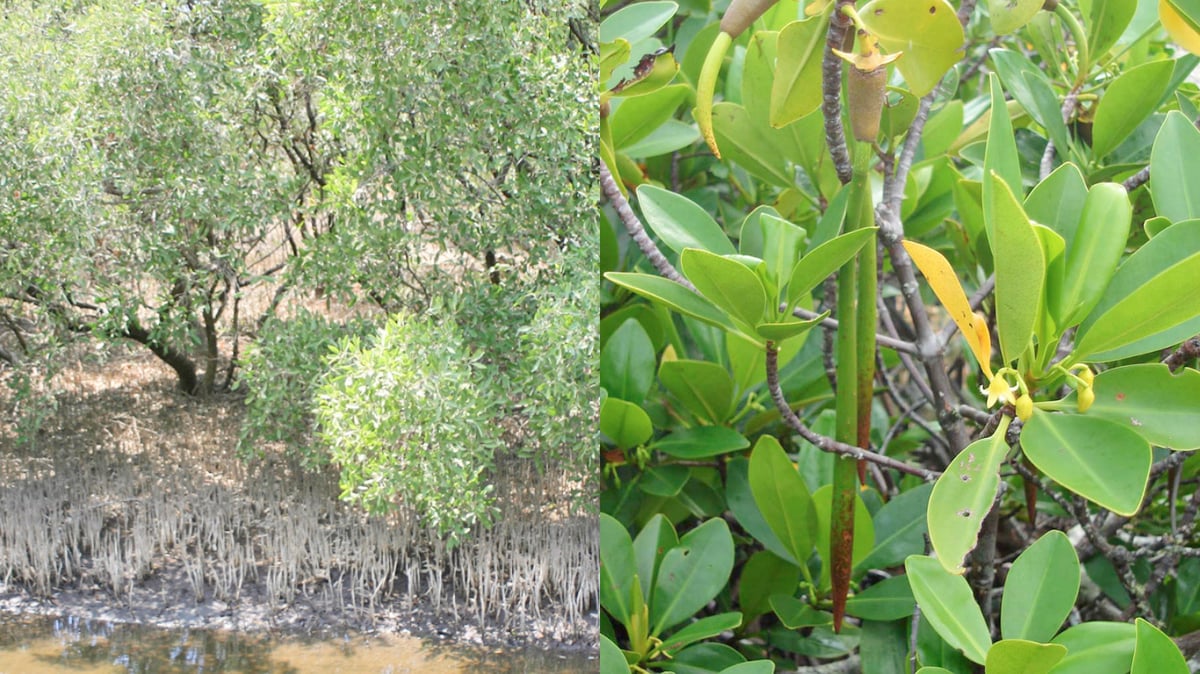
Rhizophora thrive in muddy, low-intertidal zones with prop roots that anchor firmly in soft sediments.


While mangroves serve as storm barrier and protect communities from typhoon by weaking its winds and waves, they can also suffer damage. At the Philippines Mangrove Conference 2026, the mayor of Salcedo, Eastern Samar said mangroves in many villages were damaged by post-Haiyan typhoons and have yet to be fully restored.
A former mayor of Prieto Diaz, Sorsogon also attending the conference suggested planting the Avicennia species as such mangrove trees are tougher than the Rhizophora and therefore offer better protection against destructive typhoons.
Avicennia and Rhizophora are the two most prevalent types of mangrove trees in the Philippines. Examples of the first as R. apiculata and R. mucronata, known locally as bakawan. An example of the other species is A. marina or bangin.
Rhizophora thrive in muddy, low-intertidal zones with prop roots that anchor firmly in soft sediments. They offer superior coastal protection by forming dense barriers against waves and typhoons. At the same time, they provide excellent habitats for juvenile fish and crabs, boosting fisheries.
However, Rhizophora trees grow slowly, making them vulnerable to overharvesting for poles or fuel, and they struggle in highly saline or polluted waters compared to faster-adapting species.
Avicennia mangroves, meanwhile, dominate higher, firmer intertidal flats with pneumatophores — specialized root structures — that aid aeration in oxygen-poor mud. Their rapid growth and salt-excreting leaves make them resilient to salinity fluctuations and pollution, allowing quicker forest regeneration after disturbances. Drawbacks include less effective wave attenuation due to sparser canopies and shallower roots, increasing erosion risk in exposed areas, plus higher susceptibility to pests in dense stands.
Both types enhance sustainability efforts in the Philippines, where mangrove cover has declined sharply, but mixing them in restoration maximizes ecosystem resilience.