
Are our roads making us bad drivers?
‘In urban planning, there is a concept called ‘desire lines’ which are the natural paths people take when formal routes do not align with actual behavior.’

There is a tendency to blame the driver, as we say kamote or if they’re well-off then “sweet potato.” When we see other vehicles not using their signal lights, not lining up properly for an exit or turning on their hazard on a busy street, we often frame them as personal failures. But spend enough time on Metro Manila’s roads and a different question begins to surface: what if the environment itself is shaping the behavior we so quickly criticize?
Driving in Manila is like a box of chocolates: you never know what you’re going to get. Everyday there is a new obstacle on the road whether it be an accident, road repair, a broken stoplight, flooding and everything else. It doesn’t help that from the get go, our road systems are not exactly designed to be helpful as they’re not uniformly built in the first place.
Much of Metro Manila’s road network was laid out during a different time when we didn’t expect to get this big. Over the decades, our road systems had to be stretched, adapted, and layered upon which results in an urban condition where clarity is often sacrificed for accommodation. I’m sure all of us know a street or a place with changed traffic rules.
The result is a kind of spatial ambiguity, where rules exist, but are not always legible, and as we say “maraming namamatay sa maling akala (many die from making wrong assumptions)..”
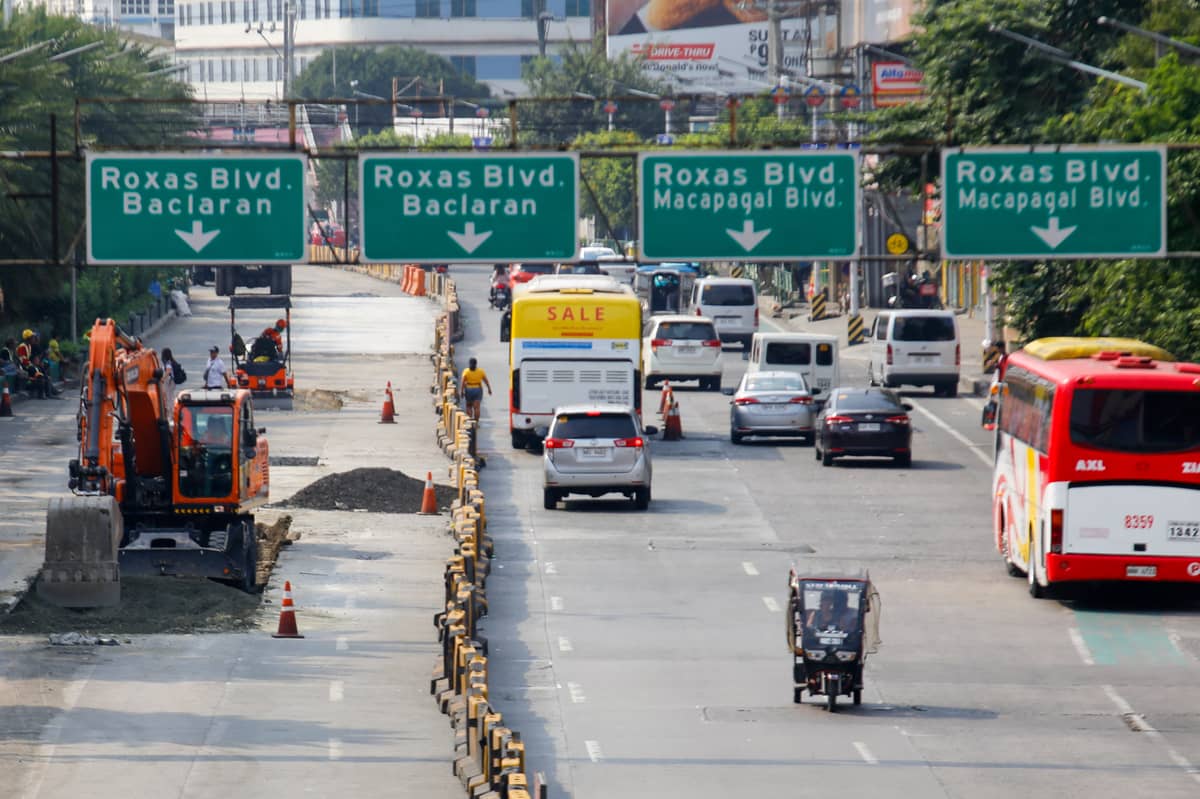
URBAN roads in the capital show how drivers constantly adapt to changing traffic patterns and challenges.
In urban planning, there is a concept called “desire lines” which are the natural paths people take when formal routes do not align with actual behavior.
On our roads, these “desire lines” are everywhere. They appear in the way drivers create informal lanes, anticipate gaps, or negotiate right of way without relying solely on signals. What may seem like recklessness is, in many cases, a form of learned adaptation.
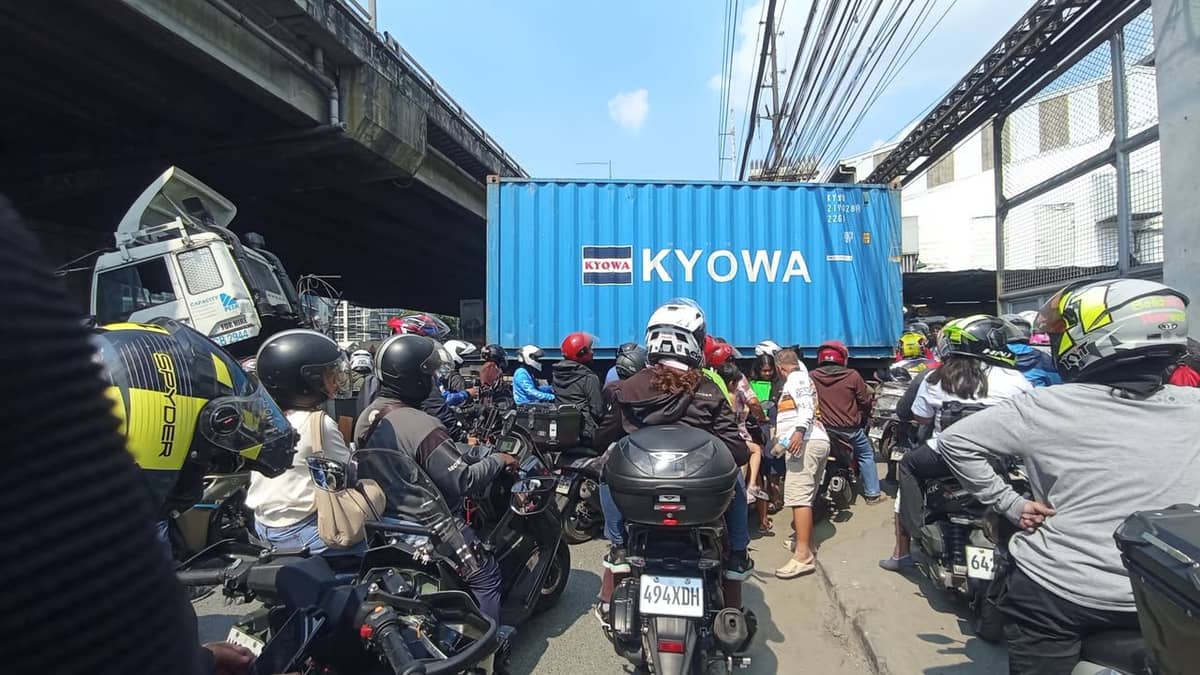
A COMMON Manila scene: Cars, motorcycles and buses sharing limited road space while navigating obstacles.
These situations are created because of a lack of coordination between the different elements of traffic. Car drivers may think that motorcyclists are impatient for filtering lanes but in their perspective it seems acceptable because they can fit. One might suddenly swerve off their lane when they see that the one beside it is much faster, maybe because a jeep stopped a few hundred meters down the road.
Perhaps this is why we, Filipinos are so good at comedy because we have to improvise everyday. Lanes appear and disappear, signage competes for attention, and intersections often feel like unscripted encounters. Our roads demand that the driver adapt on the spot, have a mindset of extreme caution, and make quick split second decisions.
Good road design, at its best, does not rely on constant vigilance or negotiation. It guides behavior intuitively based on each vehicle’s perspective. Imagine a road where lane widths are consistent and properly scaled, markings are highly visible even at night, and turning lanes are clearly separated from through traffic well in advance of an intersection. Sightlines are unobstructed, curb radii are designed to guide, and the presence of designated loading bays or drop off areas. It would make disciplined and safe driving intuitive.
In this case, we can recognize that infrastructure plays a role in shaping conduct. When designed with intention, they can encourage order, patience, and even courtesy by making the desired behavior the easiest one to follow.