
After Senate spat, Ang offers to sell Petron to gov’t
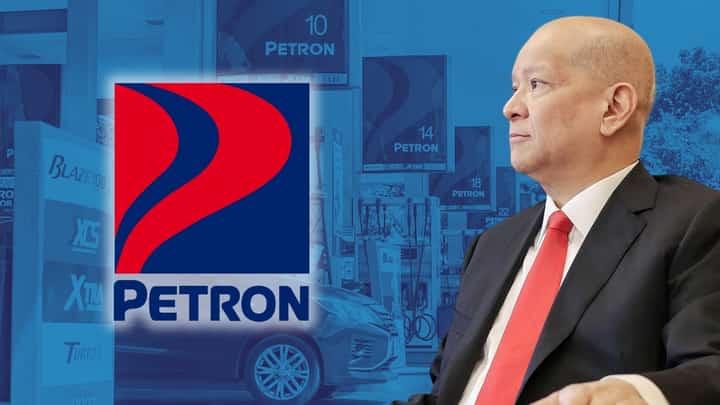
As the call for the government to temporarily take over the operations of oil companies due to the leap-frogging fuel prices — which is far higher than the increases in Asian neighbors — tycoon Ramon S. Ang, president and CEO of diversified Asian giant San Miguel Corp. (SMC), said he is more than willing to sell Petron Corp. to the government.
In a Senate hearing on Thursday on the oil crisis amid the Middle East war, Senator Rodante Marcoleta sharply questioned the oil companies, including Petron, over alleged profiteering from fuel price hikes despite selling pre-conflict inventory that cost them less.
Marcoleta claimed oil companies were making roughly P3 billion more per day from the price surges.
He said he based his calculation on national consumption volumes, arguing that these hikes came from existing stocks bought well before the conflict, when the Philippines had an estimated 60-day buffer supply.
He compared the scale of the oil companies’ daily earnings to the alleged daily cash deliveries made by “18 ex-Marines” in the flood control corruption scandal, framing it as a concerning parallel amid the public’s hardship due to the rising fuel costs.
Ang outright rejected the P3-billion daily income figure, saying Petron was not exploiting the crisis.
Marcoleta later walked out of the hearing in frustration over the Department of Energy’s responses on price oversight.
Ang then urged the government to decide whether public ownership of the country’s only oil refinery was necessary as the country grapples with a national energy emergency and amid calls for a temporary state takeover of fuel firms.
“I first made this offer to Congress in 2021, and it remains open. If the government believes that Petron under its ownership will better serve the Filipino people, especially in times like this, we are ready to sit down and make it happen,” Ang said in an interview with reporters.
He said the government would not need to make a massive one-time payment, as the sale could be structured in tranches at fair market value.
For Ang, Petron has long been a strategic asset within SMC, not merely a profit engine.
“We have never treated Petron as simply a profit center. We lost over P11 billion in 2020,” he said.
Huge capital outlay
“We invested $2 billion to upgrade the Bataan refinery. We kept it running even when it would have been easier to import finished fuel, as other oil companies chose to do. We did that because the country needs its own refining capacity. That has always been our reason,” Ang said.
Petron’s Bataan refinery — which processes 180,000 barrels per day and supplies about a third of the nation’s fuel — has become even more crucial amid the disruption in the Strait of Hormuz and soaring global oil prices.
Petron ended 2025 with a net income of P15.6 billion, surging 84 percent from P8.5 billion the year before, driven by stronger domestic sales, improved refinery performance in both the Philippines and Malaysia, and lower financing costs resulting from tighter cash management.
In a stock market disclosure, the company reported selling 113.4-million barrels across its Philippine and Malaysian operations, a three-percent increase from 110-million barrels in 2024.
According to government data, Petron raised its market share to 27.8 percent in the first half of 2025, up from 25 percent in 2024. It also maintained a dominant 25.1-percent share of the LPG sector.
“This is a public service, and we promise the public that we will not take advantage of this fuel crisis. We will not earn beyond the norm. In fact, I am even willing to reduce our income — it doesn’t matter to me. As I’ve said before, if the government wants to, it can buy it from me if it believes it can run it better,” Ang said.
He said he is willing to open Petron’s books to the Commission on Audit. Asked if he could roll back prices, Ang said they could sell fuel products at a loss.