
Volvo highlights women’s safety focus

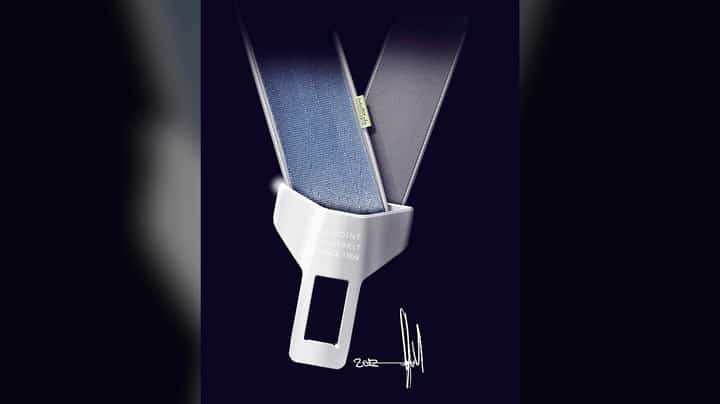
Volvo used Women’s Month to draw attention to a long-running issue in car safety and to revisit one of the best-known devices in the industry, the three-point seatbelt, which turns 70 this year.
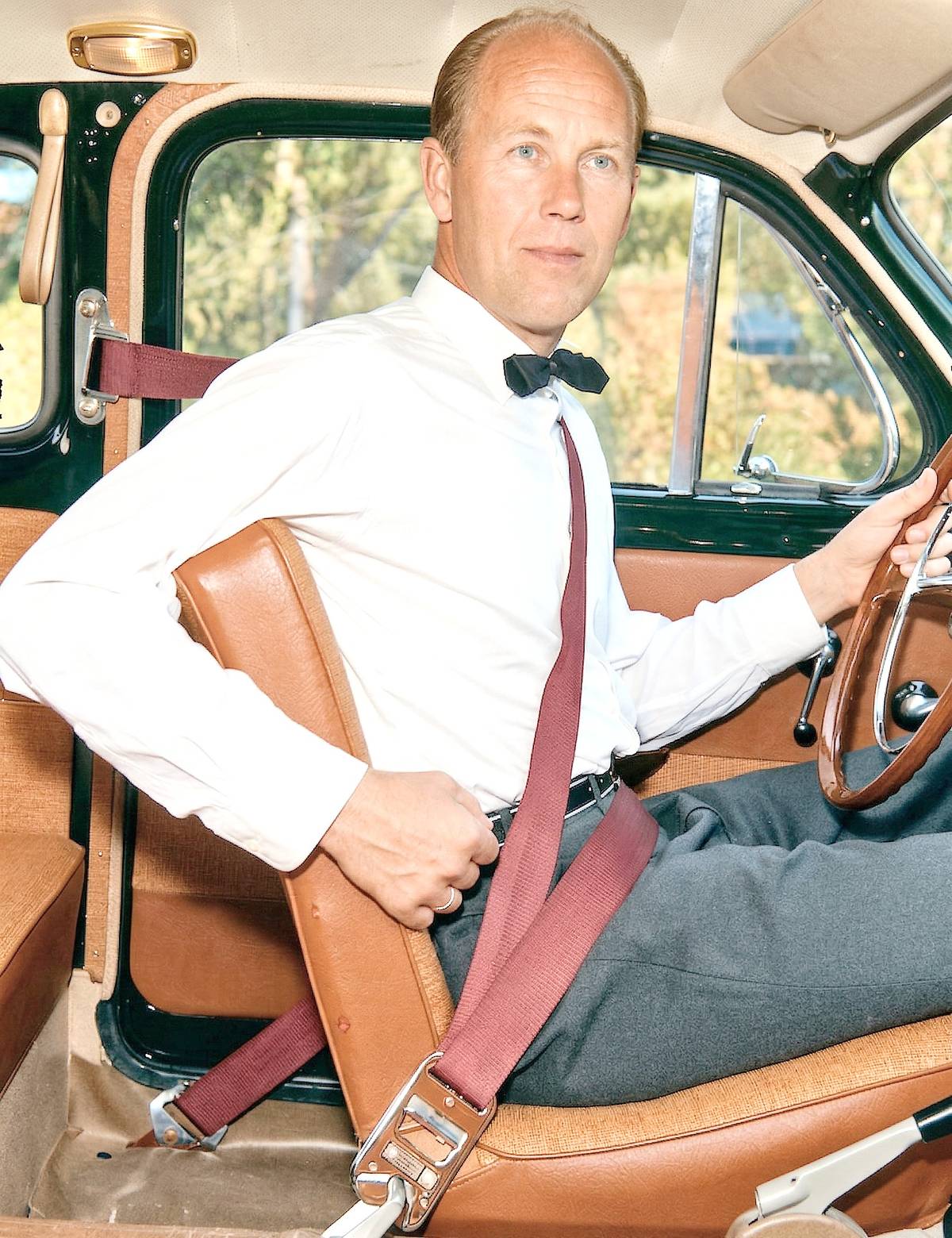
INVENTOR Nils Bohlin demonstrates the early three-point seatbelt that shaped modern vehicle safety.
PHOTOGRAPHS courtesy of volvo
In the Philippines, Hariphil Asia Resources Inc. (HARI), the local distributor of Volvo Cars, tied the two themes together and pointed to the brand’s work on safety systems that account for a wider range of occupants, including women and pregnant passengers.
The company said Volvo has used a computer model of a pregnant crash test dummy since 2002. The virtual model represents a woman in the later stage of pregnancy, a period when both mother and fetus face a greater risk in a collision. Volvo said the model helps engineers study how seatbelts and airbags affect both.
Volvo also revisited its E.V.A. initiative, short for Equal Vehicles for All, which it launched in March 2019. The program pushed for more inclusive vehicle design and drew from decades of real-world crash data. At the time, Volvo said its research found that women were 71 percent more likely to be injured and 17 percent more likely to die in car crashes. The company linked that gap to an industry practice that relied too heavily on male crash-test data.
Volvo later opened more than four decades of safety research to the wider auto industry. This endeavor invited other manufacturers to use the findings and consider broader standards for vehicle safety. The initiative also received a Gold Pencil at The One Show 2020.
The company said its broader safety work now includes not just the three-point seatbelt, but also newer systems such as Safe Space Technology and the multi-adaptive seatbelt.
Volvo framed those efforts as part of a wider push to protect more types of occupants instead of building around a single standard body type.
“Volvo has always believed that safety should be designed for everyone, including women,” Maria Fe Perez-Agudo, vice chairman, president and CEO of HARI, said.
“Celebrating Women’s Month and the 70th anniversary of the three-point seatbelt, we honor Volvo’s legacy of life-saving innovation while reinforcing our mission to make every journey safer, more inclusive, and designed with people in mind. As the official distributor of Volvo Cars in the Philippines, we uphold these principles locally, ensuring that Volvo’s innovations in safety, inclusivity and human-centric design are delivered to Filipino drivers and passengers,” Perez-Agudo added.