
Art-gorithm
Peter Zimmerman reimagines algorithms and digital imagery into tangible works that connect technology and traditional painting.

Most of us might think that in these modern times, tradition is being replaced by technology and digital media, but Peter Zimmerman thinks otherwise.
Starting his artistic journey in the 1980s, Peter Zimmerman transformed the covers and titles of atlases, art books, travel guides, and dictionaries into ‘Book Cover Paintings,’ executing them in epoxy resin on canvas.
He later expanded this approach by using epoxy resin to construct compositions from warped and distorted photographs. In 2014, Zimmerman shifted his exploration of digital image generation into oil painting, asserting that such images have no true “errors”: although algorithmic and immaterial, they can still evoke emotion and expression through deconstruction.
Through his art, Zimmerman was able to hold solo exhibitions in various places, including Nunu Fine Art in Taiwan, Galerie Perrotin in France, and the Museum of Modern Art (MoMA) in New York, just to name a few.
And now, he has an exhibit at the Metropolitan Museum of Manila with his exhibition “Painting Rules.” Through this, people will have a chance to check out his paintings and other works up close.
During Zimmerman’s press interview, he shared how he started transforming images into paintings. In the ’90s — the start of the digital boom — he admitted he did not know how to print or extract images from the computer, so he began painting them in a way that resembled a printing process, using CMYK colors. When he finds the image he wishes to draw, he separates the colors and transforms the projection of the image.
That beginning led him to his current exhibition at the Metropolitan Museum of Manila. After being invited to show his work, he thought of having a special concept to present his paintings. This is where he came up with the idea of creating a mural out of stickers as a backdrop to his works. He thought of creating a pattern through the stickers, which was made possible with the help of 10 chosen student volunteers who helped stick over 10,000 stickers onto the gallery walls. This repetition of stickers and patterns relates to how technology work — the algorithm, which shows repetitive content and images to individuals. These stickers are images of the old Metropolitan Museum building, statement stickers, and even a photo of the national hero, Dr. Jose Rizal.
“I would have only put in one sticker, and it would have become totally meaningful, but once you use so many of them, it gets another layer of meaning because it is so repetitive. It also says something about how we are using these algorithms in our day-to-day lives, and after seeing it ten thousand times, it becomes boring. That is how algorithms work. That was my point,” Zimmerman said.
However, not all the walls of the gallery have stickers. Zimmerman left one part of the wall in his exhibit without them. He intended to keep a good balance between the mural and the paintings and not overdo it.
“I personally am really satisfied with the outcome because it's one thing to have the idea and another to see the finished installation. And I'm really very satisfied with how it looks,” Zimmerman mentioned.
Painting Rules
Rules exist to maintain order in society, but Zimmerman isn’t constrained by them. He said, “I like to break the rules.” For him, it is part of the game that you have to find a way to deal with them because, as he explained, he had a deep mistrust of using technology. Despite that, he understands that there is no way to avoid its existence and influence, and he adapted it into his art.
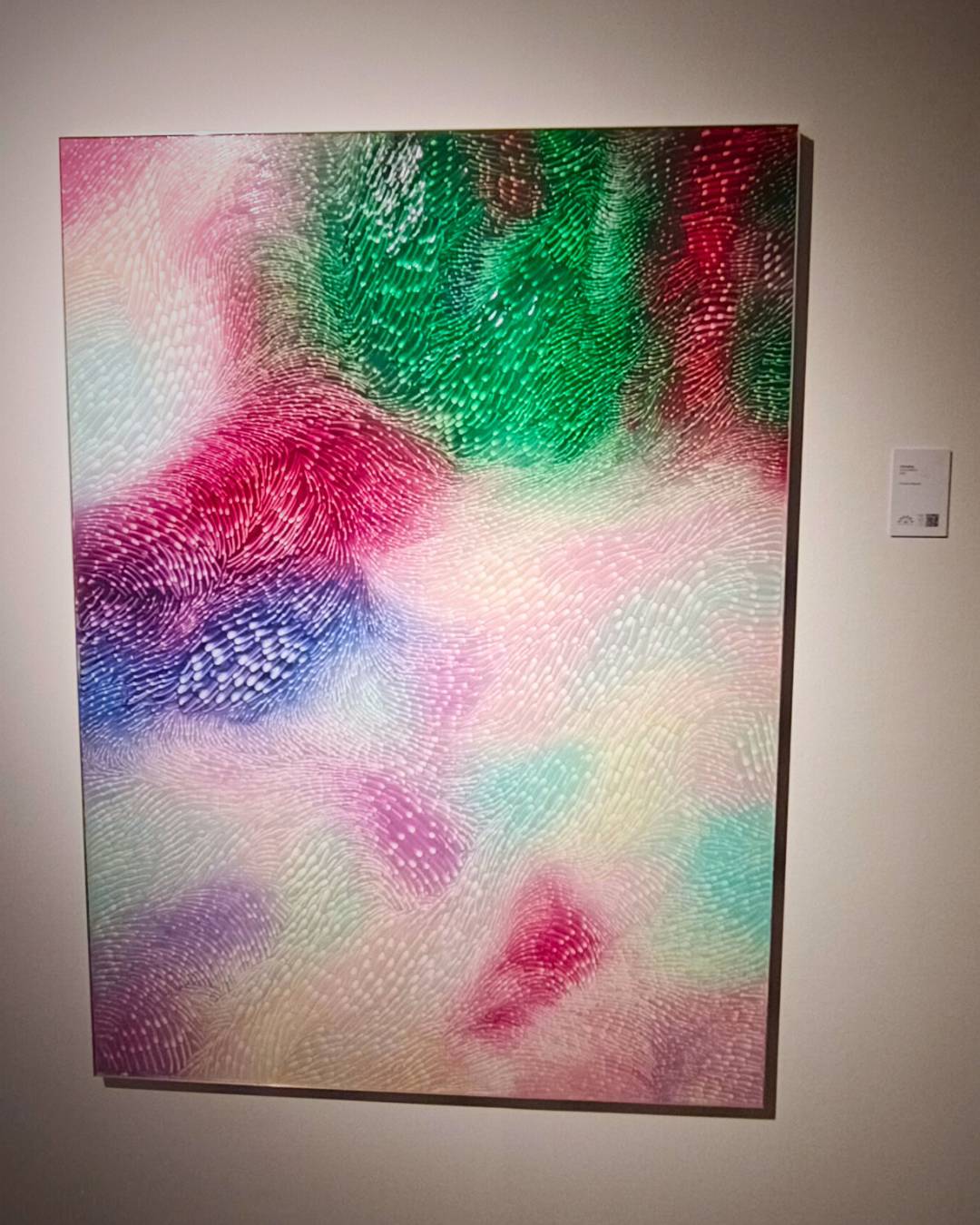
The Sweeping by Peter Zimmerman. Swarm of colors created using his fingers through swiping technique.
Photo by Chynna Basillaje for DAILY TRIBUNE
One of the artworks present in the exhibit is the Sweeping, made in oil on canvas, created with his fingers using a swiping technique. This art technique represents what contemporary people do, swiping on phones. Through this process, he was able to create a swarm structure where every color has a technical direction that makes the art look alive.
But the style he is most known for is resin painting, where he uses powdered color pigments mixed with resin, then pours transparent layers of resin on top of each other. He tilts and shifts the canvas to make the resin flow, which creates gradients and overlapping layers.
In his resin art, he started by imitating the intensity of the colors emitted by computer screens, so the colors are fleshy and intense. As he progressed through his series of resin works, he created pieces with more refined, monochromatic color schemes.
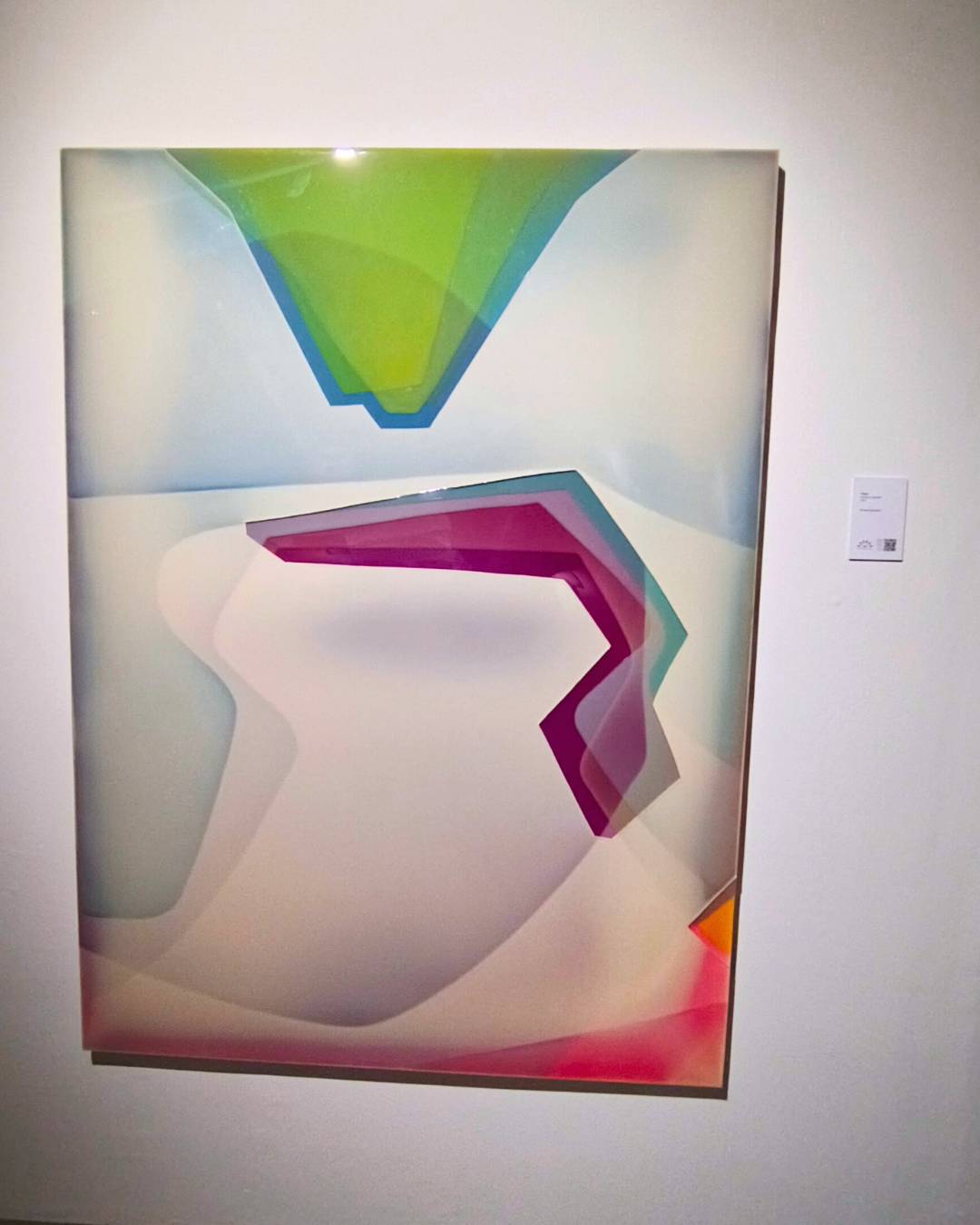
The Plane by Peter Zimmerman. Made up of color pigments mixed with resin and layered on top of each other.
Photo by Chynna Basillaje for DAILY TRIBUNE
Compared to all his other artworks, this piece might be the thickest of all, The Plane. It is made out of two paintings combined. The first is his iconic resin art, in which you can see the colored layers; then, he covered it with white resin. Round shapes and straight lines on the canvas are also visible, creating a geometric formation that merges two different paintings. For him, everything has meaning, but it is difficult to combine those meanings to achieve a “special meaning” when creating works.
As Zimmerman continues to blur the line between the digital and the traditional, Painting Rules becomes more than just an exhibition, as it becomes a reflection of the world we live in. Through his artworks, he transforms algorithms and technology into a tangible experience, reminding us that technology does not need to replace traditional work but, instead, can be reinterpreted and reshaped.
To experience firsthand how Zimmerman bridges the virtual and the physical in his works, visit his exhibition at the Metropolitan Museum of Manila. Open until 30 April 2026.