
The great bystander
The danger isn’t that the UN failed. It’s that the wars have learned they no longer need it.
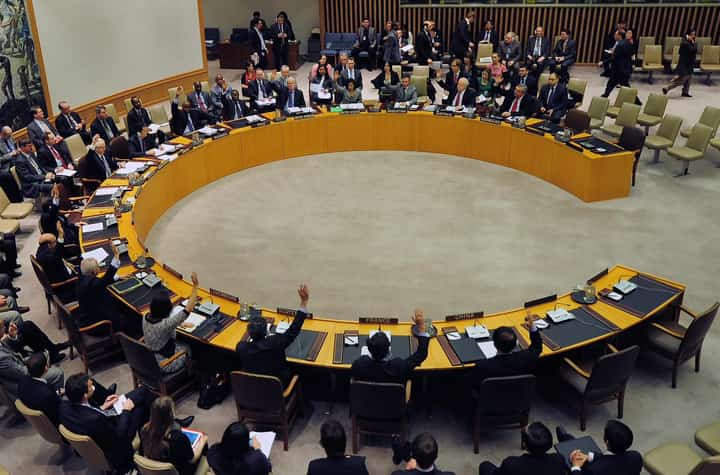
THE Iran strike exposes a harsher truth: The United Nations still speaks, but the world’s wars no longer listen. An institution built for order now struggles to contain it.
Photograph courtesy of UN
The United States and Israel launched Operation Epic Fury against Iran, a strike long anticipated by analysts, yet startling in execution after weeks of quiet American troop positioning.
Perhaps, the “shock” that the world experienced is due to the fact that the military action opened the floodgates for a ripple of attacks within the Middle Eastern region. Although expecting a retaliation, the agility of the Iranian Revolutionary Guard Corps and its allies in the so-called “Axis of Resistance” was something the world did not see coming. This, in turn, furthered anxiety within the neighborhood.
With the unfurling of yet another tension, apart from the Russo-Ukrainian war and the Pakistani-Afghan “open war,” the international community is undoubtedly at a crossroads.
When societies and institutions are gradually becoming more and more anxious, then there is a problem — bigger than we expect it to be — that has to be addressed. Much of it, one can easily argue, is rooted in the credibility of global institutions today.
Despite sounding the clarion call for cessation of hostilities and resumption of dialogue by the United Nations, armed conflicts, such as the three escalating in front of our very eyes, prevail.
The fact that its voice does not do the trick this time, only gets to show how the bastion of peace and stability is badly needing a revamp.
Being convinced that the status quo, which has held the UN together for the past eight decades, is working is now an erroneous argument.
An overhaul toward a more representative and participatory UN may be among the primary pathways the world must venture on to resolve the ills of our time.
In recent years, there have been a number of propositions on how such a rework on the multilateral body can be done, including opening the doors of the UN Security Council to middle and minor powers.
Such a move alone, however, is not viable. Instead, a stronger emphasis on cultural understanding, and how diverse perspectives are celebrated and recognized beyond declarations, must be facilitated.
This is because the cosmopolitan perceptions of great powers, which has steered the UN since its inception, have always overshadowed the caveats of nation-states’ appreciation and grasp of things. The differing appreciation of the rule of law and human rights is a prime example. These themes often cause conflict between countries.
Without a doubt, the tensions that have flared recently are mirrors of the kind of global order we presently have. An order helmed by the great powers, whose perceptions vary from those of minor and middle powers.
If multilateral institutions still wish to be the champions of global order and stability, then now is the time for them to prove the credibility and influence they wield — a reimagination of how they function, and who steers them might be the best way to begin.
The author teaches diplomacy at DLS-CSB, where he coordinates its Diplomacy program. His research examines regionalism, collective identity, and AI in Asean and the EU.