
Full gallop
The Year of the Horse tells us that momentum is important. But a horse that sprints without control burns out.


2026 is the Year of the Horse.
The horse represents speed, but it also represents stamina. It moves fast, yet it survives long journeys.
That sounds like the direction of today’s car market.
New models arrive quickly. Facelifts happen sooner. Screens grow larger every year. Driver assist systems that were once reserved for luxury sedans now appear in compact crossovers.
The automotive industry here is galloping.
But speed today comes from architecture, not just horsepower.
Many newer vehicles now use centralized computing systems instead of dozens of small control modules scattered across the body. That design reduces wiring weight and allows software updates to improve features after purchase.
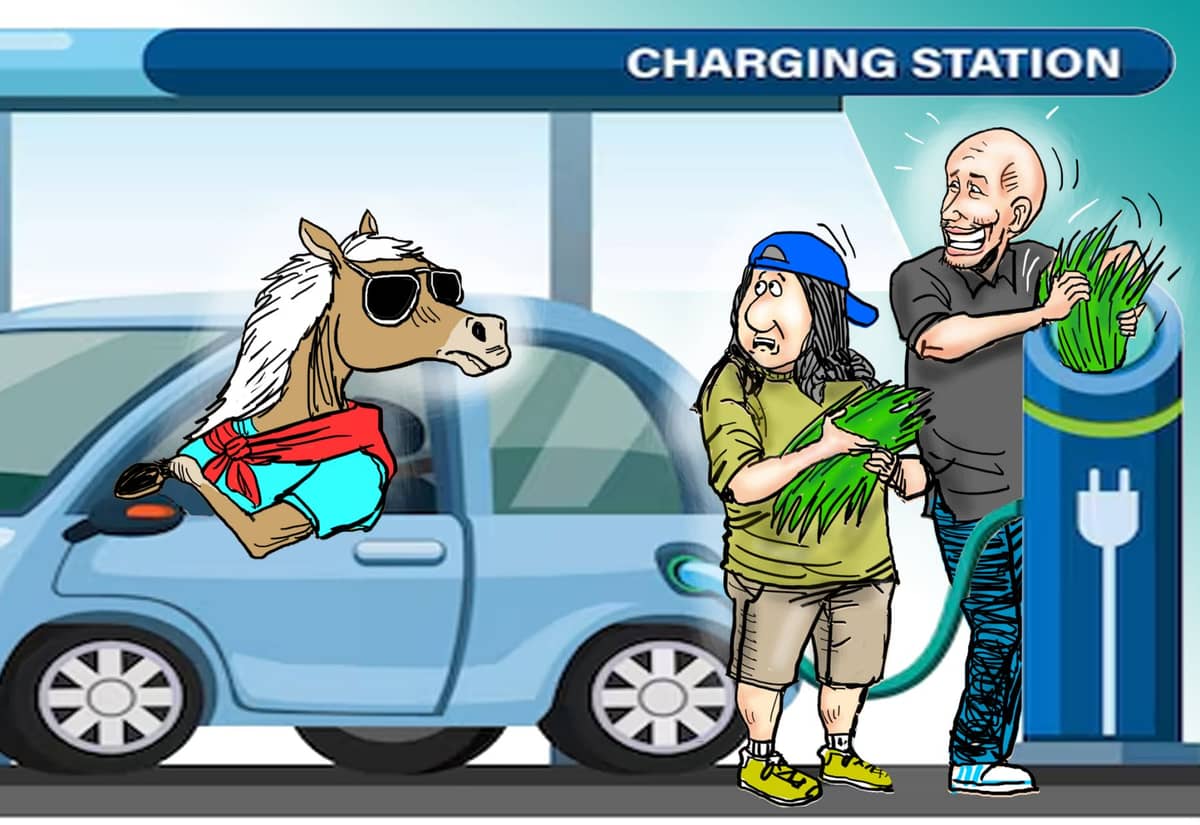
Illustration by Glenzkie Tolo
Some brands can adjust regenerative braking feel, refine adaptive cruise control behavior, or improve battery efficiency without replacing a single mechanical part.
That sounds convenient. It also means part of your ownership experience now depends on software support, not just oil changes and brake pads.
Buyers often focus on the advertised range. Hybrid and electric vehicles are part of this faster market, but the numbers on paper need context.
Take fast charging.
Public DC fast chargers in the Philippines are often rated at around 60 kW, with newer sites offering 120 kW to 150 kW. That figure is only the maximum.
Most EVs charge fastest between about 10 and 50 percent, then gradually slow down to protect the battery. Some cars can hold higher charging speeds longer before tapering off. Others reduce power early.
Therefore, two vehicles with similar charging claims can have very different real-world charging times during a typical 20 to 80 percent stop.
Battery cooling systems also make a difference in our climate. Liquid-cooled battery packs handle repeated fast charging better than simpler air-cooled designs.
In our case, where ambient temperatures regularly stay above 30 degrees, thermal management affects long-term durability.
Hybrids have their own version of stamina.
There is a difference between mild hybrid systems and full hybrids. A mild hybrid assists the engine but cannot run purely on electric power for meaningful distances. A full hybrid can move at low speeds on battery alone and can significantly reduce fuel use in heavy traffic.
That difference shows up in real-world fuel consumption, not just brochure numbers.
Then there is driver assistance.
Adaptive cruise control, lane keeping, and blind spot monitoring. These features rely on cameras and radar.
In clear conditions, many systems perform well. In heavy rain or on poorly marked roads, the capability varies. Processing power and sensor quality determine how confidently a system behaves.
This is where endurance matters.
A quick test drive can feel exciting. But after three or four years, good cooling, steady software updates, and a reliable electrical system matter more.
The Year of the Horse tells us that momentum is important. But a horse that sprints without control burns out.
The brands that will stand out this year are not just the ones that accelerate quickest or add the biggest display.
They are the ones that can sustain support, maintain reliability under heat and traffic, and keep improving the product after it leaves the showroom.
Speed draws attention.
Stamina builds trust.