
Phl, U.S. flex airpower in WPS live-fire drills
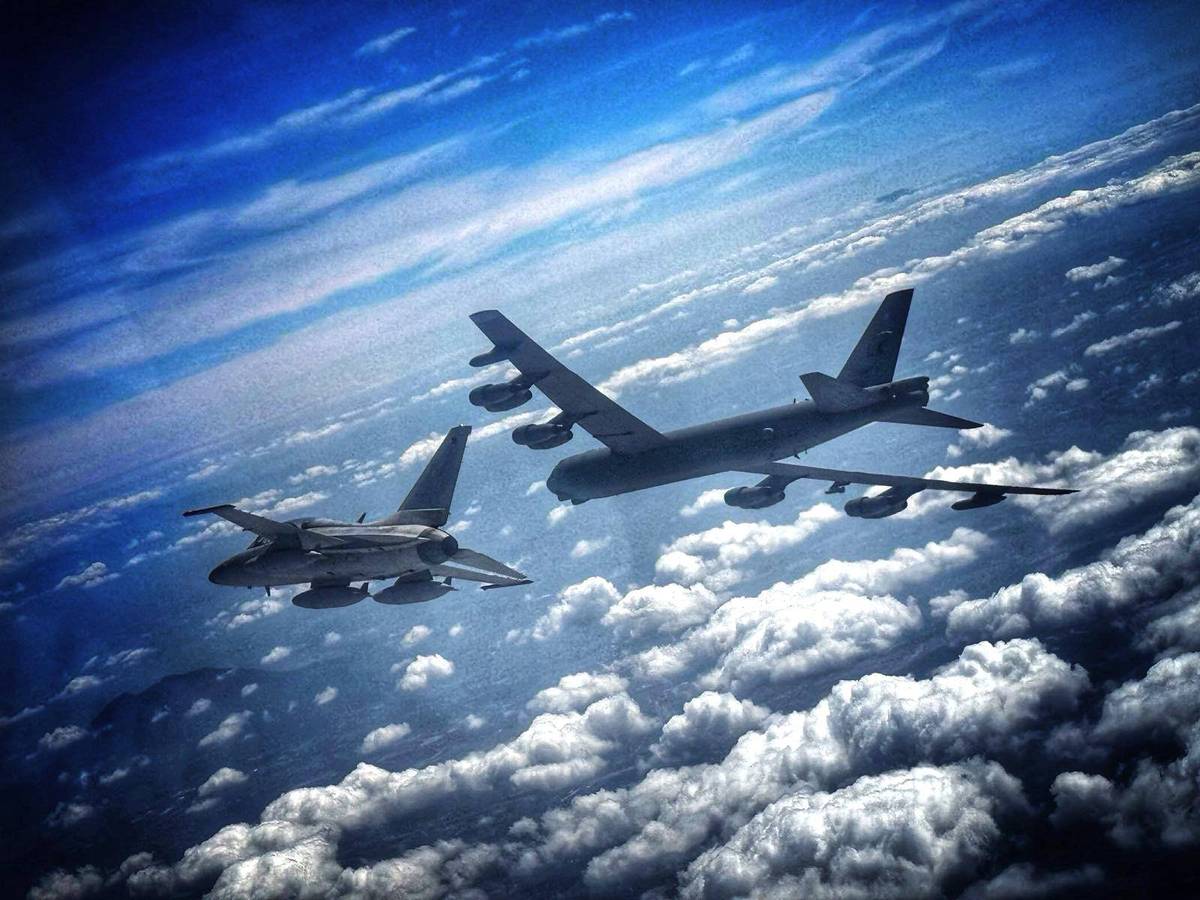
The exercise culminated with a Joint Bomber Air Patrol, as combined aircraft flew over the WPS and Luzon Strait in a demonstration of integrated mission planning and operational reach.


SIMULATION Combat air controllers from the Philippine Air Force and their American counterparts synchronize air-to-ground operations during the US-Philippine Live Drop exercise at Colonel Ernesto Rabina Air Base in Tarlac City.
Photographs courtesy of PAF
SIMULATION Combat air controllers from the Philippine Air Force and their American counterparts synchronize air-to-ground operations during the US-Philippine Live Drop exercise at Colonel Ernesto Rabina Air Base in Tarlac City.
Photographs courtesy of PAF
The Philippine Air Force (PAF) and the United States Pacific Air Forces (PACAF) flexed their combined airpower through a series of live-fire drills and joint bomber patrols over the West Philippine Sea (WPS) and the Luzon Strait.
PAF spokesperson Col. Ma. Christina Basco said Saturday that the two sides brought together FA-50PH fighter jets and US B-52 strategic bombers in coordinated missions across key locations, including the Colonel Ernesto Rabina Air Base (CERAB) in Tarlac City and contested waters west of Luzon.
The drills began with a Live Drop Exercise at CERAB, where FA-50PH aircraft worked alongside B-52 bombers in simulated strike operations, supported by joint planning teams from the US Special Operations Command Pacific and Marine Forces Pacific.
Aircrews also transitioned to an air defense scenario over the WPS, focusing on tighter airspace control, improved command-and-control coordination, and faster joint responses to potential threats.
The exercise culminated with a Joint Bomber Air Patrol, as combined aircraft flew over the WPS and Luzon Strait in a demonstration of integrated mission planning and operational reach.
Basco said the activities were designed to sharpen combat readiness and strengthen coordination between allied forces under realistic, multi-domain conditions.
“These activities enhanced bilateral interoperability, operational readiness, and strategic cooperation,” she said, adding that the exercises reinforced the country’s ability to safeguard national airspace and uphold sovereignty.