
BSP: Oil, AI gaps hurt Phl
Remolona said the Philippines should diversify its oil sources and establish strategic fuel reserves to reduce its exposure to supply shocks.
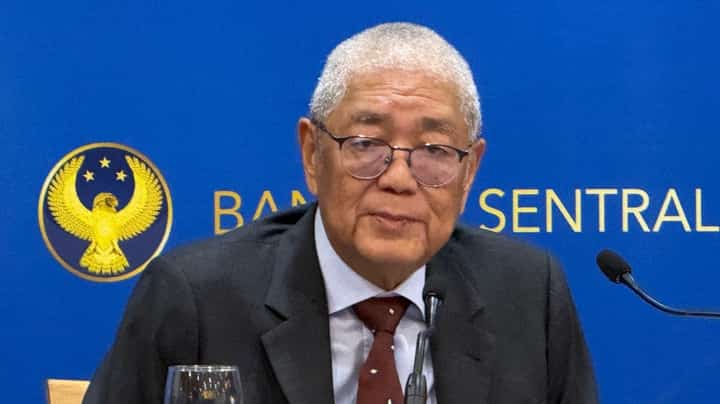
The Philippines’ higher inflation than its Southeast Asian neighbors reflects its dependence on imported oil and limited advanced artificial intelligence capabilities, Bangko Sentral ng Pilipinas Governor Eli Remolona Jr. told senators Thursday.
Remolona said the Philippines is more vulnerable to global oil supply disruptions than Indonesia and Malaysia, which maintain domestic oil resources and fuel stockpiles.
The Philippines imports 95 to 98 percent of its oil, mostly from the Middle East, leaving it exposed to price spikes and supply disruptions linked to the US-Israel war on Iran.
“We are the ones affected by the oil crisis. Unlike Indonesia, although they are still importing, they have oil. Same with Malaysia; they have oil, but they are importing a little. But us, we really don’t have oil,” Remolona said during the Senate Finance Committee’s hearing on the proposed 2027 budget.
He was responding to Senator Risa Hontiveros’ question on why Philippine inflation remained higher than in Malaysia, Thailand and Vietnam.
July inflation eased slightly to 6.2 percent from 6.4 percent in June, but remained above Malaysia’s 1.8 percent, Thailand’s 1.95 percent, Vietnam’s 4.4 percent and Indonesia’s 2.88 percent.
AI economies
Remolona said the Philippines should diversify its oil sources and establish strategic fuel reserves to reduce its exposure to supply shocks, particularly if fighting disrupts exports through the Strait of Hormuz.
He also cited the country’s limited advanced AI capabilities as another economic disadvantage.
“You can also divide economies into those that have AI, and those that don’t. We don’t have AI — at least not [advanced] AI — so economies that do have AI can compensate for the lack of oil. So in that sense, we are really at a disadvantage,” he said.
Remolona said the Philippines currently produces traditional, low-bandwidth semiconductors that are insufficient for advanced AI applications.
Asked by Senator Robin Padilla whether the US-led Pax Silica initiative could benefit the Philippines, Remolona replied, “If it materializes.”
H2 rebound
The BSP chief said inflation remains difficult to control because oil and other supply shocks are beyond the central bank’s direct control.
“Since the start of the war in Iran, oil prices have risen sharply. As a consequence, our energy prices and our food prices went through the roof. There is little the BSP can do about the price of oil,” he said.
Remolona said economic growth could recover in the second half, particularly in the fourth quarter, as government investments accelerate.
He attributed the second-quarter slowdown largely to a “collapse in government investment,” saying efforts to speed up spending could put growth “back on track” by the fourth quarter.