
Bounding for Bambanti
Isabela’s festival culminates with vibrant dances honoring farmers, local traditions and the iconic scarecrow.

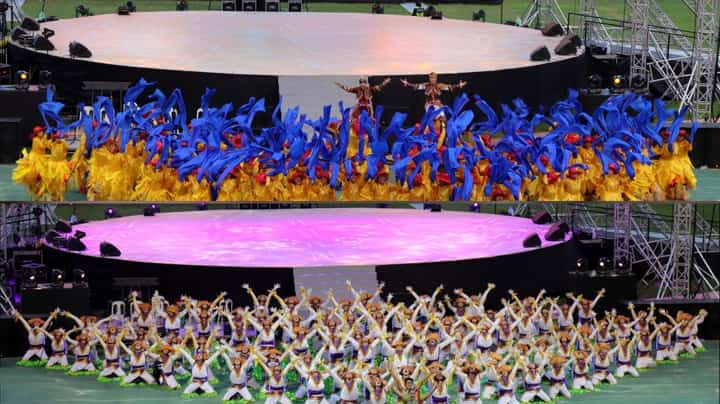
Rousing performance of the Ilagan City group and The Pinilisa Festival contingent of Jones declared Street Dance category first runner-up.
Photographs by Roel Hoang Manipon for DAILY TRIBUNE
The weather was brisk in late January at the northeastern part of the Philippines, and in spite of intermittent drizzle that fell throughout the province of Isabela, the provincial government pushed full throttle with the Bambanti Festival, a touristic celebration that has been held annually since 1997.
By late afternoon on 23 January, the rain finally let up. A rainbow appeared over the Isabela Sports Complex in Ilagan City as crowds gathered for the Bambanti Festival Street Dance and Showdown Competition, along with the Bambanti Musical — two of the culminating events of the eight-day festival.
Street dancing has become a staple of recently established festivals in the Philippines, inspired by Mardi Gras celebrations and the flamboyance of the Rio de Janeiro Carnival, but incorporating local themes. At the Bambanti Festival, performances follow a different format. Instead of parading through the streets, competing groups perform on the oval track of the sports complex for the street dance category, and later take to the main stage for the showdown.
Since the festival’s inception, the show has been directed by the festival’s creative director Nilo Agustin, who has emphasized the dance itself rather than relying heavily on large props or spectacle. The movements are modern jazz, blended with steps from the local festival dances of the participating towns and cities, as well as the Bambanti Festival steps inspired by the imagined movements of a scarecrow — bambanti in Ilocano.
The festival pays tribute to Isabela’s agricultural identity, honoring farmers and the scarecrow, a familiar and iconic presence in the province’s rice fields.
“Nakilala ang Isabela sa pagbibigay punyagi sa ating mga mauhusay, magagaling, masisipag na mga magsasaka dito po sa ating lalawigan ng Isabela. Nakilala tayo bilang number one sa agrikultura dahil po sa ating mga mahuhusay na mga farmers (Isabela is known for giving recognition to the dedication and perseverance of our skilled, capable, and hardworking farmers here in the province of Isabela. We are recognized as number one in agriculture because of our outstanding farmers),” said Faustino “Bojie” Dy III, congressman, speaker of the House of Representatives of the Philippines, and the festival director, in his opening speech during the event.
This year, 14 contingents from Isabela’s two cities and 12 municipalities took part in the competitions: Alicia with their Pagay Festival-Balitok ti Alicia; Jones with their Pinilisa Festival; Echague with their Mengal Festival; Ilagan City with their Mammangi Festival; Benito Soliven with their Sabunganay Festival; Luna with their Bato Art Festival; Dinapigue with their Hilada Festival; Roxas with their Pinakbet Festival; Santo Tomas with their Inatata Festival; Tumauini with their Mangi Festival; Cauayan City with their Gawagaway-yan Festival; San Pablo with their Baka Festival; Quirino with their Baraniw Festival; and Santa Maria with their Mabangga Festival.
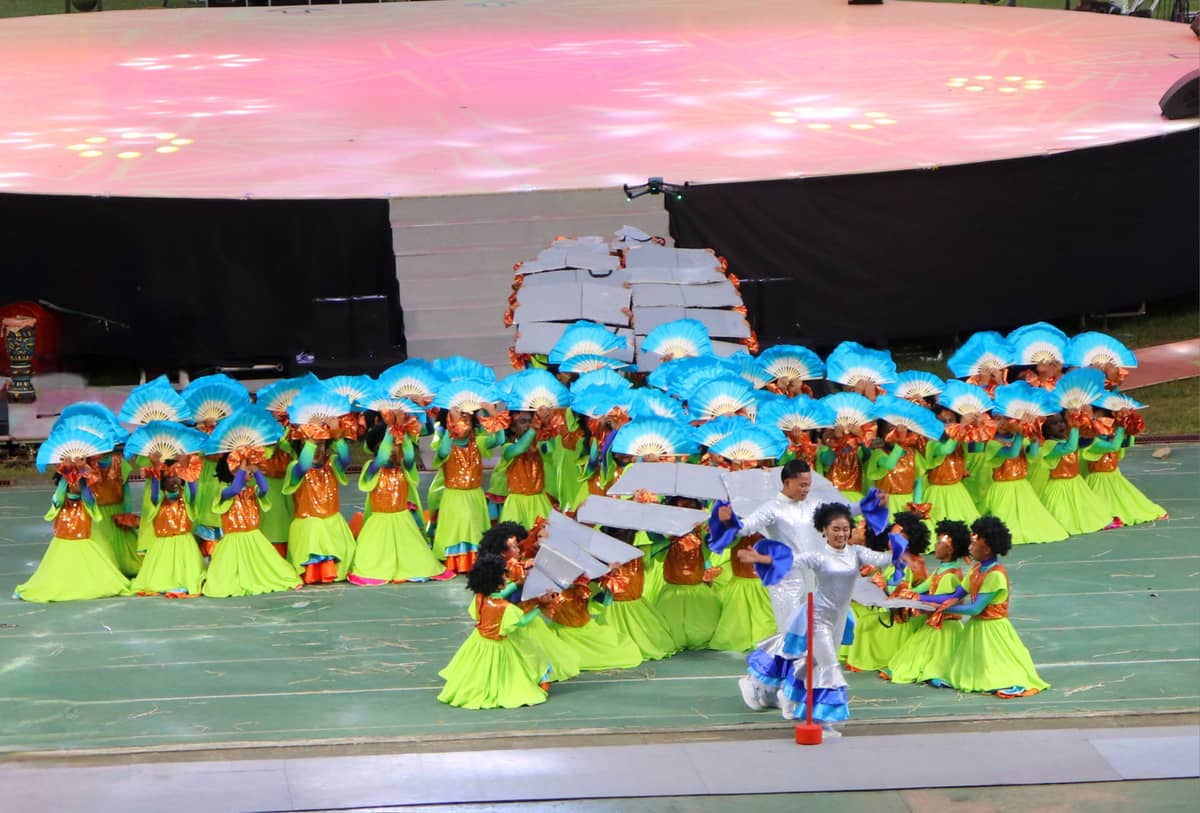
FISH-SHAPED formation of the Hilada Festival contingent of Dinapigue.
The second part of the program, the showdown, featured dance dramas created by each group, narrating local stories, legends and traditions. Echague’s Tribu Yogad, for instance, portrayed the story of Maranatu, who helped the Yogad people survive a season of drought. The contingent from Alicia highlighted the town’s devotion to Our Lady of Atocha, their patroness.
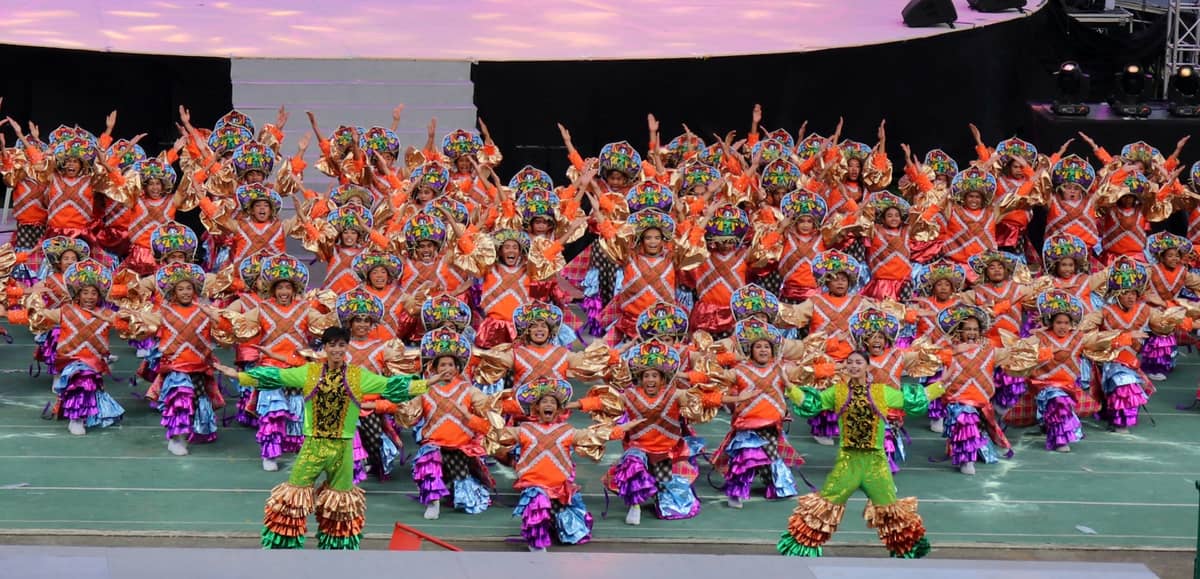
ECHAGUE’s Mengal Festival contingent adds colors to the event.
At the end of the competitions, Alicia was declared champion — its first win in six years — earning praise for its polished choreography and strong dance execution in both the street dance and showdown categories.
In the street dance category, Jones placed first runner-up, followed by Echague as second runner-up, Ilagan City as third runner-up and Benito Soliven as fourth runner-up.
For the showdown category, Echague emerged as first runner-up, Cauayan City as second runner-up, Roxas as third runner-up and Jones as fourth runner-up.