
Review: 'Sentimental Value' — A modern masterpiece on family and art


What is home? A house? In Sentimental Value, Joachim Trier’s masterpiece on family drama, a house is a witness to a family’s history, trauma, and grief. A space where the things we carry within ourselves somehow become part of the structure: the cracks, the old stove where voices l i n g e r a nd t e l l stories, the shivering sunlight cast on a wall. Trier builds his Norwegian drama, which won last year’s Cannes Grand Prix, around the idea that a home is an archive. In fact, it begins with a simple narration of a child’s essay about what it is like to be a house — when it feels heavy, lighter, empty, and when it loses sight of its inhabitants once they move beyond its line of “vision.”
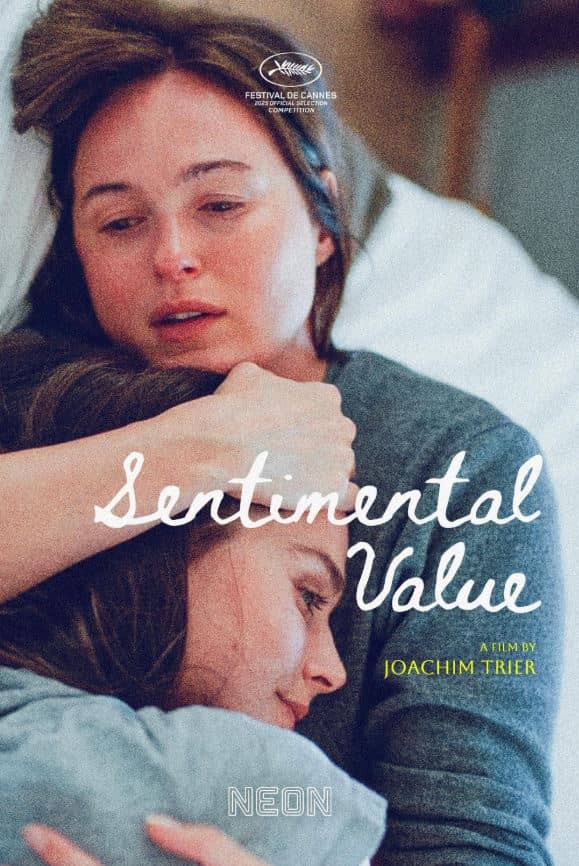
A MATURE and deeply moving family drama, ‘Sentimental Value’ navigates the complexities of human emotion with quiet precision, leaving an impact that lingers long after it’s over.
Photograph courtesy of Cannes Film Festival
The film tells the story of a broken family. It follows the reunion of Gustav Borg (Stellan Skarsgård), a renowned filmmaker, and his estranged daughters, Nora (Renate Reinsve) and Agnes (Inga Ibsdotter Lilleaas), after the death of his ex-wife.
While Nora, played with extraordinary restraint by Reinsve, is the central figure, the narrative also shifts to the points of view of Gustav and Agnes. Nora is a theater actress, and this choice is intentional, not decorative. Trier does not decorate his characters with professions, but assigns them with psychological precision. Nora’s work allows her to inhabit other people, other lives, other pain. Onstage, she can hide behind characters. Offstage, she remains guarded, fearful of intimacy, repeatedly drawn to emotionally unavailable men. And we understand why.
Unmarried and childless, Nora lives with panic attacks and depression — depicted here with painful accuracy. The film does not aestheticize her suffering or turn it into spectacle. Her anxiety simply exists, as it does in real life.
In fact, everything in the film is intensely real, intimate, and deeply empathetic toward its characters, with Trier and co-writer Eskil Vogt nailing the complexity of how lived experiences and childhood trauma shape who we become as adults.
Trier understands how our inner lives influence our outward paths, and how who we are professionally is inseparable from how we were built emotionally. Nora’s distance from others is not presented as a flaw to be corrected, but as a survival mechanism formed early, rooted in abandonment and emotional neglect.
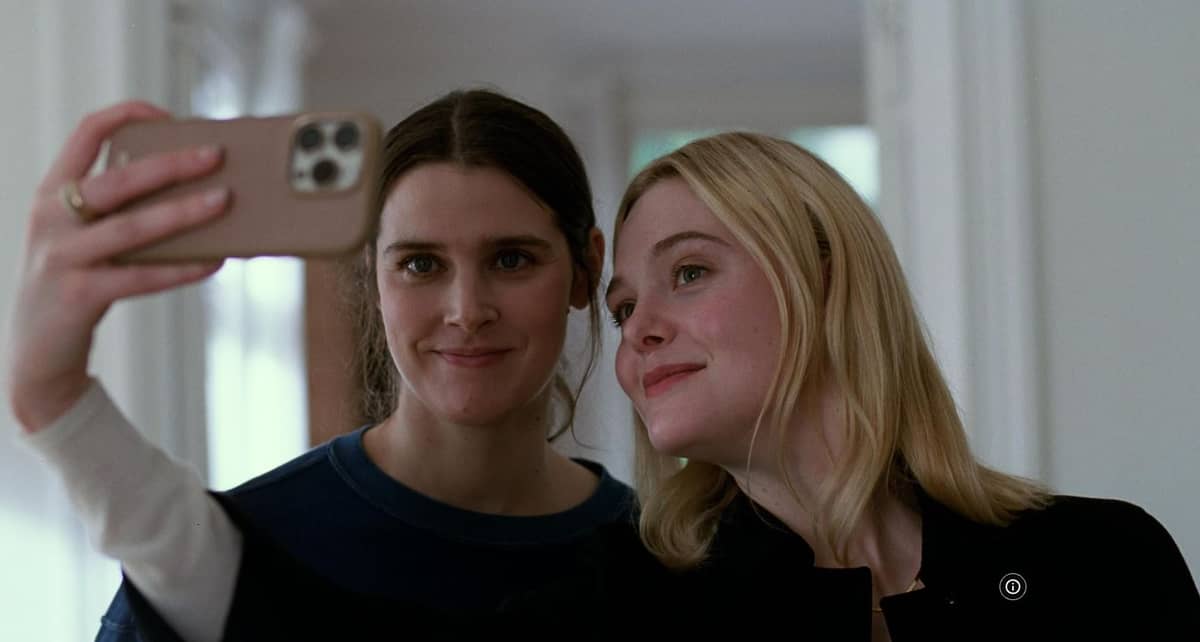
ELLE Fanning and Inga Ibsdotter Lilleaas in ‘Sentimental Value’ (2025).
Photograph courtesy of IMDb
The film uses flashbacks sparingly and with integrity. They are never manipulative. They simply provide necessary history, allowing the audience to assemble the emotional architecture of the family. What emerges is a portrait of fracture: a woman and a father broken by circumstances, even tracing back to the Holocaust era. A kind of generational trauma that sneaks in, creeps in, and calcifies in the soul, subconsciously passed on through generations.
How fully developed and rich the characters are. Nora, the eldest daughter, and her restrained rage born of loneliness and depression. There’s the creatively gifted father who is unable to communicate outside of his art.
As an audience, you sometimes question him, growing resentful of a father who is an artist before he is a father, who may see his family as nothing more than “projects.” But as the film progresses, we gradually understand Gustav as much as we understand Nora. And even as we feel that the damage within the family may be irreversible, we still hold on to hope.
It is also a film that deeply touches on mental health, portrayed with sophistication — harrowingly accurate yet never in-your-face. The progression of the film is so natural and effortless that you become absorbed from opening scene to end credits, often holding your breath, both devastated and healed.
This film, in essence, is about the language of love blended with the language of art and cinema. We glimpse the film industry, and it is not forced; it is part of the father’s psyche and identity. When he reluctantly casts a Hollywood American A-lister, Rachel Kemp (Elle Fanning), in his new project — because Nora, for whom he wrote the script, refuses the role — we see the pain of compromise. The need to bring a personal project to fruition, and the pain of having to compromise when you cannot get what you want: the actress you want, the cinematographer you want, the format in which your film will be screened.
Returning to the idea of the house, it also reflects the inner world of the family. We see Rachel, who deeply admires Gustav, work hard to understand her character, going as far as learning a Norwegian accent and repeatedly questioning Gustav about the main character. Yet she knows, deep in her soul, that she cannot understand the story the way it needs to be understood — because she is an outsider, a person looking into the home, who does not belong in that home.
It is with that integrity that she questions her suitability for the role. It is touching how reverent she is toward art and cinema, and toward preserving the integrity of the story and the intention of the artist. When she reads a crucial line from the script, we, as an audience, know she is not — and can never truly be — the right actress for Gustav’s role.
Sentimental Value received nine Academy Award nominations at the 98th Oscars, including Best Picture, Best Director, and Best Actress. It is not simply a family drama. It is an intimate examination of trauma, memory, and the power of art. It understands that pain is rarely isolated, that it echoes across generations, haunting the present even when the past remains unspoken.
Above all, the film affirms the power of cinema. Cinema here communicates when words fail. It makes us feel, recognize, and understand. It reaches into the deepest recesses of the subconscious and gives shape to what we cannot articulate.
Joachim Trier truly understands the human condition — and, more importantly, he trusts the audience to recognize it too. This is cinema as it should be: honest, restrained, compassionate, and devastating in its truth.
5 out of 5 stars
Showing in select cinemas until 3 February in the Philippines as part of FDCP Presents: A Curation of World Cinema.