
Plunder victims
This mass genocide happened in our time, but that should no longer come as a shock considering the news stories we still receive about Ukraine, Gaza and Trump’s ICE soldiers in masks shooting down unarmed civilians.

“Are we all human, or are some more human than others?”
This was a question Lt. Gen. Romeo Dallaire asked himself many times in the course of writing his book Shake Hands with the Devil: The Failure of Humanity in Rwanda, which he described as “a testament to the slaughtered.”
After seeing the murder of “over 800,000 Rwandans in only a hundred days,” he came home a broken, suicidal man, far from the “Cold Warrior” who was sent to Rwanda as force commander for the UN Assistance Mission.
Dallaire and his peacekeepers, some of whom lost their lives in the process of trying to “stem the tide” of violence in that African nation, failed in their mission, as he starkly remembered the blood and bone of hacked bodies, including those of babies.
This mass genocide happened in our time, but that should no longer come as a shock considering the news stories we still receive about Ukraine, Gaza and Trump’s ICE soldiers in masks shooting down unarmed civilians.
Humanity, even in peaceful, tropical islands like the Philippines, shows its dark side every now and then. More often than not, in fact, nowadays.
One is tempted to think, then, that with the current issues plaguing our corner of the world, we are also victims of extreme violence.
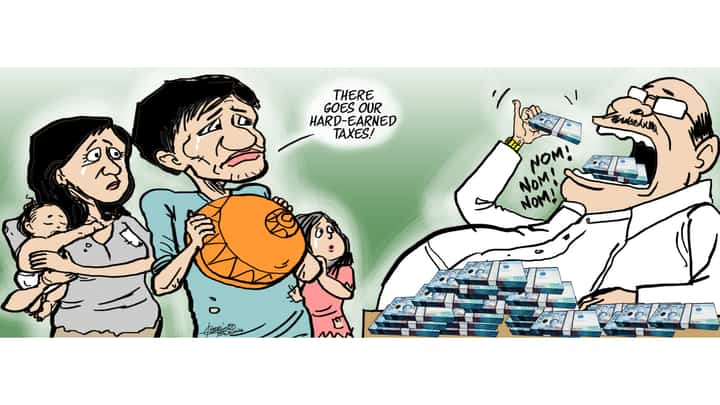
Endemic corruption in the form of anomalous government projects is a form of mass violence, not just a financial crime.
Last year’s P1.4-trillion flood control case, yet to move toward real accountability, shows how unchecked corruption has caused slow but sure death in the form of degraded systems and loss of lives from the denial of life-saving services.
When public funds are siphoned from infrastructure, healthcare, social welfare and education, people are denied their constitutional rights. Yet many hardly know this. Ignorance leads to a culture of impunity, where thieves and murderers are shielded and laws are rendered laughable.
When the cycle continues, the “crime” affects future generations, where potential is stunted, a nation is held back from progress and society becomes self-serving and resentful.
A survey early this month revealed 94 percent of Filipinos believe corruption is widespread, with many viewing it as a “national disaster” that destroys futures as effectively as a storm.
Accountability for the multibillion-peso flood control scandal in the Philippines is currently being pursued across three main groups: high-ranking government officials, private contractors and implementing agencies.
Yet confidence is low that justice will ever be achieved, with political dynasties and alliances offering a strong layer of defense for alleged perpetrators.
It will take much more than a series of investigations, impactful they may be on public sentiment, to take the Philippines out of the rut it finds itself in today.
Indifference — by leaders who are only concerned about their hold on power, and by people too cynical to demand change — will ensure we stay exactly where we do not want to be.