
The Roman Colosseum: Timeless persistence
Through the centuries, the Colosseum has lived many lives. Once spectacles ceased, it served variously as a cemetery, a place of worship, housing, workshops, a religious residence and a fortified stronghold.


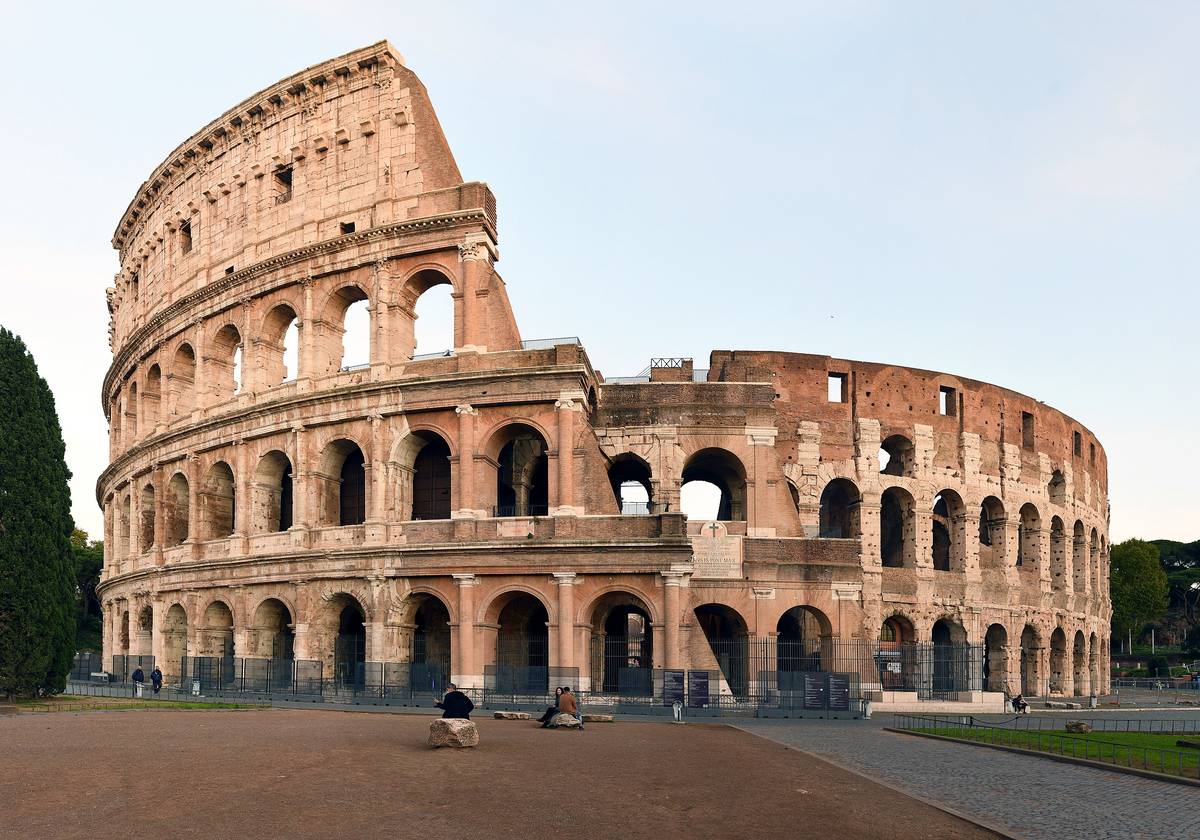
ROMAN Colosseum
Photograph by Edu Jarque for DAILY TRIBUNE
Ask the Romans —or for that matter, any Italian — what is the must-visit single structure while in Rome. The replies come quickly, almost instinctively — the Roman Colosseum!
Nearly two millennia on, it remains a constant reference point, anchoring the fabled capital to its distinct ancient roots.
But first, some history. Completed in 80 AD, the Colosseum is now 1,937 years old, an age that feels impossible to attain — yet we were there once again, in front of its still-commanding façade — we never seem to tire from it!
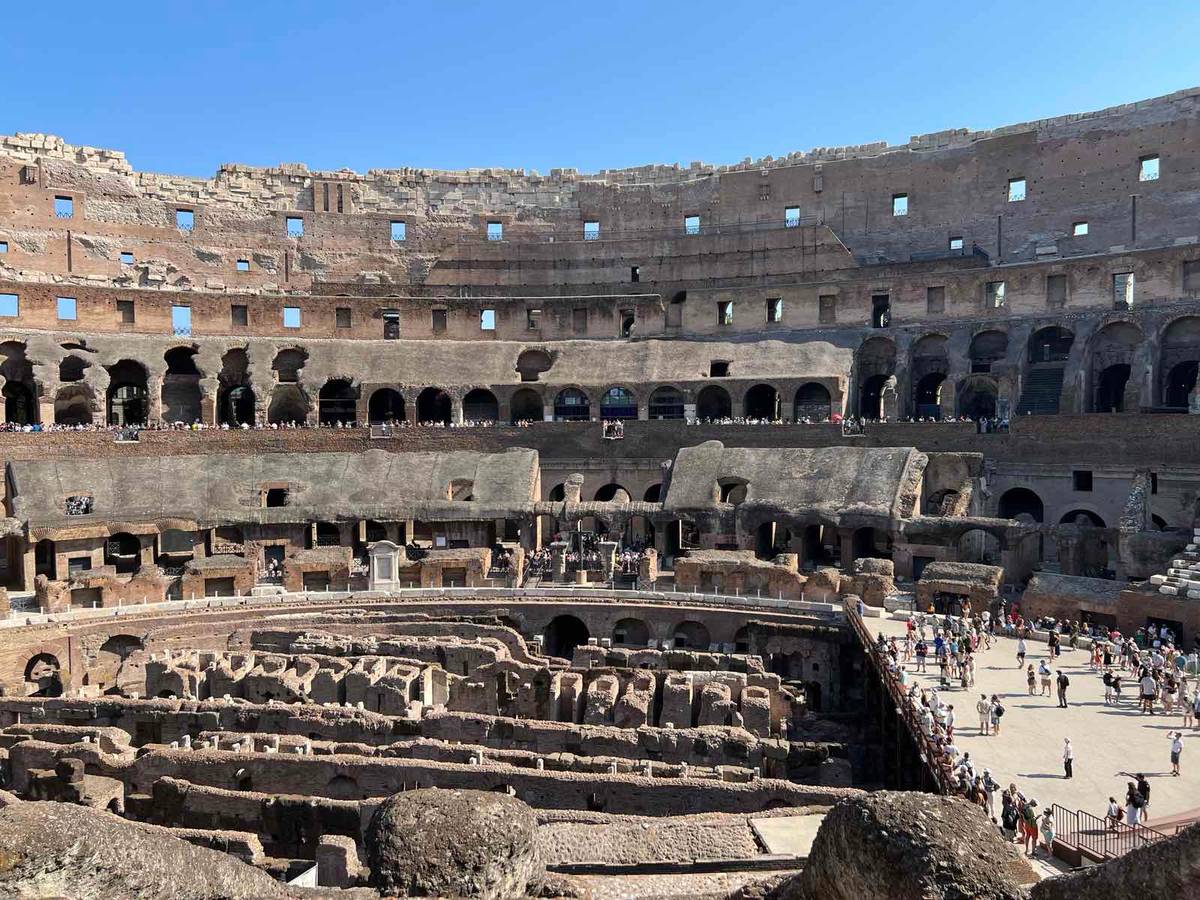
VISITORS converge over the grounds of the arena.
Photograph by Edu Jarque for DAILY TRIBUNE
Construction followed the Roman victory in the First Jewish–Roman War, a conflict that reshaped the empire and left deep scars across the newly-conquered territories.
After the sack of the Temple of Jerusalem, tens of thousands were enslaved and transported to Rome. Historians estimate between 60,000 and 100,000 of these captives labored on the structure which would become the largest ancient amphitheater ever built — and the largest standing in the world!
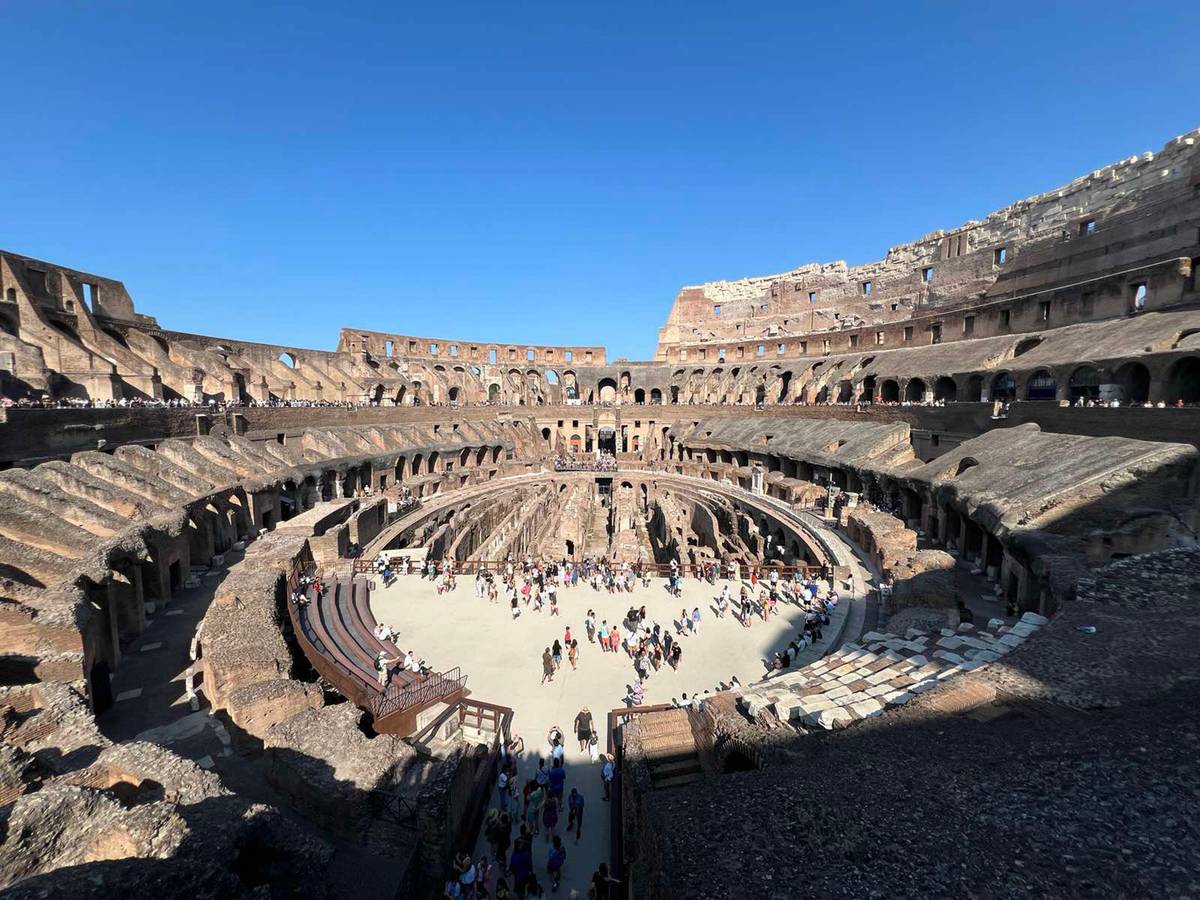
TOP-LEVEL view of the gladiatorial area.
Photograph by Edu Jarque for DAILY TRIBUNE
Originally known as the Flavian Amphitheater, it was commissioned by Emperors Vespasian, Titus and Domitian, members of the Flavian dynasty and successors of Nero. The name Colosseum likely came later, inspired by a colossal bronze statue of Nero which once stood nearby — itself modeled after the famed Colossus of Rhodes.
Architecturally, we read on site, the Colosseum remains a marvel of Roman engineering. Oval in shape, it measures 189 meters in length, 156 meters in width and rises 48.5 meters high, occupying roughly six acres of land. Its outer walls display three distinct levels of classical columns — Doric, Ionic and Corinthian — stacked in a deliberate progression.

THE author on the Roman platform.
Photograph by Edu Jarque for DAILY TRIBUNE
Walking along the aisles, each tier featured 80 arches, 76 of which were numbered with Roman numerals to guide spectators efficiently to their seats. Of the original ground-level arcs, sadly, only 31 survive today, forming the iconic silhouette recognized across the world.
At its peak, the Colosseum could seat between 50,000 and 80,000 spectators, drawn to events that defined Roman public life. Gladiatorial combats were the most famous, but the arena also hosted animal hunts, executions — including the notorious damnatio ad bestias. During its earliest years, it staged naval battles known as naumachiae, achieved by flooding the arena floor.
Over approximately 350 years of bloodsports, it is believed as many as 400,000 persons perished within its walls. These included gladiators, slaves, convicts, prisoners and volunteers.
Animals, too, were integral to the spectacle. Lions, tigers, leopards, elephants, buffaloes, hippopotamuses, bears, wolves, wild boars, hyenas and even crocodiles and giraffes were brought into the arena, either to be hunted or as instruments of execution.
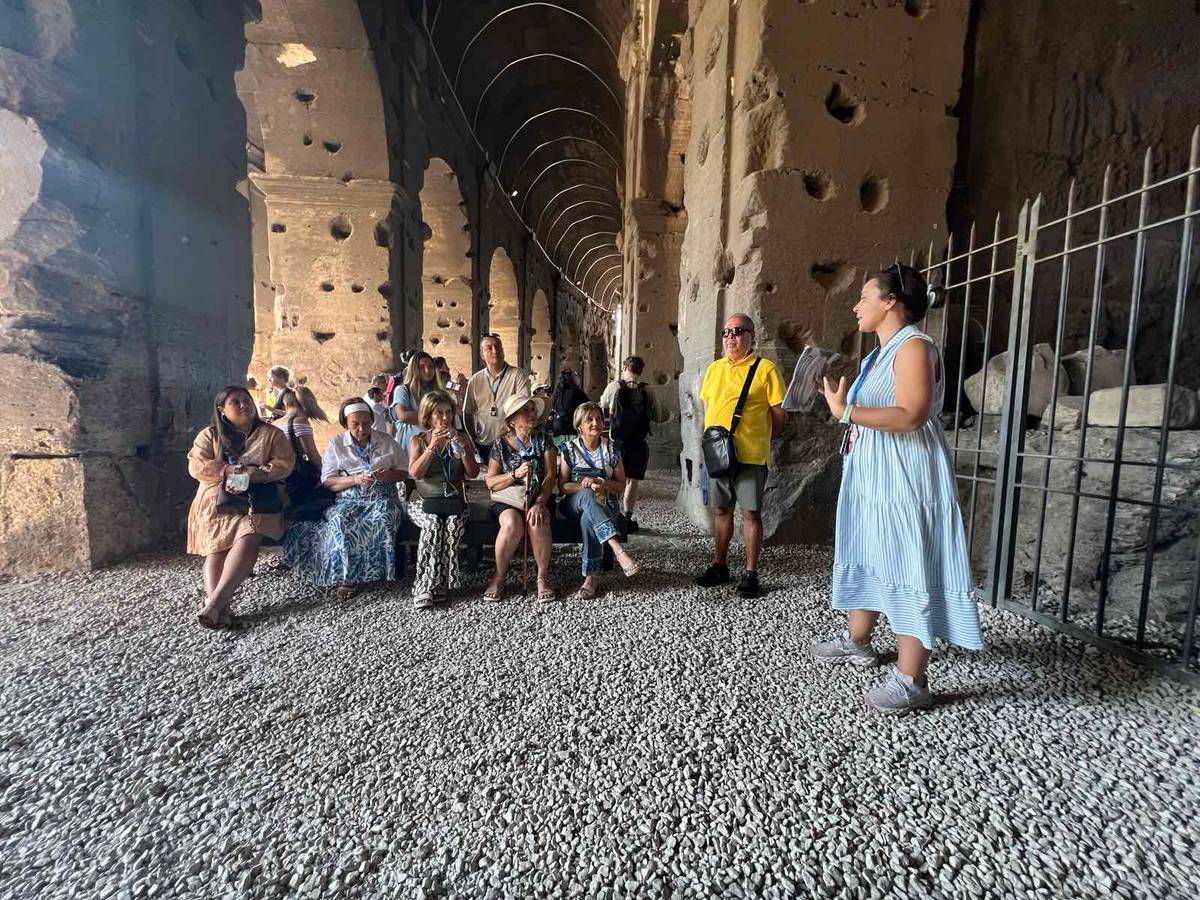
A TOUR guide explains the hypogeum to our travelling group.
Photograph by Edu Jarque for DAILY TRIBUNE
Yet popular imagination often exaggerates the chaos, mayhem, riots and pandemonium, misguided by films in the popular culture. As our academically-inclined, well-read tour guide patiently explained, gladiator combats followed strict rules, akin to modern-day boxing.
Fighters were classified by size and style, matched up according to experience and record, overseen by referees, with physicians on standby. Combats did not always end in death. Successful gladiators would become celebrated figures, sustaining long careers despite frequent losses. The bloody violence was real and often fatal — but it was controlled rather than indiscriminate.
Though this was off limits, beneath the arena lay the hypogeum — a dark underground labyrinth of tunnels and chambers where gladiators, prisoners and animals waited nervously before emerging into the light. We soon learned 80 vertical shafts connected this underworld to the arena above, supported by trap doors and mechanical lifts, which allowed scenery and creatures to suddenly appear, heightening drama and suspense.
Through the centuries, the Colosseum has lived many lives. Once spectacles ceased, it served variously as a cemetery, a place of worship, housing, workshops, a religious residence and a fortified stronghold.
Fire has struck it at least three times. Earthquakes have damaged it no fewer than four. Repairs and reconstructions have marked its long existence. Today, it is now a monument for visitors and draws over seven million people each year, a figure that has risen sharply as global travel continues.
Oh yes, it still stands — weathered, incomplete, yet resolute. And if history is any indication, persist it shall continue.