
More than preserving flavor: Bohol’s asin tibuok making inscribed in UNESCO’s Urgent Safeguarding list


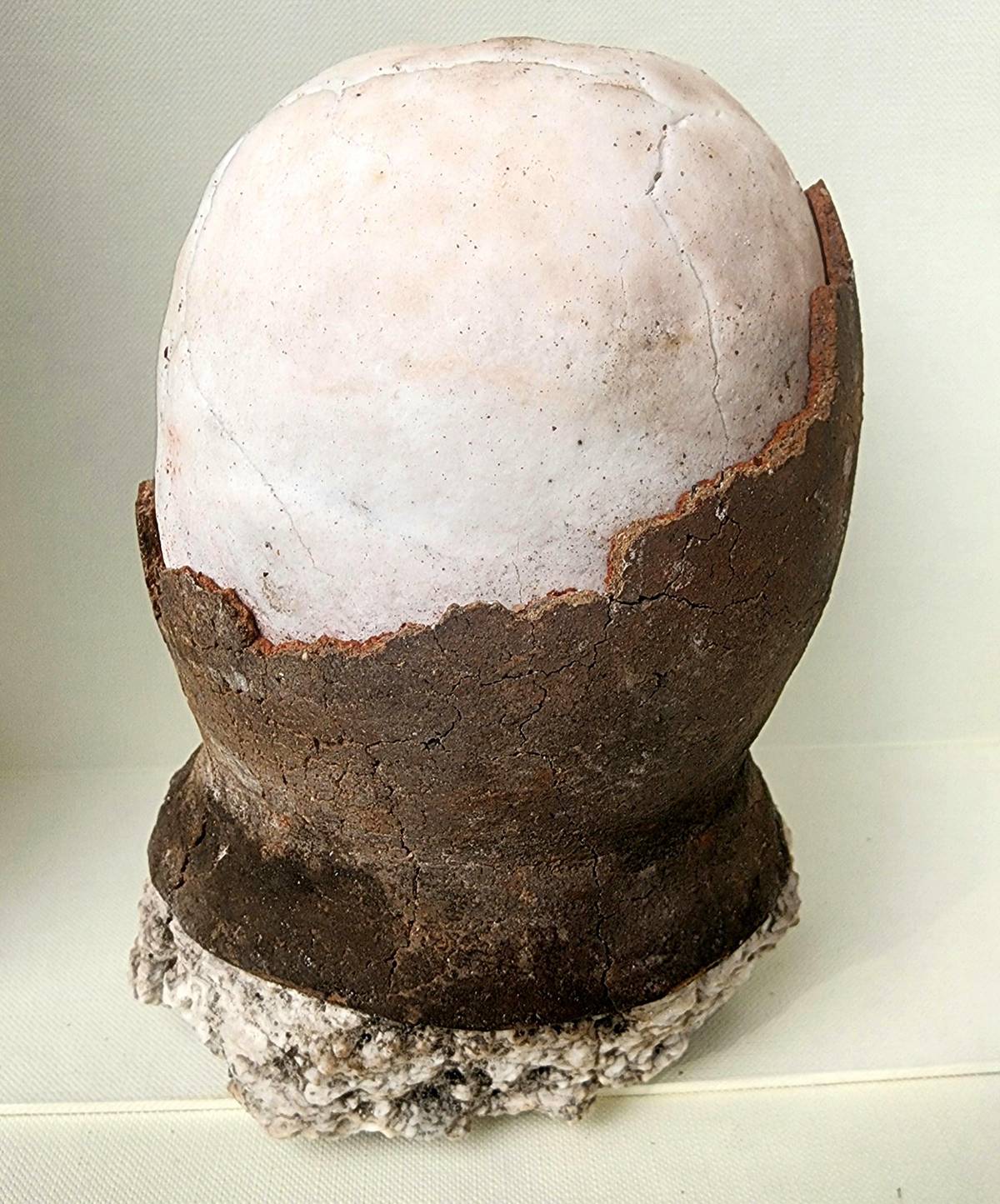
BOHOL'S asin tibuok
A critically endangered, tradition Philippine saltmaking took the global spotlight on 9 December as the United Nations Educational, Scientific and Cultural Organization (UNESCO) officially inscribed the practice of making asin tibuok—the artisanal sea salt of Alburquerque, Bohol—into the List of Intangible Cultural Heritage in Need of Urgent Safeguarding during the 20th session of the Intergovernmental Committee on the Safeguarding of the Intangible Cultural Heritage, happening from 8 to 13 December in New Delhi, India.
The decision is considered historic as asin tibuok making becomes the first food-processing practice from the Philippines to be recognized in any UNESCO intangible cultural heritage list.
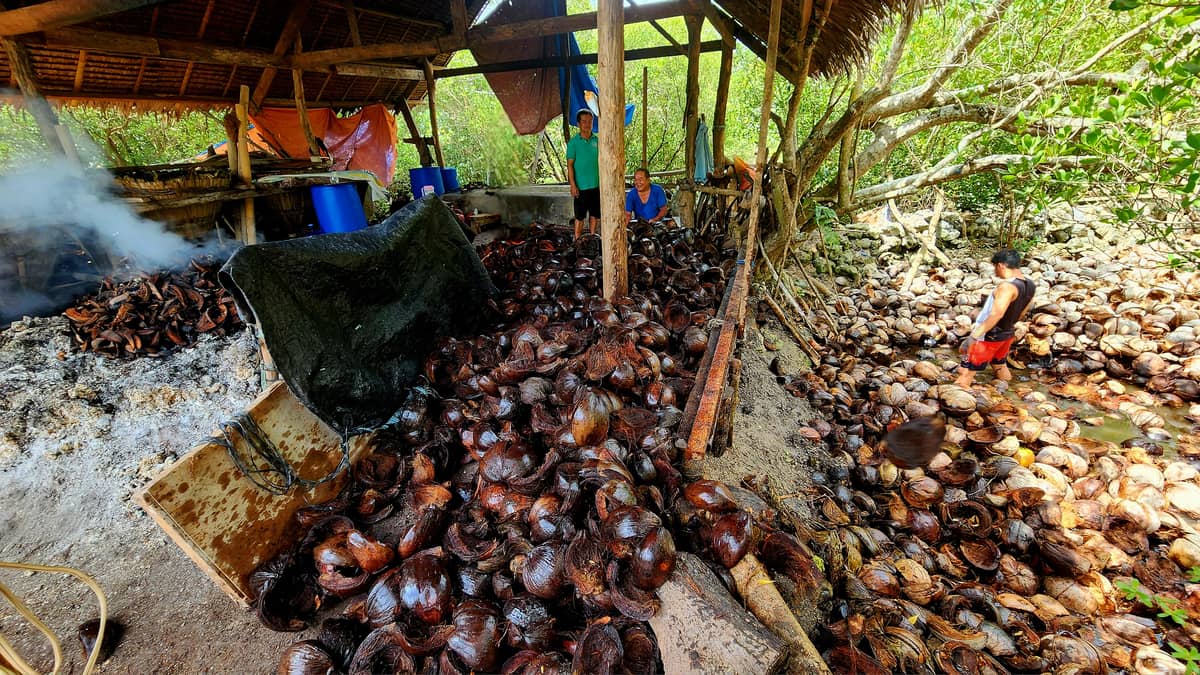
DRY coconut husks are soaked in seawater for several months.
For most of the twentieth century, asin tibuok — documented as early as the 17th century and once referred to as “sal de Bisayas” by early Spanish chroniclers—was produced in several coastal towns in Bohol Island. Over time, however, the demanding labor, lack of interest, and changing livelihoods led to its decline. By the early 21st century, the practice had nearly disappeared. Only about four or five families in Alburquerque, most concentrated in the barangay of Santa Filomena, continued the laborious process: soaking discarded coconut husks in seawater for months, burning them into mineral-rich ash, filtering the brine, and slowly cooking it in handmade clay pots until salt is formed in its signature egg-shaped block.
The passage of the ASIN Law in 1995, which limited the market for non-iodized salt, compounded the decline. Younger generations sought less strenuous jobs. Clay-pot makers—indispensable partners in the craft—also dwindled, threatening the survival of the entire production chain.
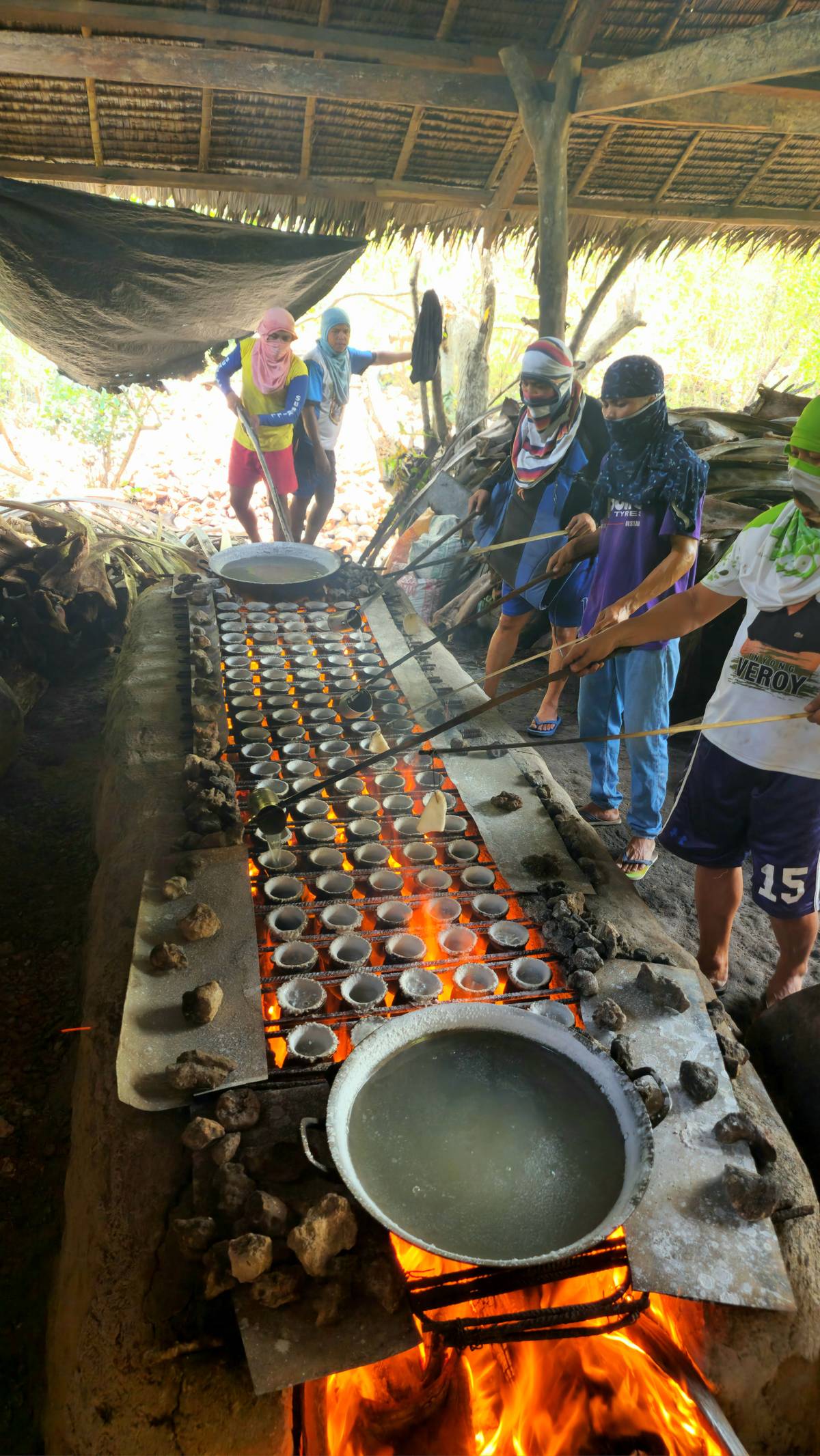
WORKERS cook the brine at the oven to make salt.
In recent years, however, asin tibuok, which literally means “whole” or “unbroken salt” in Cebuano, began to attract renewed attention from travelers, their imagination captured by the salt’s striking form, reminding them of something “primeval.” It also piqued the interest of cultural workers, heritage advocates and chefs and cooks seeking “authentic” Filipino foodways. This growing appreciation brought visibility to asin tibuok and sparked a sense of pride within the community. The craft—once seen as an arduous, fading livelihood—was rediscovered as a cultural emblem of resilience, creativity and memory. This revival remained modest and gave the practice just a longer lease on life. Thus, local and national agencies began to rally behind its safeguarding.
Building on this momentum, the UNESCO National Commission of the Philippines (Unacom), the National Commission for Culture and the Arts (NCCA), the National Museum of the Philippines (NMP)-Bohol, the provincial government of Bohol, the municipal government of Alburquerque, the Bohol Arts and Cultural Heritage Council and the salt-making families jointly prepared the UNESCO nomination, affirming that safeguarding the making of asin tibuok required urgent, collective action.
Under the 2003 Convention, UNESCO maintains three mechanisms for recognizing and safeguarding living heritage: the Representative List of the Intangible Cultural Heritage of Humanity, which celebrates cultural diversity and raises awareness of heritage; the List of Intangible Cultural Heritage in Need of Urgent Safeguarding for practices and traditions at risk of disappearing; and the Register of Good Safeguarding Practices, highlighting exemplary programs for heritage transmission.
The Philippines already has six inscribed ICH elements: the hudhud chants of the Ifugao (inscribed in 2008), the Darangen epic of the Meranaw people of Lake Lanao (2008), the Punnuk tugging game of the Ifugao (2015), and Aklan piña handloom weaving (2023) in the Representative List of the Intangible Cultural Heritage of Humanity; the Subanen ritual buklog (2019) in the Urgent Safeguarding list; and the School of Living Traditions (2021) in the Register of Good Safeguarding Practices. Asin tibuok making is the seventh inscription for the country.
In his message, NCCA chairman Victorino Mapa Manalo said the inscription “honors not only the skill and devotion of our Boholano salt makers but also affirms the centuries-old wisdom passed down through our ancestors.” He added that at a time when modern industry overshadows many traditional practices, UNESCO’s recognition “strengthens our resolve to protect and revitalize the knowledge systems that have shaped Filipino identity.”
Senator Loren Legarda, a heritage advocate, underscored the deeper meaning of the inscription, noting that asin tibuok affirms “a knowledge system that has traveled across generations and across communities throughout the Philippine archipelago, sustained by memory, skill and care.” She emphasized that the practice reflects “the continuity of Filipino ingenuity and patience amidst disruption and uncertainty”
The National Museum of the Philippines likewise celebrated the inscription, calling it “a well-deserved and long-overdue recognition for Alburquerque’s mang-asinay (salt makers), whose dedication has kept this important heritage alive across generations.” They also stressed the role of salt potters, “whose skilled hands shape the very vessels that make traditional salt-making an enduring facet of Bohol’s heritage.”
“The recognition calls the National Museum of the Philippines to work ever more closely and deeply with the community of salt makers and salt potters, to support the industry, uphold and affirm their place as important economic and social drivers, and strengthen appreciation for this distinct intangible cultural heritage,” they added.
More than a honor, the inscription is a commitment to safeguarding. A five-year safeguarding plan was developed focusing on strengthening community participation, revitalizing intergenerational transmission, securing environmental resources, and ensuring economic sustainability.
“Together, we must ensure its survival, not only as a livelihood but as a living testament to the resilience, identity and shared memory of the people of Alburquerque, Bohol and the entire Philippines,” the NMP emphasized.
For the salt makers and their communities, the UNESCO inscription, as Legarda said, “offers communities a platform to be seen, valued and supported.” For Bohol and for the nation, this a grand way of bringing heritage back from the brink, and given new life on the world’s cultural map.