
Eyes on the Sea conference pushed community maritime monitoring


From left to right: • H.E. Marc Innes-Brown PSM, Ambassador of Australia to the Philippines • H.E. Catherine McIntosh, Ambassador of New Zealand to the Philippines • H.E. Lai Thai Bing, Ambassador of Vietnam to the Philippines • Mr. Don McLain Gill, Non-Resident Fellow of the Stratbase ADR Institute and Lecturer at De La Salle University
Amelia Clarissa de Luna Monasterial for Daily Tribune
MAKATI CITY — The West Philippine Sea remains one of the Philippines’ most critical maritime regions, supplying an estimated 11 percent of the country’s marine captured fisheries and sustaining the livelihoods of roughly 300,000 fisherfolk. These waters are not only crucial for national food security but also for the economic and social stability of coastal communities.
However, the West Philippine Sea faces increasing environmental and security challenges. Unregulated activities, maritime intrusions, and unilateral measures such as fishing bans and the creation of so-called “nature reserves” have disrupted traditional fishing practices, degraded marine habitats, and placed additional pressure on local communities. Strengthening maritime governance while empowering those directly affected has emerged as a key strategy for sustainable management.
The conference “Eyes on the Sea: Community-Based Maritime Monitoring and Reporting in the West Philippine Sea,” held on 01 December 2025 at the Manila Polo Club in Makati City, brought together government officials, diplomats, academics, and fisherfolk leaders to explore how local communities can play a central role in safeguarding the country’s maritime territory. The event emphasized community-based monitoring, fisherfolk networks, and local ecological knowledge as integral to broader maritime security and governance.
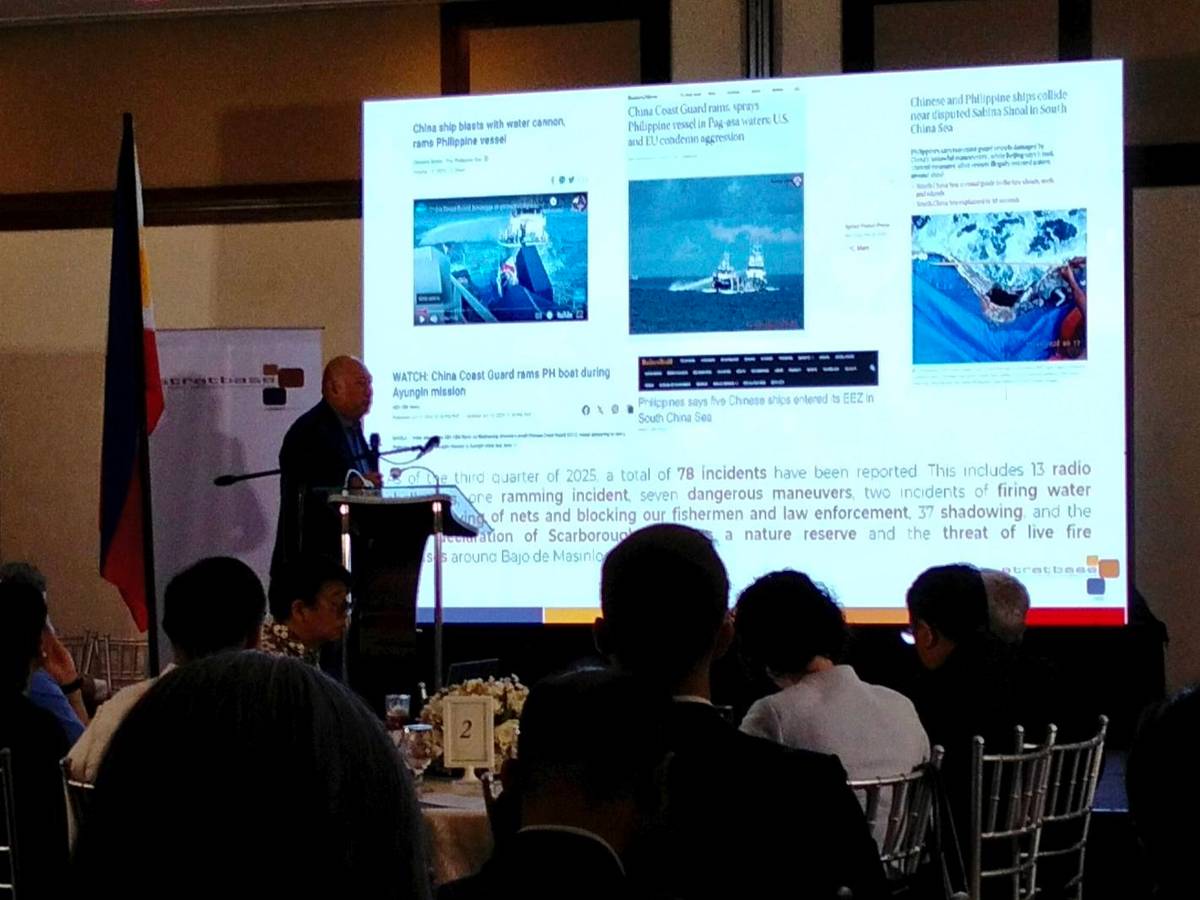
Professor Victor Andres "Dindo" Manhit, President of the Stratbase Institute, reports that a total of 78 incidents have been reported in the West Philippine Sea as of the third quarter of 2025.
Amelia Clarissa de Luna Monasterial for Daily Tribune
Community-based vigilance and national security
Philippine maritime territory is roughly seven times larger than its land area, and panelists highlighted the necessity of proactive local participation in reporting and monitoring. Fisherfolk were recognized as frontline responders, providing daily observations on fishing activity, vessel movements, and ecological changes. These efforts complement satellite technology and naval operations, allowing authorities to respond more effectively to incursions and environmental risks.
As of the third quarter of 2025, a total of 78 incidents had been reported in the West Philippine Sea, illustrating the ongoing challenges faced by coastal communities. Satellite mapping revealed significant Chinese presence around strategic locations, including Bajo de Masinloc, Scarborough Shoal, Sabina Shoal, and Kagitingan Reef. Some reefs claimed by the Philippines show fully developed Chinese bases, while vessels are observed circling traditional fishing areas. Satellite tracking using Automatic Identification Systems (AIS) is limited by “dark vessels” turning off their transponders, making community reporting even more vital for real-time situational awareness.
Fisherfolk have faced harassment when attempting to access traditional fishing grounds and have experienced additional hardships from climate-related events and typhoons. Programs such as Fish Right have provided radio communication systems, support in processing official documentation, and satellite offices to ensure safer operations and better coordination with the Philippine Coast Guard. Panelists emphasized the importance of safety, security, and dignity for local communities, alongside strengthening their sense of ownership and role in maritime protection.
Strategic approaches to maritime security
Panel discussions outlined two primary approaches to securing the West Philippine Sea. The first involves diplomatic strategies: asserting Philippine rights through legal frameworks, international law, and coordinated multilateral engagement. This approach emphasizes partnerships, regional cooperation, and the use of scientific and satellite data to inform legal and diplomatic claims.
A contrasting approach, sometimes described as “escalate to deescalate,” focuses on tactical, resource-based responses to maritime challenges. Experts highlighted scenarios in which the temporary withdrawal of foreign vessels during typhoons could provide opportunities for Philippine authorities and fisherfolk to assert control over strategic areas such as Scarborough Shoal. These measures would require robust preparation, fast communication between fleets, and strategic positioning, acknowledging that the Philippines cannot match larger adversaries in direct confrontation but can act decisively in targeted, time-sensitive situations.
Panelists emphasized that both approaches require well-trained, empowered local communities, strong coordination with the Coast Guard, and the development of maritime capacity before material investments. Fisherfolk are considered active participants in enforcement and monitoring rather than armed personnel, providing immediate reporting, ecological observations, and consistent presence in Philippine waters.
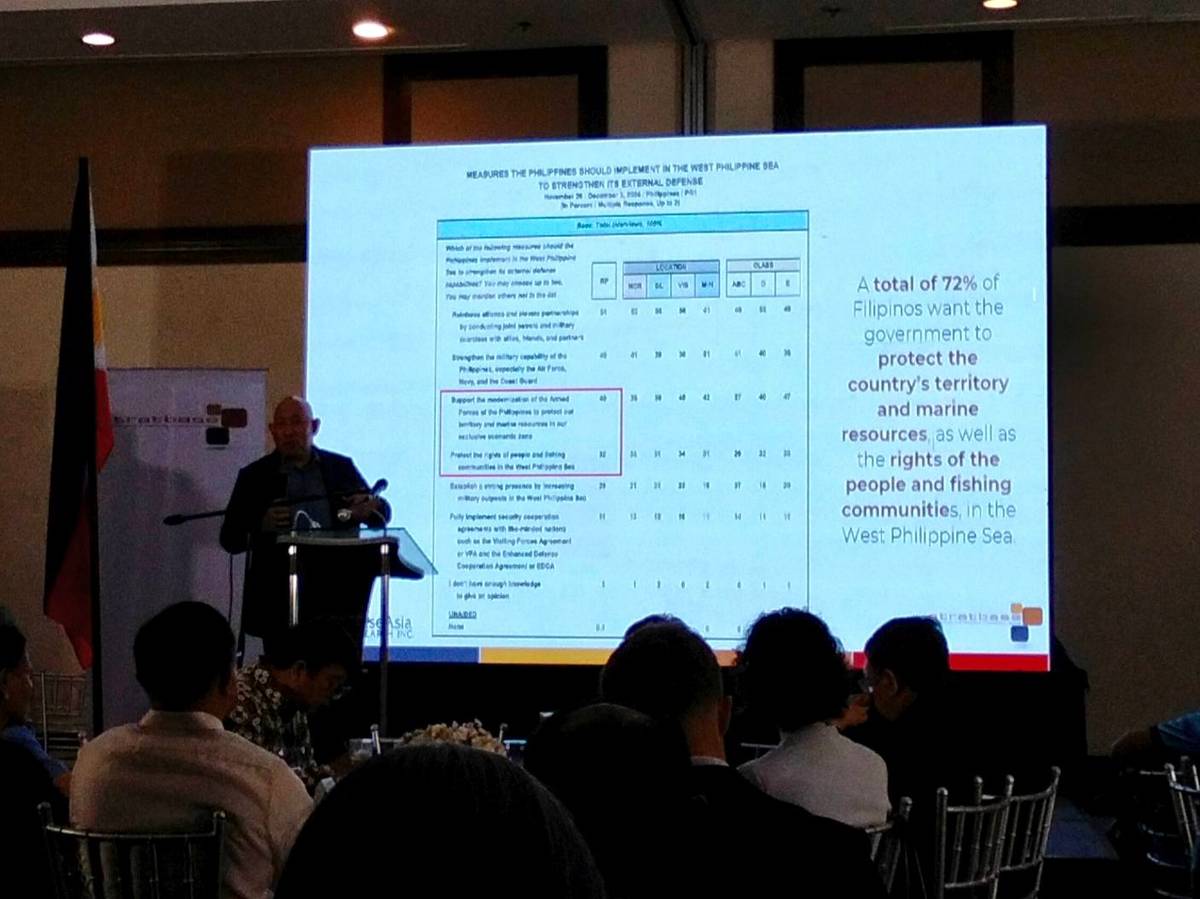
Professor Victor Andres "Dindo" Manhit, President of the Stratbase Institute, shares that a majority of Filipinos wants the government to protect the country's territory.
Amelia Clarissa de Luna Monasterial for Daily Tribune
Satellite mapping and the evolving maritime picture
Scientific presentations revealed how satellite technologies are being used to track vessel activity, ecological changes, and territorial developments. Dr. John Walsh, Professor of Oceanography from the University of Rhode Island, explained how Automatic Identification Systems (AIS) help track ships, although many so-called dark vessels deliberately switch off their transponders. Satellite mapping has recorded persistent clusters of Chinese vessels circling Bajo de Masinloc and continued development on reefs long claimed by the Philippines, including a fully built-up Chinese base on Kagitingan Reef.
Experts identified areas for both immediate and long-term action. In the short term, technology can help locate distressed fisherfolk, identify threats, and guide safe access routes for local fishermen. In the long term, satellite-based assessments can inform strategic planning, reveal China’s operational patterns, and provide evidence for diplomatic or legal proceedings. Fisherfolk are treated as partners, leveraging ecological knowledge of fish stocks, habitats, migration patterns, diets, and historical trends to improve maritime domain awareness.
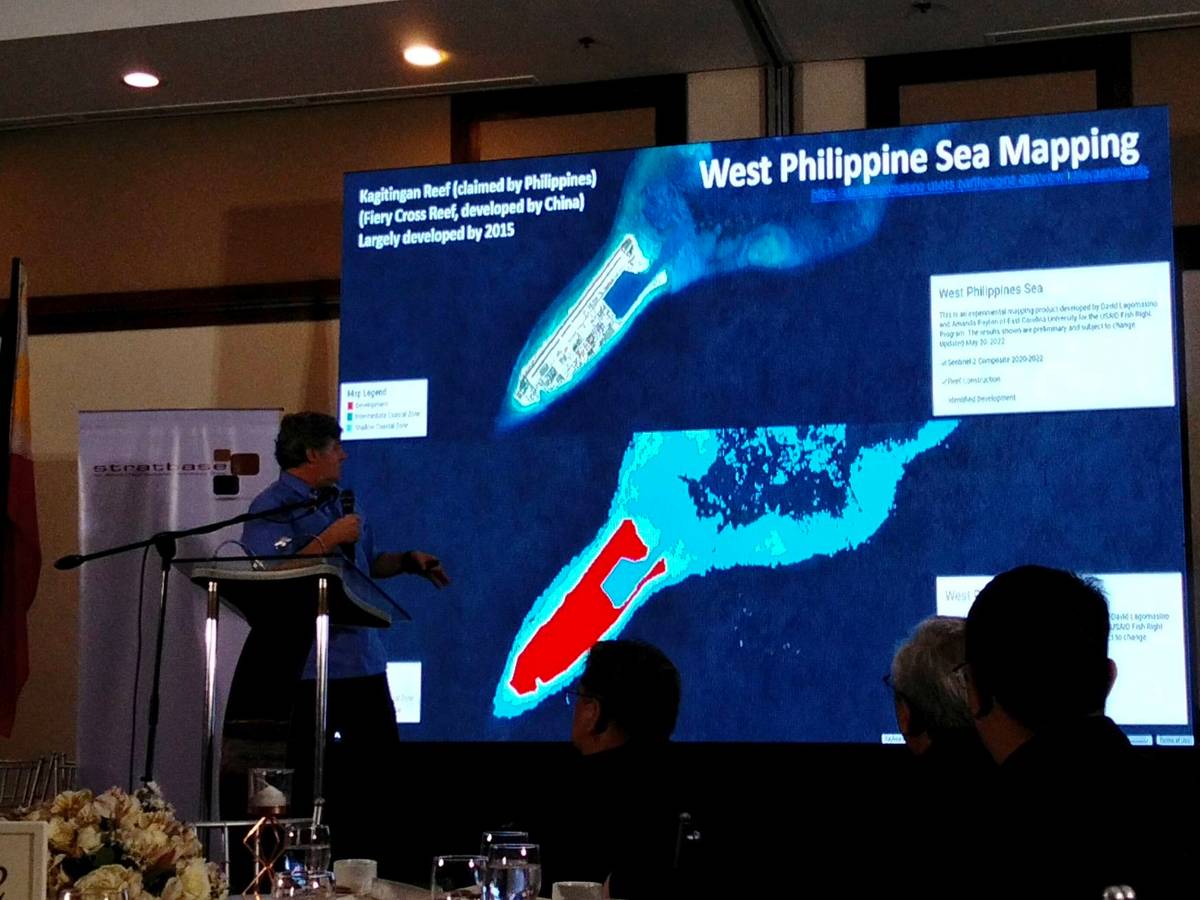
The Kagitingan Reef claimed by the Philippines shows developed Chinese activity through satellite mapping. The part highlighted in red is now a fully-developed Chinese base in Philippine territory.
Amelia Clarissa de Luna Monasterial for Daily Tribune
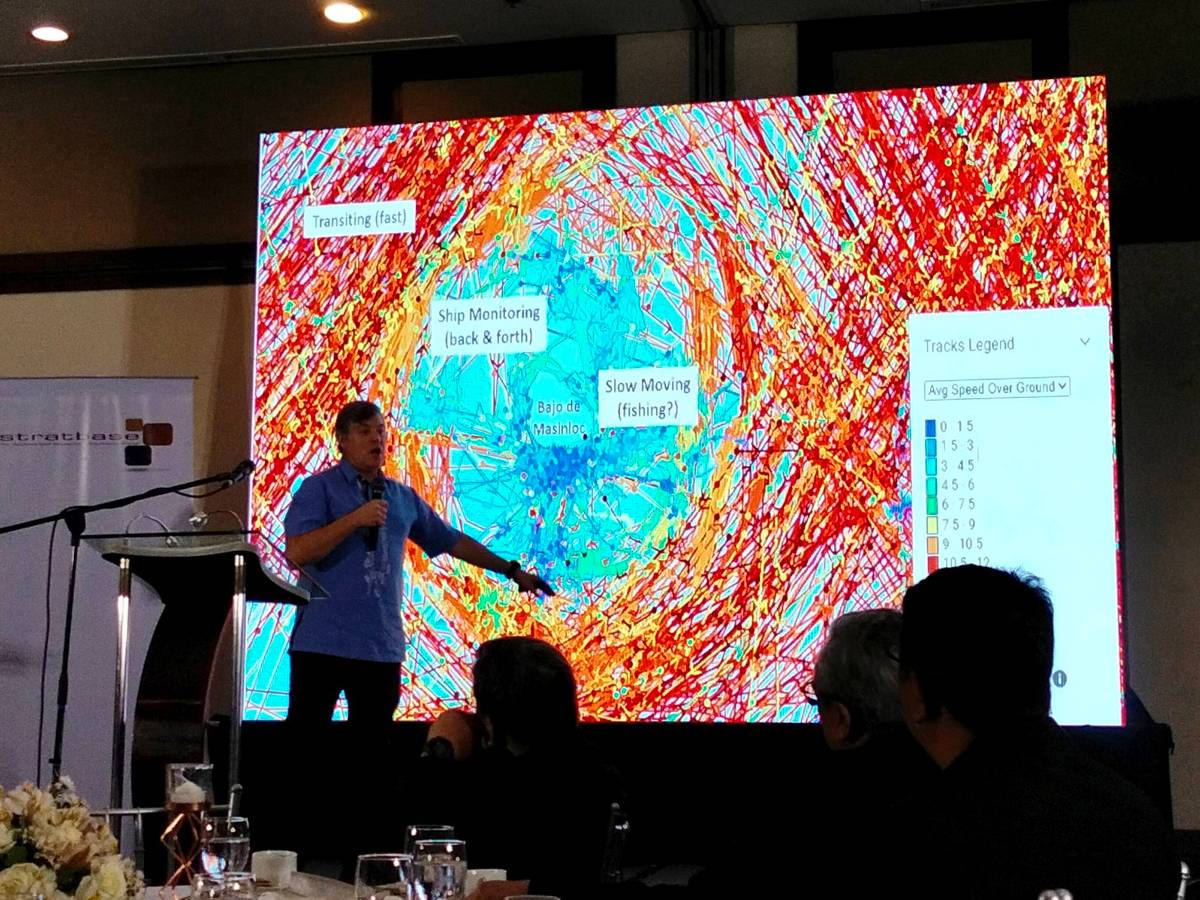
Satellite mapping tracks vessel activity. This slide shows that an alarming number of Chinese vessels are circling Bajo de Masinlor.
Amelia Clarissa de Luna Monasterial for Daily Tribune
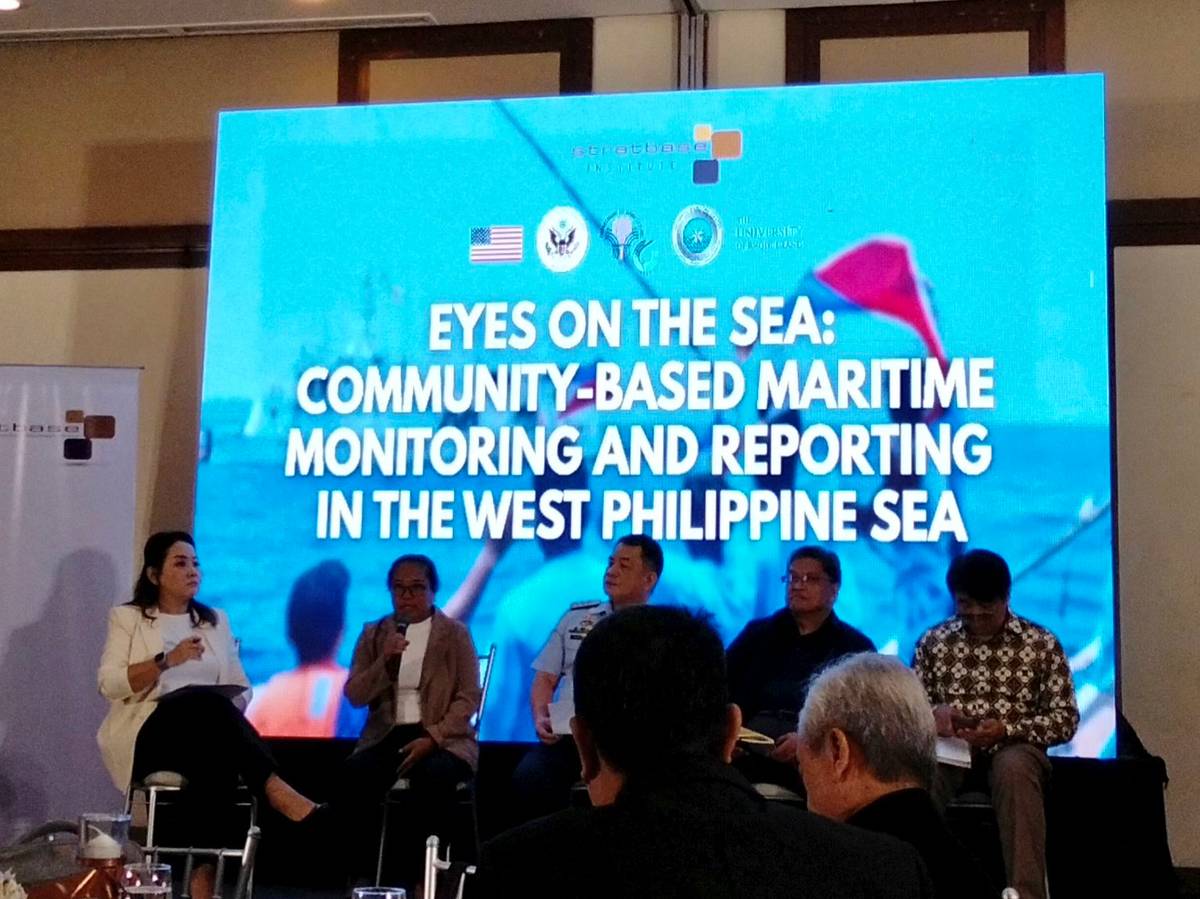
Miss Delma Morados (second to the left), Vice President of Subic Commercial Fisher's Association Inc., shares that fisherfolk cannot seek shelter or approach the Scarborough Shoal fishing territory due to Chinese vessels blocking and harassing locals.
Amelia Clarissa de Luna Monasterial for Daily Tribune
The role of science in marine resource protection
The conference also addressed opportunities within the blue economy, promoting sustainable use of ocean resources for economic growth, job creation, and ecosystem preservation. Experts highlighted the Philippines’ rich marine biodiversity and its potential for biotechnology. Marine genetic resources, particularly in species found in the West Philippine Sea, could be worth trillions of dollars by 2035 in pharmaceuticals, industrial applications, and biotechnological research. Yet the Philippines is not currently a leading contributor to global marine gene research.
Panelists emphasized the need to strengthen local capacity through training, research collaborations, and responsible data sharing. Genomic research contributes to conservation planning, ecosystem monitoring, and the development of solutions such as bionic corals using gene-editing technology. Inclusive approaches ensure that the benefits of marine biotechnology support both local communities and the broader economy.
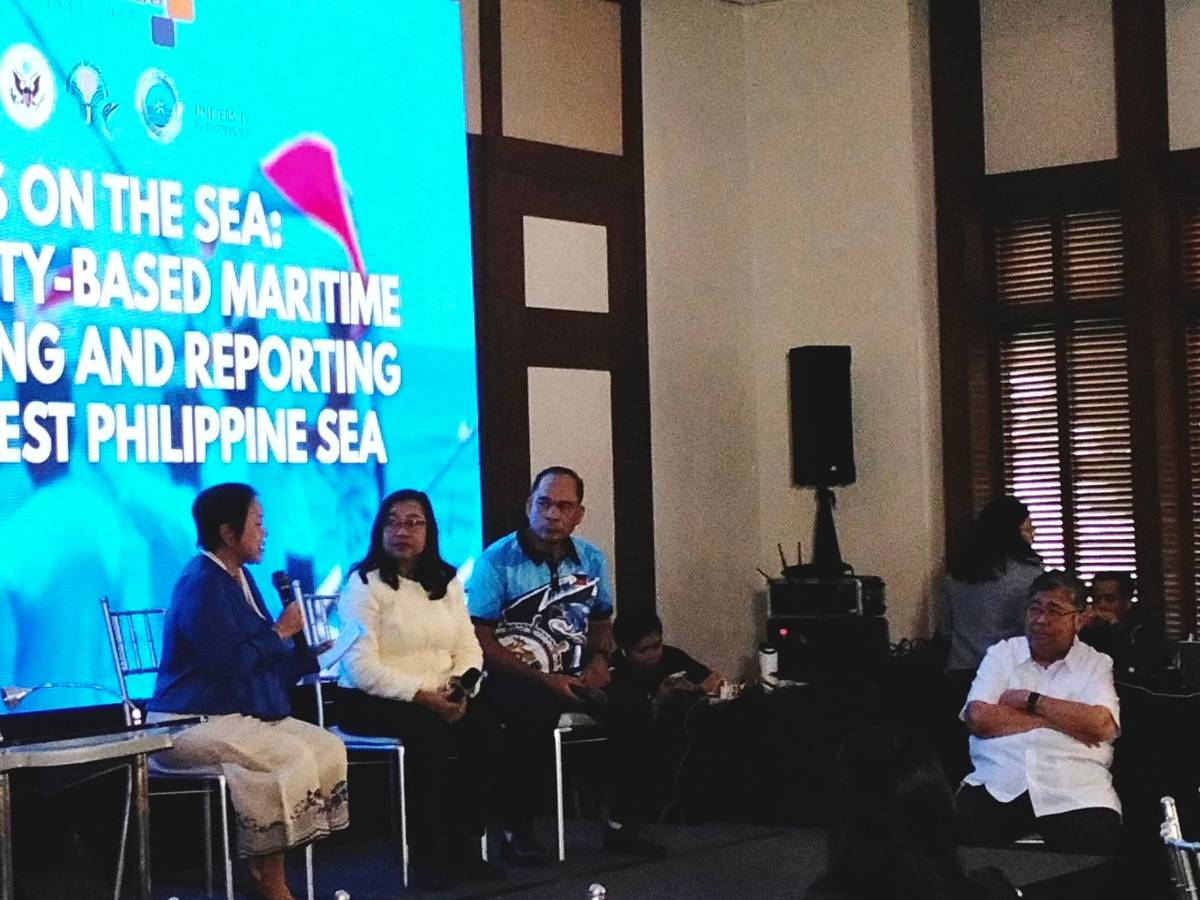
Dr. Mary Kristerie Baleva (left), Non-Resident Fellow of the Stratbase ADR Institute, moderates the “Social and Resource Protection” panel at the #WestPhilippineSea conference. Panelists include Maria Corazon Ebarvia - PEMSEA consultant (second to left), Edwin Galicia - Palawan United Commercial Fisherfolk Association (right, onstage)), and Dr. Ben Malayang III - Silliman University/UP Los Baños (far right, offstage).
Amelia Clarissa de Luna Monasterial for Daily Tribune
Regional partnerships and maritime governance
Ambassadors from Australia, New Zealand, Indonesia, and Vietnam outlined how their governments support maritime stability amid shared challenges in the Indo-Pacific. New Zealand stressed empowerment of indigenous fisherfolk through ownership and participation. Australia reaffirmed that stability in the West Philippine Sea is vital for protecting major trade routes. Vietnam, which faces similar harassment in its waters, echoed the need for ASEAN solidarity to push back against unilateral actions that weaken regional security and violate international law.
Securing the nation through its people
The conference concluded with a unified message: effective maritime governance begins with empowered people. By strengthening community-based monitoring and integrating fisherfolk into national maritime strategies, the Philippines can enhance resilience, sustain its marine resources, and uphold its territorial rights in the West Philippine Sea. Participants emphasized that safeguarding the nation’s waters is not solely the responsibility of military assets or diplomatic campaigns but a collective effort anchored in local knowledge, community participation, and shared commitment to national security.