




Wounded society
The church asks us to ask ourselves: are we the same? Do we now look out only for ourselves, paying lip service when tragedy strikes our neighbors.

Text size
The church asks us to ask ourselves: are we the same? Do we now look out only for ourselves, paying lip service when tragedy strikes our neighbors.
“War. Violence. Deep social wounds.”
It is all very well that Pope Leo XIV summed up the world’s ills when he celebrated Mass at St. Peter’s Basilica last Sunday during the Ninth World Day of the Poor, but was anyone listening?
These days, it seems many would rather dwell on the marital upheavals of Ellen Adarna than the “upheavals” of our time, when life is cheap, morals are scarce and the poor ever more downtrodden.
But these realities, some may yet argue, go back to biblical times. So what, if any, is the good of spelling it out to humans today, who are careening into hell anyway and taking everyone and the planet with them?
Again, there is always “hope.” What politics dashes, the church upholds. Hope is eternal, hope is not lost — even when (or especially when) it feels like the world is ending.
These past days alone paint a dreary future for the nation: when we see familial wounds bared for all to see, and no tears come from seeing their hideous pain, that is when we know we have sunk into our hell.
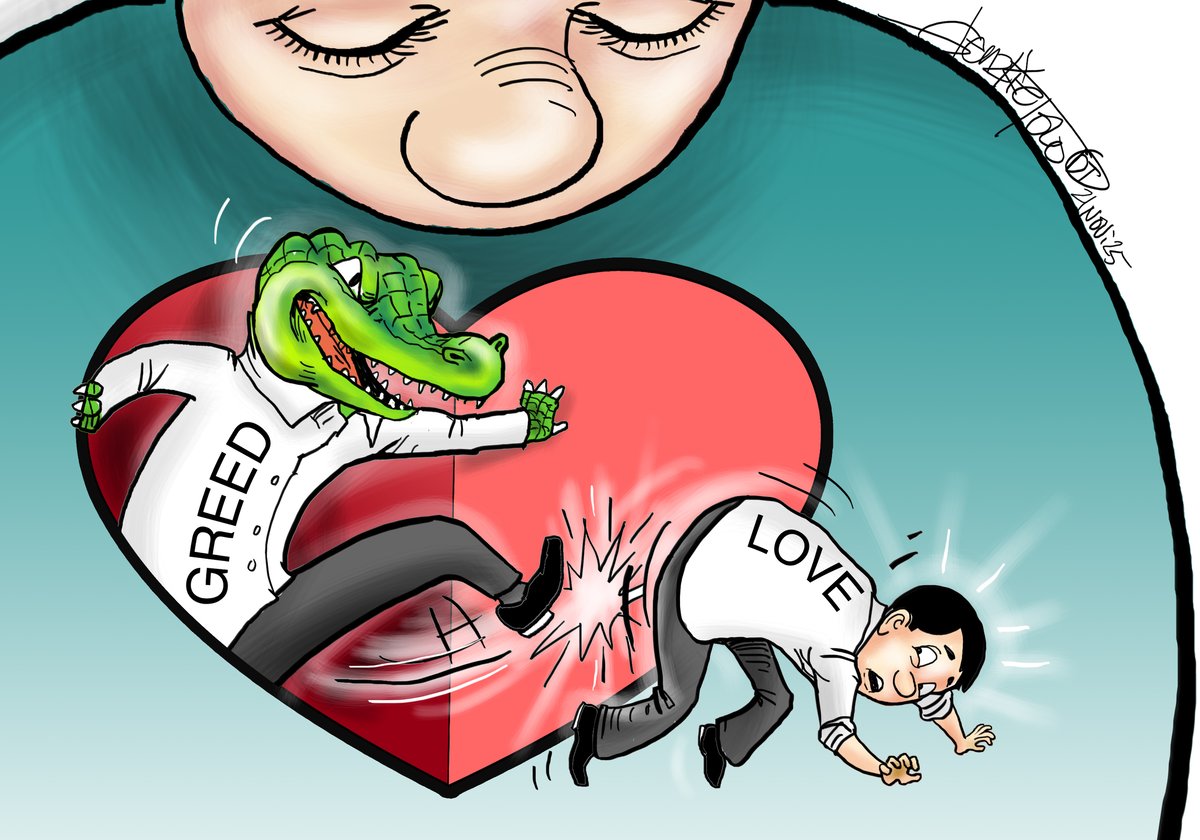
Ours is a wounded society — and “corrupt hearts” are the cause.
“A corrupt heart is a heart that is destroyed,” Bishop Raul Dael of Tandag is quoted in a Catholic Bishops Conference of the Philippines article. “And when the heart is destroyed, it cannot love anymore. The poor, the needy, they become invisible to it.”
Does Sara Duterte care about the classrooms that should have been built under her watch? With the typhoons coming in force nowadays, those classrooms aka evacuation sites should be serving the children whose quality of education has suffered long enough.
Who’s feeling poor? Not those gods of the road in their tinted Bentleys, whose houses are filled with cash. Yet, they are the people whose thirst is never slaked. They are the spiritually bankrupt, bereft of love for others and a conscience.
Still, the church asks us to ask ourselves: are we the same? Do we now look out only for ourselves, paying lip service when tragedy strikes our neighbors?
Cebuanos who lost their homes and loved ones during typhoon “Tino” are still reeling. Many still lack food and clean drinking water. Weeks after the devastating floods, aid has been left to non-government groups and private efforts. Many of the families have no idea how to start all over again, contemplating their future in evacuation centers that stink and are filled to overflowing.
The poor “always suffer the most,” Bishop Dael said in his homily that Sunday, citing the effects of “negligence, environmental abuse and the corruption that diverts resources away from communities.”
Everyone, not just the calamity victims always running to evacuation centers and the church for shelter and succor, is reaching a breaking point. Filipinos want the budget vampires to be revealed; they want them to suffer the most.
But, what then? Reform, to be real, must come not only to what we can see, but to what we can’t — which is within us.
Three decades after the Marcopper mining disaster devastated Marinduque’s waterways, the province is again pressing the…
Housing is probably the biggest issue affecting people the world over.
Malacañang on Monday called for a more thorough investigation into the questioned flood control projects in Taguig…
The defense on Monday backed the move by senator-judges to exclude a prosecution witness who testified on the firearms…
