
World Diabetes Day: Working well with diabetes
According to the IDF, 589 million adults worldwide are living with diabetes, and seven in 10 are of working age.


Yesterday, 14 November, was the celebration of World Diabetes Day — a global reminder that diabetes is not just a medical condition; it’s a life condition.
The date honors the birthday of Sir Frederick Banting, who co-discovered insulin in 1921, a breakthrough that turned what was once a fatal illness into a manageable condition. More than a century later, the fight against diabetes continues.

Colleagues also play an important role in diabetes care.
Diabetes affects how people eat, move, work and live. This year’s theme, “Diabetes and Well-Being,” focuses on diabetes in the workplace. It highlights how much of our lives — and our health — unfold where we spend most of our waking hours: at work.
According to the International Diabetes Federation (IDF), 589 million adults worldwide are living with diabetes, and seven in 10 are of working age. If diabetes goes unchecked, complications can develop, reducing a person’s ability to work and significantly affecting not only their personal lives but also the economy and community. The cost of lost productivity, absences, and medical expenses is immense — but the human cost is even greater.
Fit to work
I still remember the young professionals who visited my clinic years ago — fresh graduates eager to start their first jobs and needing “fit-to-work” certificates. Their excitement was contagious as they spoke of new beginnings, careers and independence.
Fast forward a decade, and some of those same patients have returned — this time not for pre-employment exams, but for diabetes check-ups. Long hours, skipped meals, stress, lack of exercise and convenience foods had taken their toll. “Doc,” one said with a nervous laugh, “I was fit to work then. Now I just want to stay fit enough to keep working.”
Their stories are not unique. They reflect a growing reality: diabetes affects people in their most productive years, influencing not just personal health but also workplace performance and overall quality of life.
TOGETHER for a healthier future.
Diabetes and the workplace
The modern workplace, with its deadlines, screen time, and sedentary routines, can quietly foster unhealthy habits. Skipping breakfast, relying on sugary coffee drinks, and sitting for hours on end have become the norm. Add stress and lack of sleep, and the body’s ability to regulate blood sugar begins to falter.
‘Know more and do more for diabetes at work’
This is the World Diabetes Day campaign slogan. And yes, the workplace can also be part of the solution. Employers should remember that a healthy workforce is a productive workforce. Companies that support health-friendly environments not only help prevent and control diabetes but also create happier, more effective teams. Simple initiatives like standing breaks, walking meetings, healthier cafeteria options (no more unlimited sodas and iced tea), and annual screening programs can make a world of difference.
Colleagues also play an important role in diabetes care. Understanding and flexibility go a long way, instead of shaming or resenting co-workers with health conditions. Organizations can help by making wellness programs part of their culture — offering free screening days, stress management workshops, or fitness challenges. A workplace that prioritizes well-being helps prevent burnout and supports long-term health.
For those already living with diabetes, workplace wellness means self-awareness: packing healthy snacks, choosing nutritious meals, staying hydrated, taking short walks, and never skipping medication.
The IWAS Advocacy: Guide
for everyday living
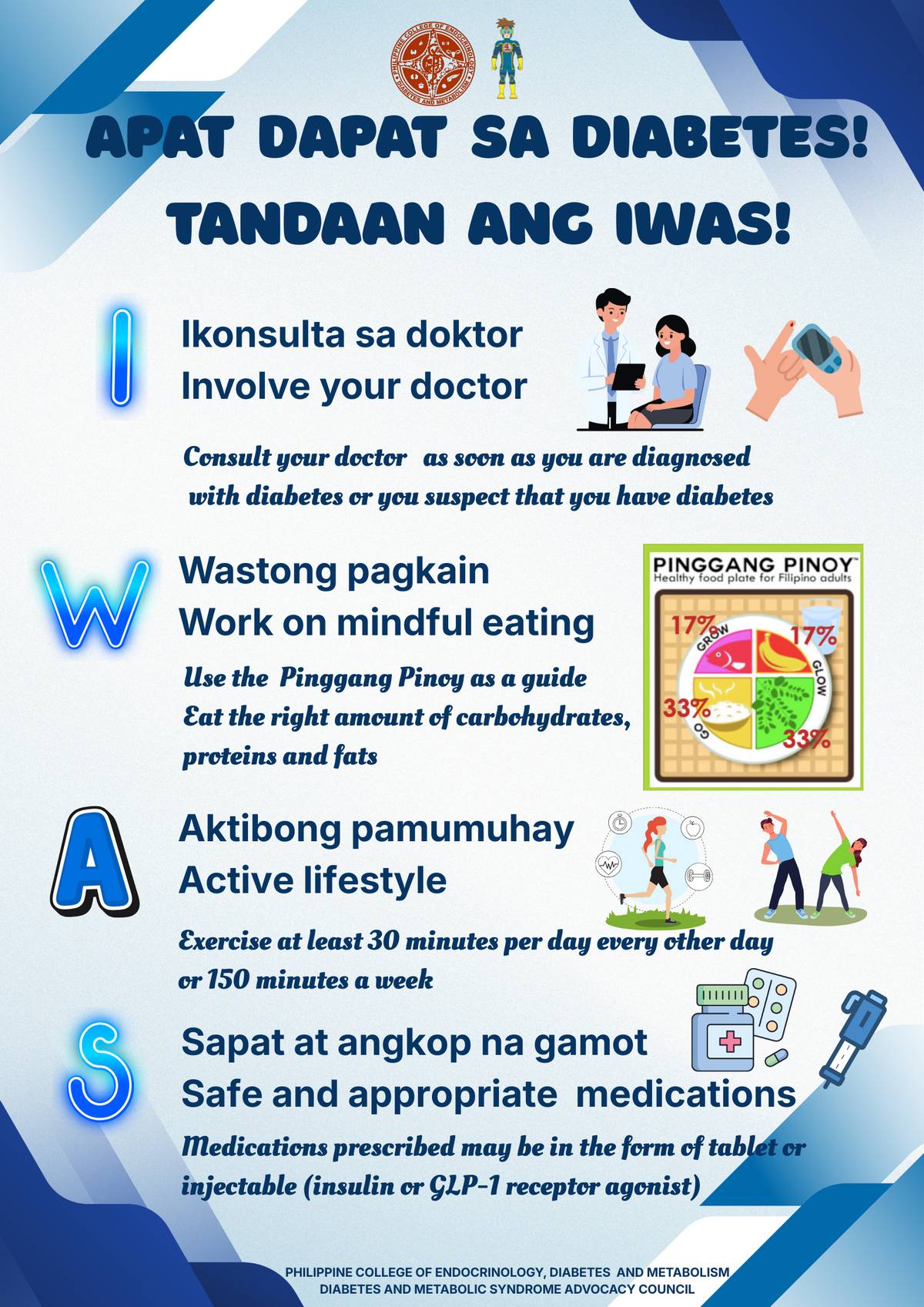
In the Philippines, the Philippine College of Endocrinology, Diabetes and Metabolism (PCEDM) promotes the Apat Dapat: IWAS advocacy — a simple, practical reminder for staying healthy, with or without diabetes:
I — Ikonsulta sa doktor / Involve your doctor: Schedule regular check-ups. Early detection and proper monitoring prevent complications.
W — Wastong pagkain / Work on mindful eating: Choose balanced, home-cooked meals whenever possible. Limit sugar, salt and processed foods. Eat more whole foods like vegetables and fruits.
A — Aktibong pamumuhay / Active lifestyle: Move more. Take the stairs, walk during breaks, stretch between meetings.
S — Sapat at angkop na gamot / Safe and appropriate medications: Take medicines as prescribed, consistently and correctly.
The IWAS framework turns global recommendations into practical, Filipino-friendly guidance. It’s not about drastic changes; it’s about mindful choices made one day at a time.
Changing the story
World Diabetes Day is not just about awareness; it’s about action. It’s about turning workplaces into spaces where health and productivity coexist. When employees feel well, they work well. When companies care for their people, everyone benefits.
The blue circle — the symbol of diabetes awareness — reminds us that we are all connected in one global effort. Whether we are doctors, employers, or workers, we each play a role in keeping that circle strong.
To the young professionals now juggling careers, families, and health: remember that success includes self-care. Take breaks, eat right, move daily, and see your doctor regularly.
Because the best “fit-to-work” certificate isn’t a piece of paper — it’s a healthy, balanced life.