




Big mayor, small town


Text size
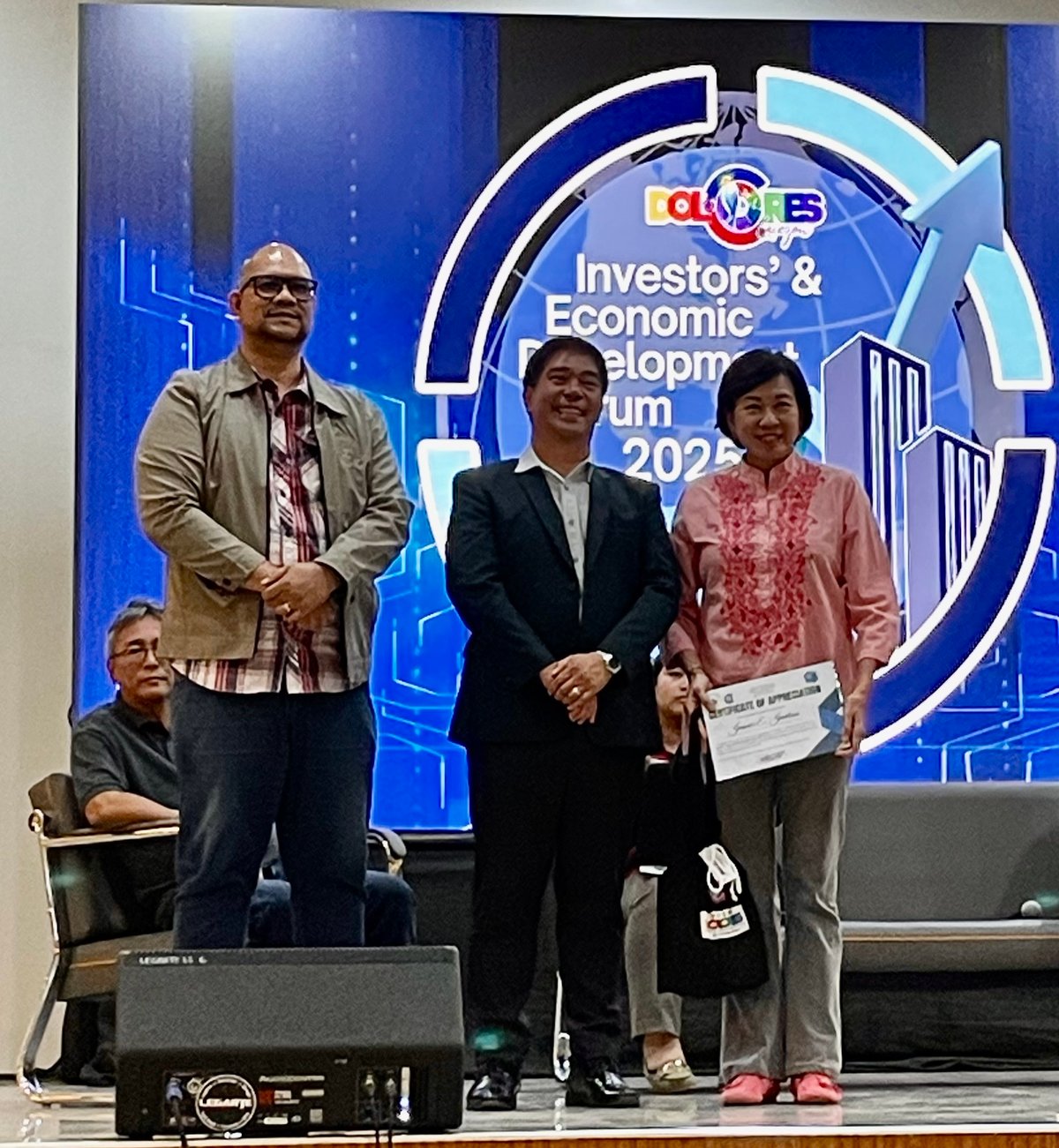
Dolores Vice Mayor Doc Jon Allilio, Mayor Orlan Calayag and the writer.
Today we found hope in our heart. With the corruption in government hogging headlines, it is rare to stumble upon a place — and a leader — who gives us reason to believe that integrity and vision are still alive in our country.
In the small municipality of Dolores, Quezon, nestled at the foot of the sacred Mt. Banahaw, we witnessed something remarkable. A town where good governance is not just a buzzword but a lived reality. A town where a mountain is revered not only as a natural wonder, but as a spiritual heartland — and is being thoughtfully shaped into a model of sustainable faith and wellness eco-tourism.
At the center of this transformation is Mayor Orlan Calayag, a leader whose actions speak volumes. Since 2019, Dolores has experienced a 19.46 percent annual growth rate in LGU revenue, rising from a fourth-class municipality to a third-class rank. Today, Dolores sits proudly at No. 30 in the National Municipal Competitiveness Index, and No. 1 in the 2024 Provincial Rankings. Under his watch, the town has been awarded the Seal of Good Governance, achieved full compliance with the Gawad Kalasag Seal of Excellence, and received the SubayBayani Awards. But what makes this truly rare is not just the numbers — it’s the spirit.
Mayor Calayag is a visionary. The kind of leader we seldom see today. He is determined to leave behind a legacy that marries economic vitality with cultural soul, modern progress with environmental wisdom.
When he invited me to speak at Dolores’ first-ever Economic Investment Forum, I said yes without hesitation. After all, this town is home to Mt. Banahaw, a protected rainforest, a sacred mountain, and a spiritual refuge whose destiny demands nothing less than deep reverence and conscious stewardship.
Buddies, associates? One happy family?
A traditional dish called zongzi is served during China’s Dragon Boat Festival, which falls in June. It is a rice…
Divina credited the firm’s achievements to its members, thanking them for their ‘hard work, dedication, teamwork, and…
‘Sec. Vince Dizon, please explain how this finding of your own team should not be flagged as a ghost project in Taguig.’
And it is a space we have learned to call home, and where we strive to create social impact through Banahaw Circle Nature Retreat, a Department of Tourism Mabuhay accredited bed-and-breakfast space, and bigger plans for a four-hectare resort-assisted living off grid-space.
Across the Philippines, sustainable eco-cultural tourism is a path lined with both opportunity and challenge. This we have learned the very hard way since we have been operating the bed and breakfast. Because it’s about working both the business side, as well as the development side of the community. Our experience is not unique. Post-Covid, there has been a large number of people all over the country, seeking to stay near nature and also create eco-businesses within local economies. All of us have met up with challenges that include unskilled workforce, supply chains that are not fully connected, limited mindsets of local community groups, travel challenges met my guests, and many others.
On the other side, the rise of tourists seeking authentic, nature-rooted experiences has led to the need to protect indigenous cultures and delicate ecosystems. This is most urgent today as we see the tourism boom that often leads to overdevelopment — roads are widened, hotels rise, and the natural carrying capacity of sites is ignored. We must bridge the gap between infrastructure development and local preservation.
Infrastructure is critical, yes — but so are community training programs, peace and order, environmental ordinances, and livelihood support. The success of a tourism destination isn’t built solely on what tourists see, but what they experience and what they leave behind — for better or worse.
My talk centered on the soul we must bring into tourism infrastructure development. Because the greatest draw of a space is its unique proposition, that special DNA that no other place can claim.
So while the LGU is busy pushing to take investment in for infra, our speak as private sector was all about sustainability with a glocal perspective. We want to bring in global standards of sustainable eco-tourism, wellness, faith practices, community involvement and nature, but to localize the experience.
One unique driver of change is coming up in the first half of 2026 when the new TR4 highway opens up from Manila to Lucena, cutting travel time to Mt. Banahaw, Dolores by almost half the current time.
And that would take a leisure 1.5 hours from Manila. The proximity will open the flood gates of visitors to the mountain town. And this is what the local government unit (LGU) has been pushing to prepare for while ensuring that the mountain’s mystical essence is not lost to commercialization.
Sacred mountain
Mt. Banahaw, long revered as a site of spiritual pilgrimage and healing, is now being developed with sustainable tourism as its core framework. To protect the mountain integrity, there are systems to manage visitor numbers, reduce pollution and keep development within ecological limits. This sacred mountain is not being turned into a mere attraction. Instead, we want it to be honored through a delicate balance of ecotourism, cultural-syncretic faith preservation and community-based initiatives alongside infrastructure both world class and community quaint.
Such places don’t happen by accident. They are created through policy, protection and planning. For sustainable destinations to thrive, local government units must take a stand — crafting ordinances that prioritize ecological protection, building frameworks that encourage responsible private sector participation and investing in capacity-building for communities. Dolores is doing just that. The LGU is not only laying the legal and policy foundation for green development but is also encouraging stakeholders to align with a shared vision.
As part of private sector, we do what we can. We personally promote slow food practices, supporting local farmers and encouraging culinary traditions rooted in the land. We see farm tourism designed to educate visitors. We create organized tours to explore the sacred sites and the mountain trails. Spiritual and healing tourism must now develop the “software”: certified hilot practitioners, care-givers, alternative healers; tour guides; plus raising the standards of provincial F&B and hospitality offerings.
Let’s add on the potential revenues of local herbs planted by the farmers created into alternative healing teas and capsulized, properly FDA and mainstreamed into the market. (Today, the local albularios in the small markets sell scary looking twigs and herbs which have not been properly checked!)
In the case of Dolores, we see that success is possible when public and private sectors work together under a unified vision. It is in these partnerships that innovation meets accountability, and dreams turn into tangible realities. We are especially grateful that in Dolores, we have an LGU partner who is not just creating policy, but building foundational pillars on which responsible businesses and investors can stand and grow.
We were so happy to meet during that forum, other like-minded business people and entrepreneurs who have found their way to the Dolores area and Mt. Banahaw — chefs creative entrepreneurs, investors with land who want to develop events, wellness and other green spaces around a shared vision and who are open to talk and collaborate.
Today we found hope in our heart. Hope that there are still leaders like Mayor Orlan Calayag who carry the passion to strategically carve out the new possibilities of tomorrow. Hope that sacred sites like Mt. Banahaw can be protected not just by sentiment, but by systems. Hope that communities can thrive — not in spite of tourism — but because tourism is done right. For tourism must serve not just the traveler, but the land, the culture, and the people who call it home. In the soul of a small third level municipality, at the base of a holy mountain, sustainable tourism is possible. We are building it — together.
