
SCUTTLEBUTT


Why look further?
Judge Felix P. Reyes is hailed by his peers as an exemplary figure in Philippine judiciary, emphasizing his integrity, judicial expertise, and contributions to legal reform.
Reyes’ qualifications and character make him indispensable to the justice system, particularly in light of alleged politically motivated attacks aimed at undermining his reputation.
The judge is a seasoned jurist with a legal career spanning private practice, public service and judicial roles.
After passing the 1986 Bar exam, Reyes began a private practice before serving in significant roles at the Land Registration Authority and the Pasay City Prosecutor’s Office.
His judicial tenure, spanning over 15 years across multiple cities (Marikina, Calamba, Taguig and Lipa), demonstrated a breadth of experience in handling diverse legal cases.
This extensive background underscored his deep understanding of the legal system, from grassroots prosecution to high stakes judicial decision-making.
Reyes was pivotal in convicting members of the ISIS-linked Maute group under the Human Security Act of 2007 and the International Humanitarian Law of 2009. These landmark convictions reflected his ability to navigate complex, high pressure cases involving national security and terrorism.
Such cases required not only legal acumen but also moral courage and impartiality, qualities that positioned him as a standout figure in the judiciary.
As an Associate Professor at the University of the East College of Law, Reyes has contributed to shaping future legal professionals.
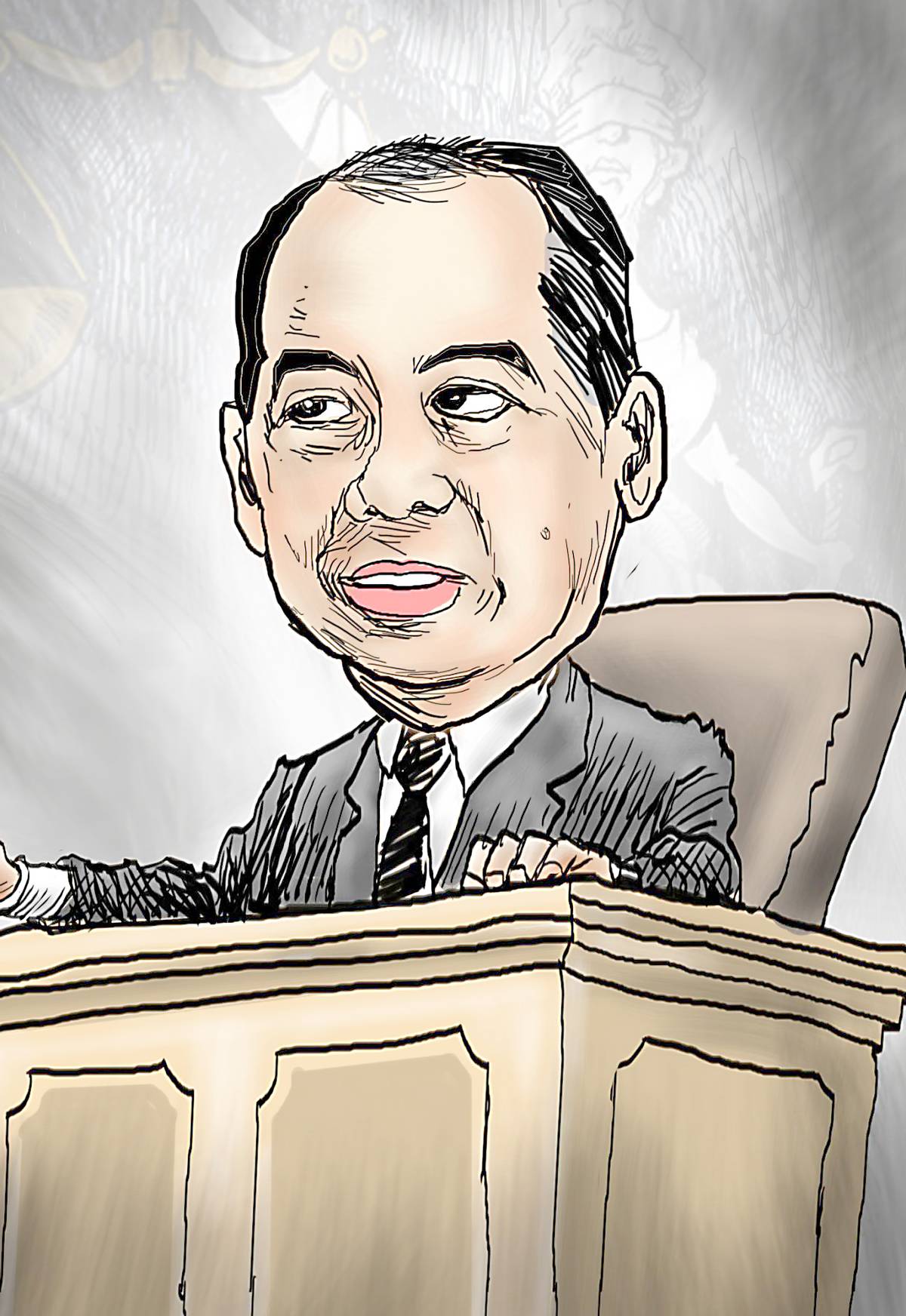
This role demonstrates his intellectual depth and commitment to advancing legal education, further solidifying his influence within the legal community.
He has a wealth of practical experience and academic contributions.
Reyes is also a reformist, as evidenced by his two significant contributions, notably as the author of A.M. 18-03-16-SC, a Supreme Court administrative edict that revolutionized plea bargaining in drug cases.
The framework addressed case congestion in the judiciary while ensuring proportional justice, demonstrating his ability to tackle systemic issues.
The reform’s impact on decongesting courts and improving judicial efficiency is a tangible achievement that highlights his forward-thinking approach.
Also, as the unopposed president of the Philippine Judges Association for two terms, Reyes successfully lobbied for a P10,000 monthly allowance increase for judges.
The advocacy reflected his commitment to improving the welfare of judicial officers, which in turn supported the judiciary’s independence and morale. His unopposed leadership suggests widespread trust and respect among his peers.
The plea-bargaining framework is a powerful attribute of Reyes, as it addresses a chronic issue in the judiciary, which is the buildup of case backlogs.
However, the text could enhance its persuasiveness by quantifying the impact of this reform (e.g., reduction in case backlog or processing times).
Similarly, while the allowance increase is a notable achievement, the text could clarify how this strengthened judicial independence or performance, providing a clearer link to systemic improvement.
Reyes’s response to allegations underscores his integrity, a critical quality for a judicial figure. His transparency and willingness to subject himself to scrutiny reinforce his credibility.
Reyes possesses “gravitas,” a quality derived from decades of service, leadership, and resilience in the face of political pressures.
His roles as a judge, educator, and PJA president are cited as evidence of his ability to lead across different spheres of the legal system. Experience and maturity, thus, make him uniquely suited for high-responsibility roles.
Reyes would be invaluable in government since his presence guarantees the upholding of meritocracy and strengthening the judiciary. It frames him as a symbol of principled public service, warning that failing to support such figures risks prioritizing populism over competence.
Judge Reyes remains a pillar of the Philippine judiciary, distinguished by his extensive experience, landmark contributions to judicial reform, and unwavering integrity in the face of adversity.
His role in convicting terrorists, authoring plea bargaining reforms, and advocating for judges’ welfare underscores his qualifications as a leader who strengthened the justice system.
Reyes’s qualifications, rooted in decades of service, leadership, and reform, make him an indispensable figure whose contributions continue to shape a more effective and principled judiciary.