




Reflections on fatherhood
Those lessons do not fade; they continue in our recollection of the words our fathers used to impart wisdom — lessons that we now pass on to our own children.

Text size
Those lessons do not fade; they continue in our recollection of the words our fathers used to impart wisdom — lessons that we now pass on to our own children.
Today, we take a pause in our busy lives to honor the man who shaped our life, who protected us, and taught us what it means to stand firm when we need to be in a world fraught with challenges.
Today, we remember to express our gratitude to he who embodied strength, whose strong and steady hand guided us through our formative years, he who was our primary source of stability as we navigated a life of uncertainties as we made our way from adolescence to adulthood.
We remember he who concretized resilience, integrity, responsibility, sacrifice, endurance, compassion, and other such values that gave shape to our lives, and made us the man, and likewise the father, that we are today.
Now all grown up, we reflect on what it means to be a father. In so doing, we acknowledge that the man we called Itay, Papa, Daddy was someone with whom we have more than just a biological connection. Our fathers nurtured and mentored us, and gave us examples of what fatherhood is.
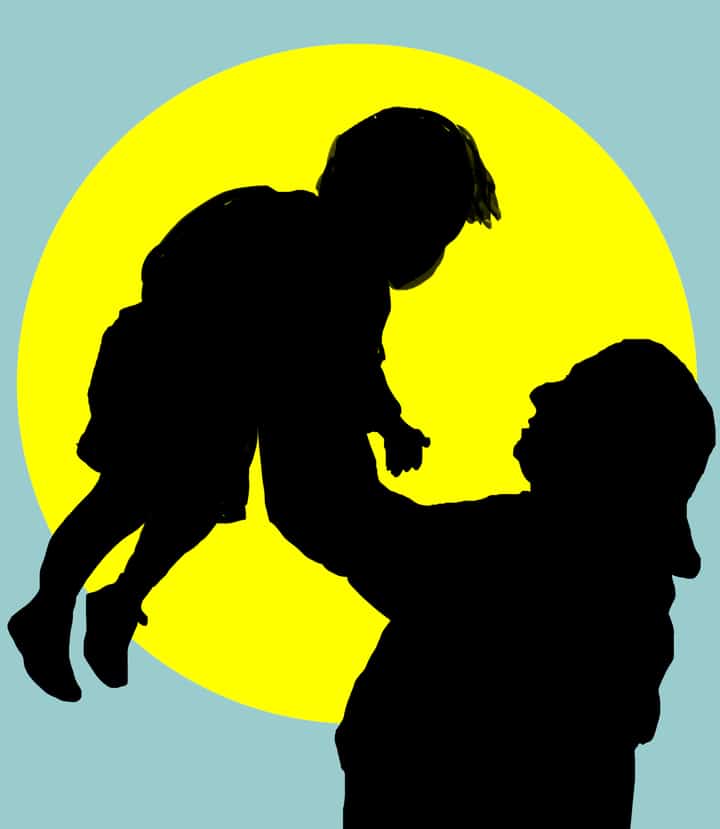
Our fathers taught us what it means for us to be fathers ourselves to our own children, how to manifest a father’s love in acts big and small, listening, encouraging, guiding , laying the foundation for our children to grow into good adults, into persons with a capacity for resilience, individuals of confidence and integrity.
Our fathers showed us that to be a father means being present, being able to offer a steady hand to your children in troubled times, and to be there too to celebrate joys, our children’s milestones, in good and not so good times.
For us whose fathers are no longer with us, Father’s Day need not be a void. It should be a day of memories, a day to reflect on our father’s legacy, a day for expressing gratitude for the memories we have of the man who gave us so much confidence growing up, for his presence in our lives.
We remember the lessons he taught us. Those lessons do not fade; they continue in our recollection of the words he used to impart wisdom — lessons that we now pass on to our own children.
To celebrate Father’s Day is not merely to recall a man who is gone, but to acknowledge the fact that he remains with us, very much so, in the way we his children speak and work, and go about our daily lives, as we father our own children.
Thus, we celebrate he who provided us with our initial examples of strength, our early model for how to build essential guideposts to not only survive, but to enjoy life — indeed, how to live life well.
We celebrate today because gratitude should never be left unspoken, because the world in which we live our lives moves fast, and too often we forget to say, “Thank you, I know now what you’ve done for me.”
We say “thank you” to the fathers who never got to hear a “thank you” from their sons because some sons never had the chance to say it to their fathers.
We also celebrate to remember that there is no such thing as a perfect father; we take pause today to acknowledge the best efforts expended by our dads to give us, his children, the best life he could.
There is no perfection in fatherhood. The true value in being a father is in the effort a man makes to show up, in trying, failing, and trying again, to show how much he cares for his children.
For those of us who no longer have our fathers, we take a moment today to reflect and celebrate the fact that, truly, love does not end with a man’s last breath. A father’s words, his voice that we remember, continue to be the wind in our, his children’s, sails, long after his ship had left shore.
Housing is probably the biggest issue affecting people the world over.
Malacañang on Monday called for a more thorough investigation into the questioned flood control projects in Taguig…
The defense on Monday backed the move by senator-judges to exclude a prosecution witness who testified on the firearms…
