




Change obsolete team
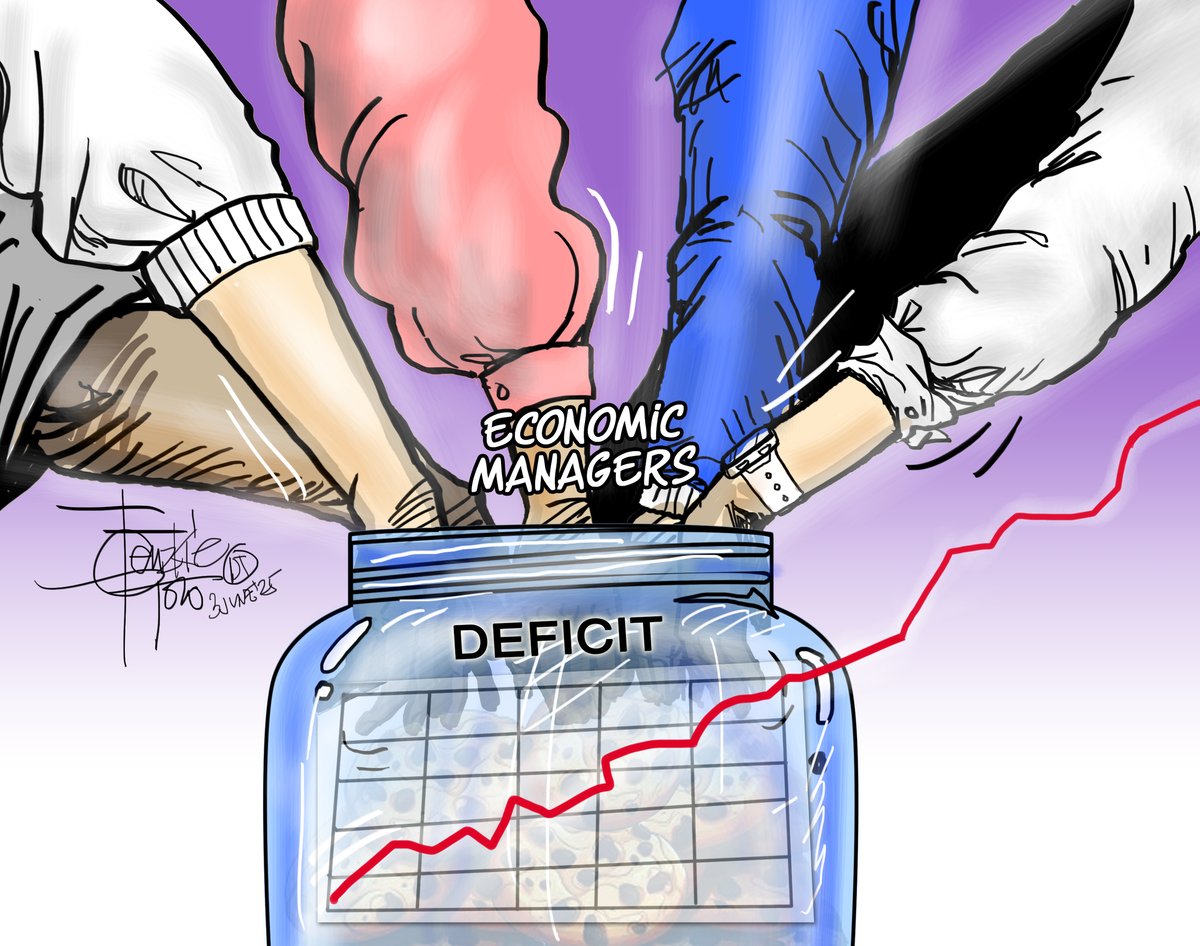
A review of the first four months of 2025 indicated the budget bled P411.5 billion in a deficit, which was an 80-percent jump over the levels of last year.

Text size
A review of the first four months of 2025 indicated the budget bled P411.5 billion in a deficit, which was an 80-percent jump over the levels of last year.
In the ongoing Cabinet shakeup, the retention of the economic team — except for Energy Secretary Raphael Lotilla, who was moved to the Department of Environment and Natural Resources — was a pretext of continuity.
The argument for retaining the managers was that replacing them may disrupt fiscal policies critical to stability, especially amid the rising inflation and burgeoning debt.
The team’s expertise in managing the economy was vital for investor confidence, according to the defenders.
A deep dive into the economy, however, debunks the claims of economic stability.
Recently, the administration highlighted a P67.3-billion budget surplus in April, which was attributed to rising tax revenues. This, however, was not accurate.
A review of the first four months of 2025 indicated the budget bled P411.5 billion in a deficit, which was an 80-percent jump over last year’s levels.
The April surplus was a blip in a growing sea of red ink, according to analyst Rob Rances.
Tax revenues are indeed picking up, mainly due to the Bureau of Internal Revenue’s aggressive crackdown on small businesses, freelancers, and middle class earners. However, income from other sources, such as remittances from government-owned and controlled corporations (GOCCs), has plunged by 68 percent.
Government spending surged 13.5 percent, with slight indications that these funds are being directed towards productive projects instead of dole-outs — a characteristic of the administration’s “ayuda” culture. The various cash assistance programs are all meant to generate political patronage.
The public is largely unaware of how their hard-earned money, which pays the taxes, is being spent due to the opaque budget process.
Former President Rodrigo Duterte flagged the “blank” line items in the bicameral conference committee (Bicam) report on the 2025 national budget that were discovered by former House appropriations committee chairperson Rep. Isidro Ungab of Davao City.
Budget Secretary Amenah Pangandaman defended the budget, pointing out there were no blanks in the final law.
The earlier existence of the blank items, however, was not refuted.
The budget deficit was primarily offset by a record borrowing of over P4.64 trillion until 2022, with little to show for it except a few new development projects. Most of the money went to haphazard dole programs.
During the period when the debt shot up, the hunger rate surged to a never seen level of 27.2 percent of families, while over 1.1 million Filipinos lost their jobs in just one year.
Foreign investors have started to hesitate in their plans for the country, as reflected in the 61.9-percent drop in investments in February compared to the same period last year.
The administration is heralding the nation’s entry into the upper middle-income club within the term of the incumbent, but the boast is proving hollow.
Consider that despite the strong growth of about five percent or more every quarter, based on government data, borrowing has increased significantly, suggesting that public money is not being spent efficiently.
Retaining the economic team serves only to use its members for political objectives, such as Finance Secretary Ralph Recto who swept up the GOCCs’ “idle funds” to cover unappropriated allocations (UA) in the budget.
The UA in the 2024 budget consisted of items vital for development, but these were shoved aside to make room for pet projects of members of Congress.
A sincerity of purpose in the Cabinet overhaul would be hard to prove unless a fresh economic team is formed.
Three decades after the Marcopper mining disaster devastated Marinduque’s waterways, the province is again pressing the…
Housing is probably the biggest issue affecting people the world over.
Malacañang on Monday called for a more thorough investigation into the questioned flood control projects in Taguig…
The defense on Monday backed the move by senator-judges to exclude a prosecution witness who testified on the firearms…
