




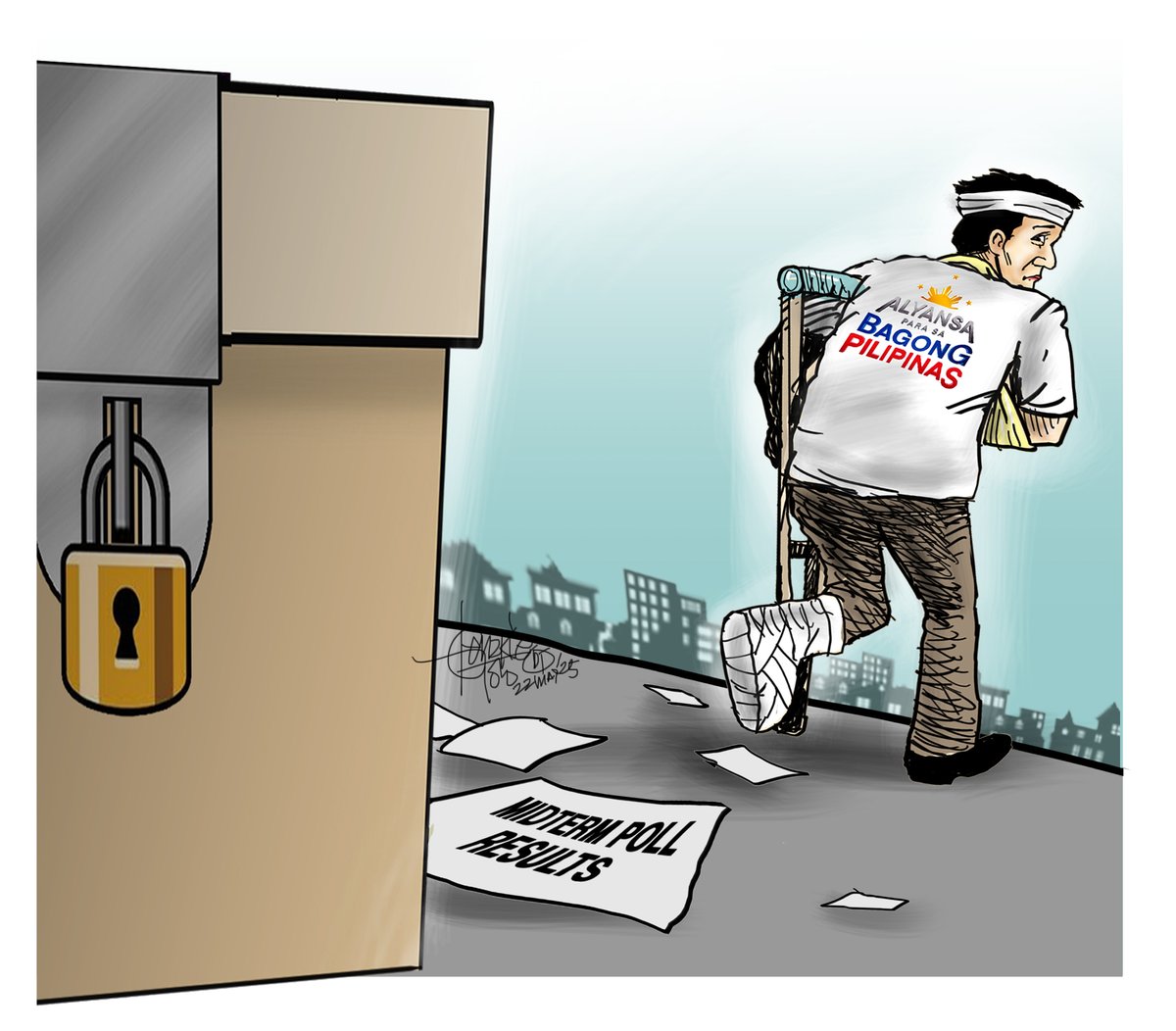
Alyansa got served
After the government surrendered former President Rodrigo Duterte to the International Criminal Court, the Alyansa was wiped out in surveys in Bisaya-speaking regions in the Visayas and Mindanao.

Text size
After the government surrendered former President Rodrigo Duterte to the International Criminal Court, the Alyansa was wiped out in surveys in Bisaya-speaking regions in the Visayas and Mindanao.
The brutally frank revelation of the reasons for the Alyansa Para sa Bagong Pilipinas’ lackluster performance in the midterm elections reflected an effort to undermine President Ferdinand Marcos Jr.’s leadership.
Navotas Rep. Toby Tiangco cast a vote in protest of a political feud in the recent political exercise.
In a podcast, President Marcos also evaluated the recent midterm polls and said that Filipinos were extremely tired of politics.
“The message to all of us, not just to me, is enough with your politicking; it’s time you pay attention to us,” Marcos said.
“The politicking must stop” was similar to the earlier call for his allies to stop the impeachment of Vice President Sara Duterte, which was ignored.
“The people are disappointed with the government’s service. They don’t feel it, and the implementation of projects is too slow, so slow that they still haven’t felt any impact,” Mr. Marcos admonished government officials.
The President admitted that his administration had lost sight of some of the nation’s immediate problems. The focus was on high-impact flagship projects which have a long gestation period before their effects would be felt by the populace.
Tiangco said that even in uncontested areas where administration candidates had no opponents, the outcome for the Alyansa lineup was not convincing.
Going overdrive on the political friction was to blame for the below-par performance of the administration candidates.
Tiangco cited an October 2024 survey that showed that in Mindanao, nine or 10 Alyansa bets were in the top 12, but right after the House impeached Vice President Duterte this dropped to four bets who fell to the tail end of the survey.
After the government surrendered former President Rodrigo Duterte to the International Criminal Court, the Alyansa was wiped out in surveys in Bisaya-speaking regions in the Visayas and Mindanao.
Tiangco claimed that while Duterte’s handover was beyond the control of those in power due to the ICC arrest warrant, the impeachment of VP Duterte should not have been rushed.
Tiangco theorized that without the impeachment, the public perception of the ICC arrest would have been different as it would have been viewed as complying with an international law or commitment.
But the two events taken together somewhat indicated that there was a plan behind it, he said.
Tiangco also suggested a misrepresentation by the President may have been behind the ramming through of the impeachment of VP Duterte.
“Remember that the Palace was livid about the 2025 budget controversy, and when the veto was applied, not all the items complained about were covered,” he said.
Some promised allocations were placed under conditional releases, which Tiangco believed triggered the signing of the impeachment complaint so the solons could get their allotments.
“There was no clamor for impeachment, but what they told the President was that they could not stop the clamor. It should have been common sense — why pick a fight with the Vice President going into an election,” Tiangco said.
“When I talked to the President about the claims of some in the House leadership of the conditional release of allotments being tied to the signing of the impeachment complaint, I was told ‘walang usapang ganyan (there was no such talk),’ Tiangco said.
He conceded that another pivotal factor for the poor showing was the denial of support by an influential religious group.
“All those seeking to be elected ask for support from the Iglesia ni Cristo, which held a rally supporting the call of President Marcos not to proceed with the impeachment,” Tiangco said.
Some powerful forces within the Palace circle may have pursued partisan objectives at a considerable cost: the erosion of public support for the administration.
Housing is probably the biggest issue affecting people the world over.
Malacañang on Monday called for a more thorough investigation into the questioned flood control projects in Taguig…
The defense on Monday backed the move by senator-judges to exclude a prosecution witness who testified on the firearms…
