
Cardinal Tagle reflects on Pope Leo XIV as a missionary shepherd
The Pro-Prefect of the Dicastery for Evangelization speaks with Vatican News about Pope Leo XIV, shares his spiritual experience of the conclave, and reflects on the legacy of Pope Francis nearly a month after his passing.

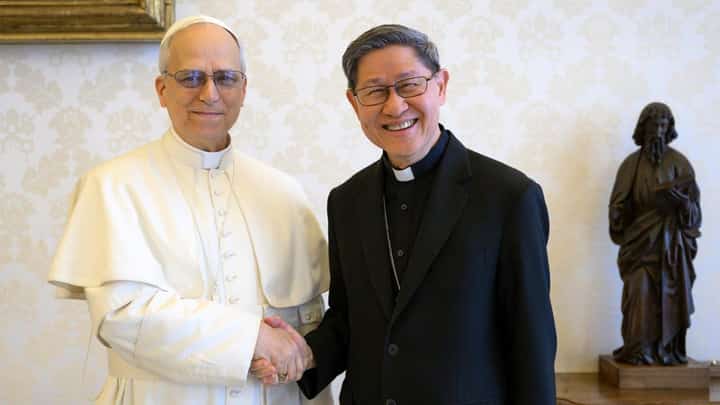
In the Sistine Chapel, during the Conclave, Cardinal Luis Antonio Tagle and Cardinal Robert Francis Prevost sat next to each other. On 16 May, during a private audience, they met once again, one week after Pope Leo XIV's election and his first Urbi et Orbi blessing.
The American-Peruvian cardinal and the Filipino cardinal have known each other for many years and, over the past two, have worked together closely as heads of their respective dicasteries—Bishops and Evangelization. In this interview with Vatican News, Cardinal Tagle offers a personal portrait of the new Pope, recounts the spiritual experience of the Conclave, and reflects on Pope Francis' legacy.
Q: Cardinal Tagle, Pope Leo XIV has begun his pontificate following a quick conclave. What stands out to you about this Pope, whom we are all just beginning to know?
A: I first met Pope Leo XIV in Manila and in Rome when he was still the Prior General of the Order of St. Augustine. We worked together in the Roman Curia starting in 2023. He has a deep and patient capacity for listening and engages in careful study and reflection before making a decision. The Pope expresses his feelings and preferences without imposing them. He is intellectually and culturally well-prepared, but without showing off. In his relationships, Pope Leo brings a calm warmth, shaped by prayer and missionary experience.
Q: On the eve of the Conclave, many spoke of a divided Church and cardinals with unclear ideas about choosing a new Pope. Yet the election concluded on the second day. How did you experience this Conclave, your second after 2013?
A: Before any major, global event, you hear speculation, analysis and predictions--and a conclave is no different. I have participated in two conclaves which I count as a real grace. In the conclave of 2013, Pope Benedict XVI was still alive, while in the conclave of 2025, Pope Francis had passed into eternal life. We should bear in mind the difference in context and atmosphere. While each of the two conclaves was a unique and unrepeatable experience, some elements remain constant.
In 2013, I wondered why we had to wear choral attire during the conclave. Then I learned and experienced that a conclave is a liturgical event - a time and space for prayer, for listening to God’s Word, the stirrings of the Holy Spirit, the groanings of the Church, humanity and creation, for personal and communal purification of motivations, and for worship and adoration of God, whose will must reign supreme. Both Pope Francis and Pope Leo were elected on the second day. The conclave teaches us, our families, parishes, dioceses, and nations that communion of minds and hearts is possible if we worship the true God.
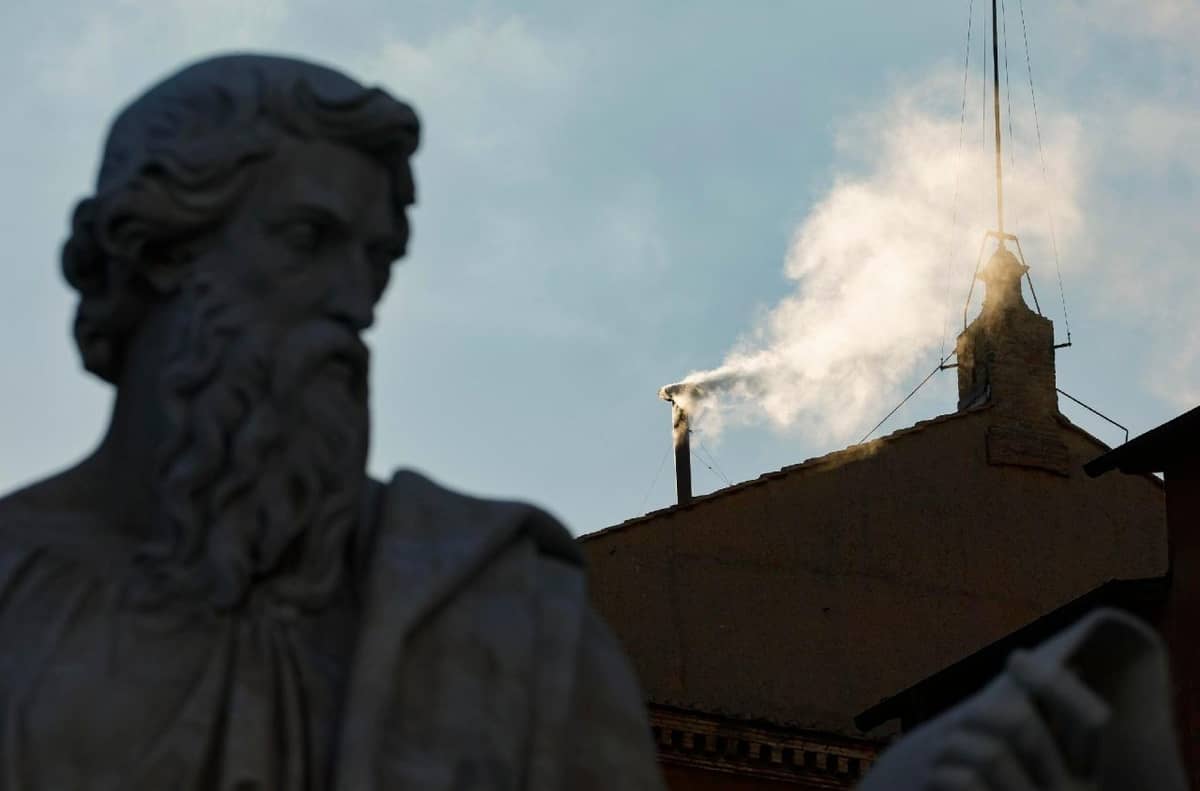
White smoke comes out of the chimney of the Sistine Chapel on 8 May 2025.
Agenzia Nazionale Stampa Associata (ANSA)
Q: In the Sistine Chapel, you were sitting next to Cardinal Prevost. How did he react when the 2/3 majority vote was reached?
His reaction alternated between smiling and breathing deeply. It was holy resignation and holy fear combined. I silently prayed for him. The moment he got the required number of votes, a thunderous applause erupted, (much like at the election of Pope Francis). The Cardinals expressed joy and gratitude for their brother, Cardinal Prevost. But it was also an intimate moment between Jesus and him, which we could not enter nor disturb. I said to myself, “Let holy silence envelope Jesus and Peter.”
Q: After a son of St. Ignatius, we have a son of St. Augustine. What do you think it means that the Church has one Pontiff after another who belonged to a major religious order, an Augustinian after a Jesuit?
A: St. Augustine and St. Ignatius had many things in common. They both had worldly careers and experienced a restlessness that led to adventurous pursuits. Then, at the time appointed by God, they found in Jesus what their hearts desired, "Beauty ever ancient, ever new", "Eternal Lord of all things." The Augustinian and Ignatian "schools" arise from a common ground of God’s graciousness and mercy which frees the heart to love, serve and go on mission.
While keeping his Augustinian spirit, Pope Leo will also echo the Ignatian spirit of Pope Francis. I believe the whole Church – and indeed the whole of humanity – will benefit from their gifts. After all, St. Augustine and St. Ignatius (and all the saints) are treasures of the whole Church.
Q: Cardinal Prevost was a missionary bishop. He was born and raised in the United States, but formed as a priest and pastor in Peru. Some have said he is the “Pope of two worlds.” From your perspective in Asia, how do people view such a Pope?
A: Without denying the primacy of grace in the ministry of Pope Leo, I believe that his human, cultural, religious and missionary background will give a unique face to his ministry. But this is true of all Popes. The Petrine ministry of strengthening brothers and sisters in the faith in Jesus, the Son of the living God, remains the same—but each Pope lives and exercises it through his unique humanity. Pope Leo’s multi-continental and multi-cultural background will surely help him in his ministry and benefit the Church. The people of Asia love the Pope as Pope, whichever country he comes from. He is loved not only by Catholics, but also by other Christians and followers of non-Christian religions.
Q: Many people were "supporting" you, hoping you would become Pope. How did you experience that? Were you aware that you were, as they say in Italian, a leading "papabile"?
As someone who does not enjoy being put in the limelight, I found the attention rather unsettling. I tried to muster spiritual and human strength in order not to be affected. I meditated a lot on the words of the apostolic constitution Universi Dominici Gregis concerning "the grave duty incumbent on (the Cardinals) and thus on the need to act with right intention for the good of the Universal Church, solum Deum prae oculis habentes."
While placing his ballot, each Cardinal says, "I call as my witness Christ the Lord who will be my judge, that my vote is given to the one who, before God, I think should be elected." It is clear that there are no "candidates" in the worldly sense of political elections, where a vote for one is a vote against another. When you seek the good of the Universal Church, you do not seek for winners and losers. This guiding principle purifies the mind and brings peace.
Q: We are approaching the one month anniversary of Pope Francis’ death. In your view, what will be the most lasting legacy he leaves to the Church and to humanity?
My heart is gladdened by the numerous testimonies given by the Catholic faithful, non-Catholic Christian communities and members of non-Christian religions about the teaching and legacy of Pope Francis. I hope these testimonies continue to grow and be "gathered" as part of our understanding not only of Pope Francis but also of the Petrine ministry.
For my part, I would highlight his gift of humanity—of being human to others—which marked his Pontificate. If you have a personal story to tell about him, share it. Our world needs to rediscover and to nurture the beauty and worth of being authentically human. Pope Francis, through his simple and even frail humanity, has contributed immensely to this search, not for his own glory, but for the greater glory of God, who in Jesus became fully human.
(Source: By Alessandro Gisotti, Vatican News)