




Sindoor doctrine

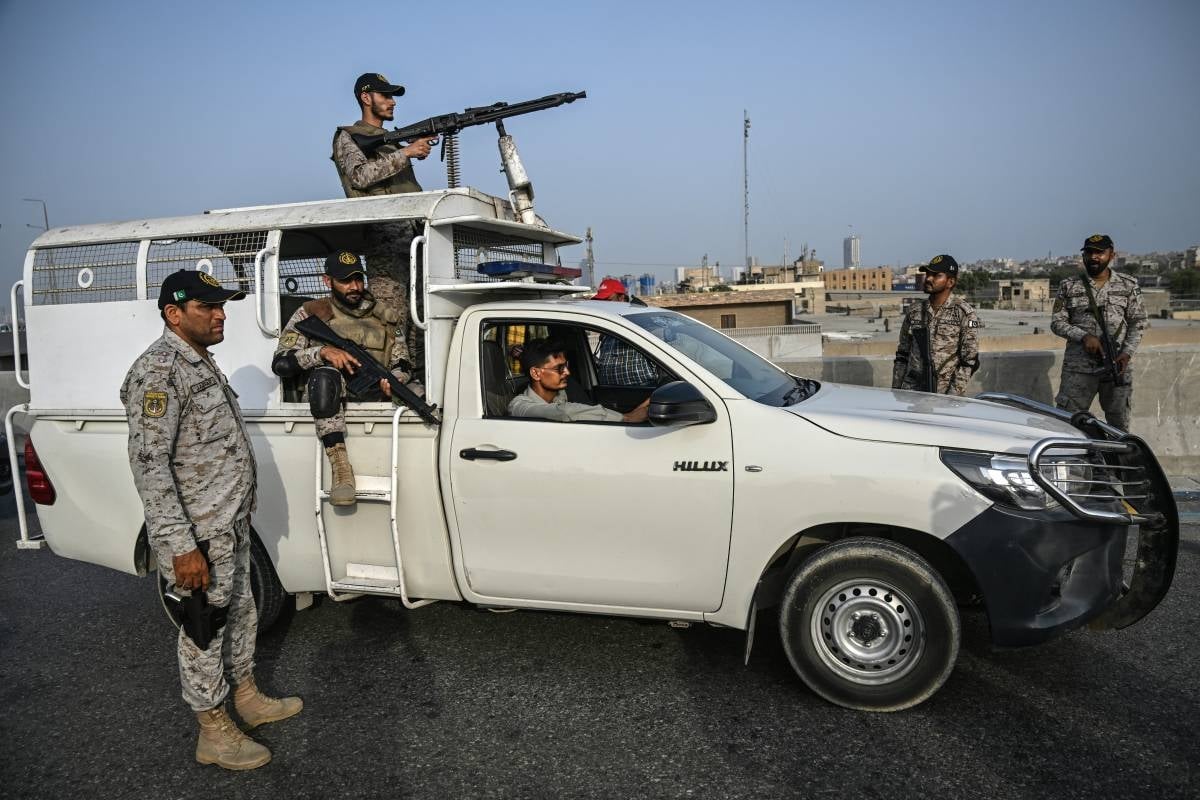
Security forces stand watch at Karachi Port on 9 May, as India’s Operation Sindoor intensifies tensions with Pakistan following the 22 April massacre of civilians in Kashmir’s Pahalgam region.
AGENCE FRANCE-PRESSE
Text size
Security forces stand watch at Karachi Port on 9 May, as India’s Operation Sindoor intensifies tensions with Pakistan following the 22 April massacre of civilians in Kashmir’s Pahalgam region.
AGENCE FRANCE-PRESSE
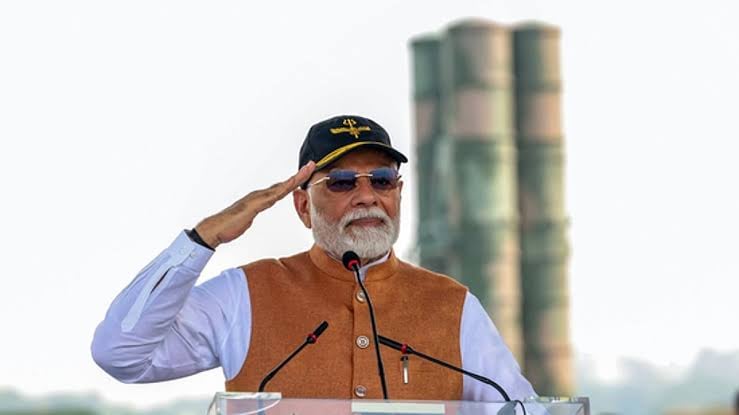
Prime Minister Modi frames Operation Sindoor as military retaliation and symbolic justice, turning a tactical strike into a public reckoning rooted in honor and emotion.
AGENCE FRANCE-PRESSE
Some military operations unfold in silence, cloaked in plausible deniability and the hush of diplomatic restraint. India’s Operation Sindoor was not one of them.
Late into the night of 6 May, and in the bleary hours that followed, India launched a coordinated assault on terror camps inside Pakistan, missile strikes, drone hits, surgical precision, the works.
By morning, the targets in Bahawalpur and Muridke were reduced to rubble. The Indian government claimed over a hundred militants dead, many of them linked to a grisly 22 April attack in Pahalgam that left civilians slaughtered in front of their families.
An act Prime Minister Narendra Modi described as a wound on the soul of the nation.
But this wasn’t just a military response. It was a narrative strike.
The name itself, Operation Sindoor, said as much. Sindoor, that thin red line worn in the hair parting of married Hindu women, was transformed overnight from a cultural tradition into a symbol of violated sanctity, and then, just as quickly, into a justification for airstrikes.
“The terrorists wiped off the sindoor of our sisters,” Modi said in a nationally televised address. “India responded by erasing their headquarters from the map.”
To Western ears, this might sound surreal: missiles fired in the name of symbolic pigment. But in India’s current political climate, it lands with brutal clarity.
Here, national honor isn’t an abstraction. It has color, gender, memory. It bleeds.
There is, to be fair, a practical military precedent. This isn’t India’s first cross-border retaliation. There were the surgical strikes in 2016. The Balakot airstrike in 2019.
But those were strategic responses dressed in vague language. Sindoor is something else: it’s deeply emotional, unabashedly performative, and deliberately mythic.
It’s hard to ignore the choreography. Within hours, Indian news networks exploded into a frenzy. There were graphics of exploding terror hubs, patriotic montages scored with orchestral swells, and guest panels stacked with generals, spiritual gurus, and Bollywood personalities.
It felt less like war coverage and more like the Super Bowl halftime show of nationalist catharsis.
And yet, for all the spectacle, there’s something raw beneath it. The Pahalgam attack was not abstract.
It was intimate, horrifying, targeted. The victims weren’t soldiers. They were families. Children. Grandparents. There’s a reason Modi leaned into the domestic metaphors, sindoor, sisters, daughters.
He wasn’t addressing generals. He was speaking directly to living rooms.
What’s less clear is what comes next. Pakistan, as expected, denies the existence of these terror camps and has condemned the strikes as aggression.
The international community is cautiously hedging: the US reiterated India’s right to self-defense, while European powers issued sterile calls for “de-escalation.” The usual fare.
But escalation isn’t necessarily the point anymore. India, under Modi, isn’t playing the old game of tit-for-tat.
It’s writing a new script, where the battlefield is also the stage, and retaliation is a public performance designed not just to punish, but to galvanize.
Critics say it’s dangerously theatrical. That it blurs the line between justice and vengeance.
That it plays fast and loose with the kind of symbolism that can burn a nation’s fingers if handled too long.
And maybe they’re right. Or maybe this is what modern warfare looks like in the post-truth era: strikes timed for prime time, military briefings with the pacing of movie trailers, and national trauma rebranded as a moral crusade.
Three decades after the Marcopper mining disaster devastated Marinduque’s waterways, the province is again pressing the…
Housing is probably the biggest issue affecting people the world over.
Malacañang on Monday called for a more thorough investigation into the questioned flood control projects in Taguig…
The defense on Monday backed the move by senator-judges to exclude a prosecution witness who testified on the firearms…
