
The future of Filipiniana: Fashioned with fresh imagination and inspired by artistic heritage
Philippine visual arts and fashion meld in ‘Filipiniana X Obra,’ an exhibit featuring capsule collections by the winners, mentors, and finalists of TernoCon 2025.

‘TernoCon 2025 X Conversations’ with TernoCon 2025 winners Peach Garde, Bryan Peralta and Ram Silva, hosted by CCP’s Glaiza Lee.
Photographs by Roel Hoang Manipon for Daily Tribune
FIRST OF TWO PARTS
For fans and proponents of what many deem as the Philippine national dress, the Cultural Center of the Philippines (CCP) is holding an exhibit at the National Museum of Fine Arts in Manila to satisfy their fashionably patriotic heart. In Filipiniana X Obra, terno collections inspired by the masterpieces of Filipino master visual artists, many of whom were declared National Artists, are on display at the Sandiganbayan Reception Hall from 25 February to 11 May.
The exhibit features capsule collections designed by the winners, mentors, and finalists of the recently concluded TernoCon 2025, CCP’s groundbreaking workshop, competition and showcase on the terno.
“This is the fourth edition of TernoCon, our advocacy to preserve and promote the Philippine terno through education, convention and competition. This year, we received a total of 82 entries from Ilocos Norte to South Cotabato,” said Ben Chan, head honcho of the fashion brand Bench and the company, Suyen Corporation, which is a co-organizer of TernoCon.
With Ricardo “Eric” Cruz serving as artistic director, and Gino Gonzales, the founding artistic director of TernoCon, as consultant, TernoCon 2025 had 12 finalists, who were given the instructions to create three garments that celebrate our culture: The kimona with alampay, a piece of cloth draped on the shoulder, and the Visayan wraparound skirt called patadyong;, the balintawak, worn with the alampay and tapis, a wraparound skirt; and the terno but with the addition of the panuelo or fichu.
“TernoCon plays a crucial role in CCP’s dedication to providing an avenue for the exploration of budding fashion designers. While promoting the excellent craftsmanship behind the reinterpretations of the national dress, the Filipiniana x Obra exhibit sustains the dialogue TernoCon started and integrates it with the profound portrayal of Philippine culture through visual arts,” CCP president Kaye C. Tinga said.
Featured are the winning collections of Peach Garde from Tapaz, Capiz, winner of the Gawad Pacita Longos (gold medal) of TernoCon 2025, reinterpreting the works of National Artist for Architecture Leandro Locsin; Bryan Peralta from Makati City, winner of the Gawad Pura Escurdia (silver medal), who took inspiration from the works of National Artist for Visual Arts José Joya; Ram Silva from Iloilo, the Gawad Ramon Valera (bronze medal) winner, who drew inspiration from the works of National Artist for Visual Arts Fernando Amorsolo; and Windell Madis from Ilocos Norte, winner of Gawad Joe Salazar Medal (Chief Mentor’s Medal), inspired by the works of National Artist for Visual Arts Hernando R. Ocampo.
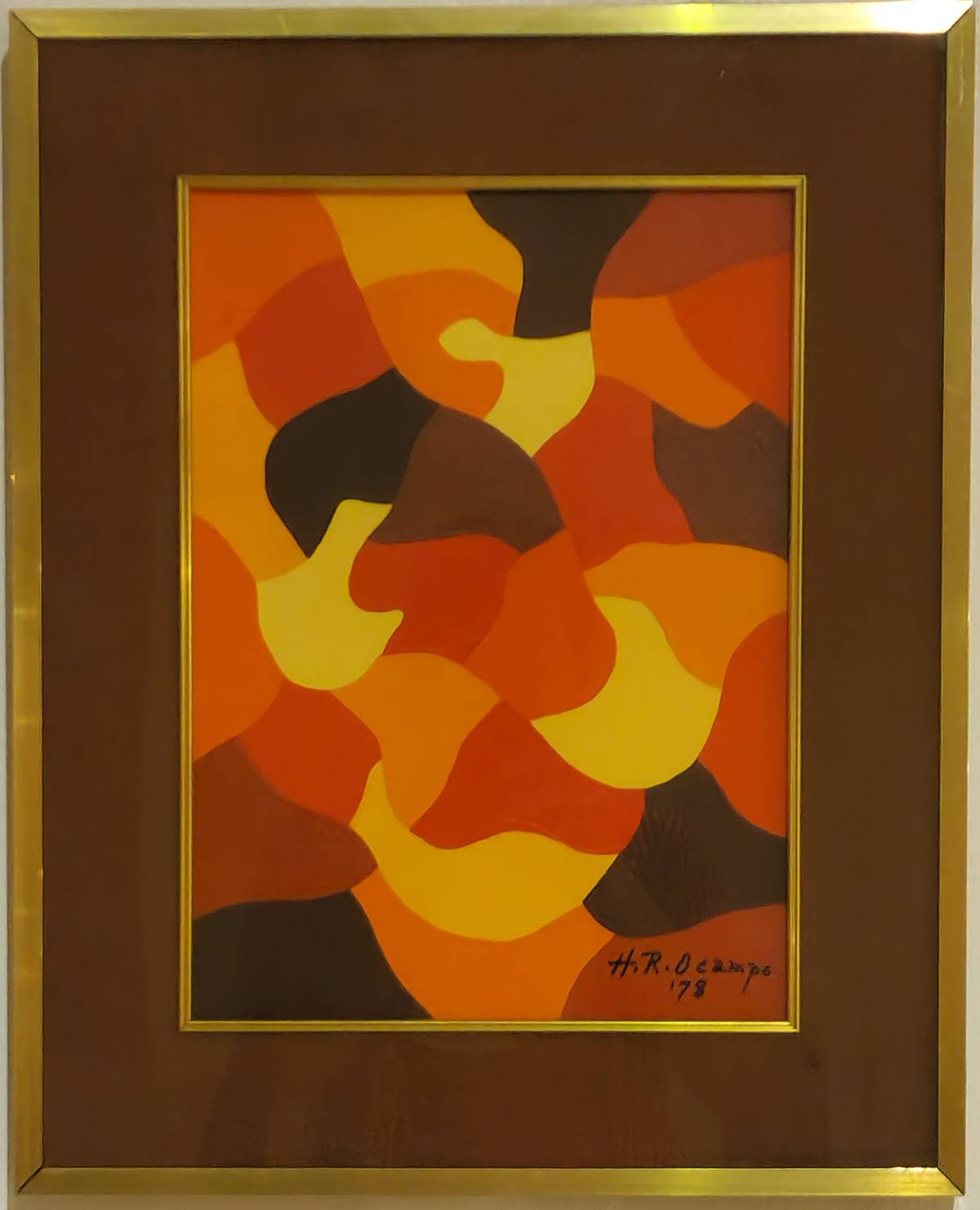
‘Abstract’ (acrylic on paper, 1978) by Hernando Ocampo.
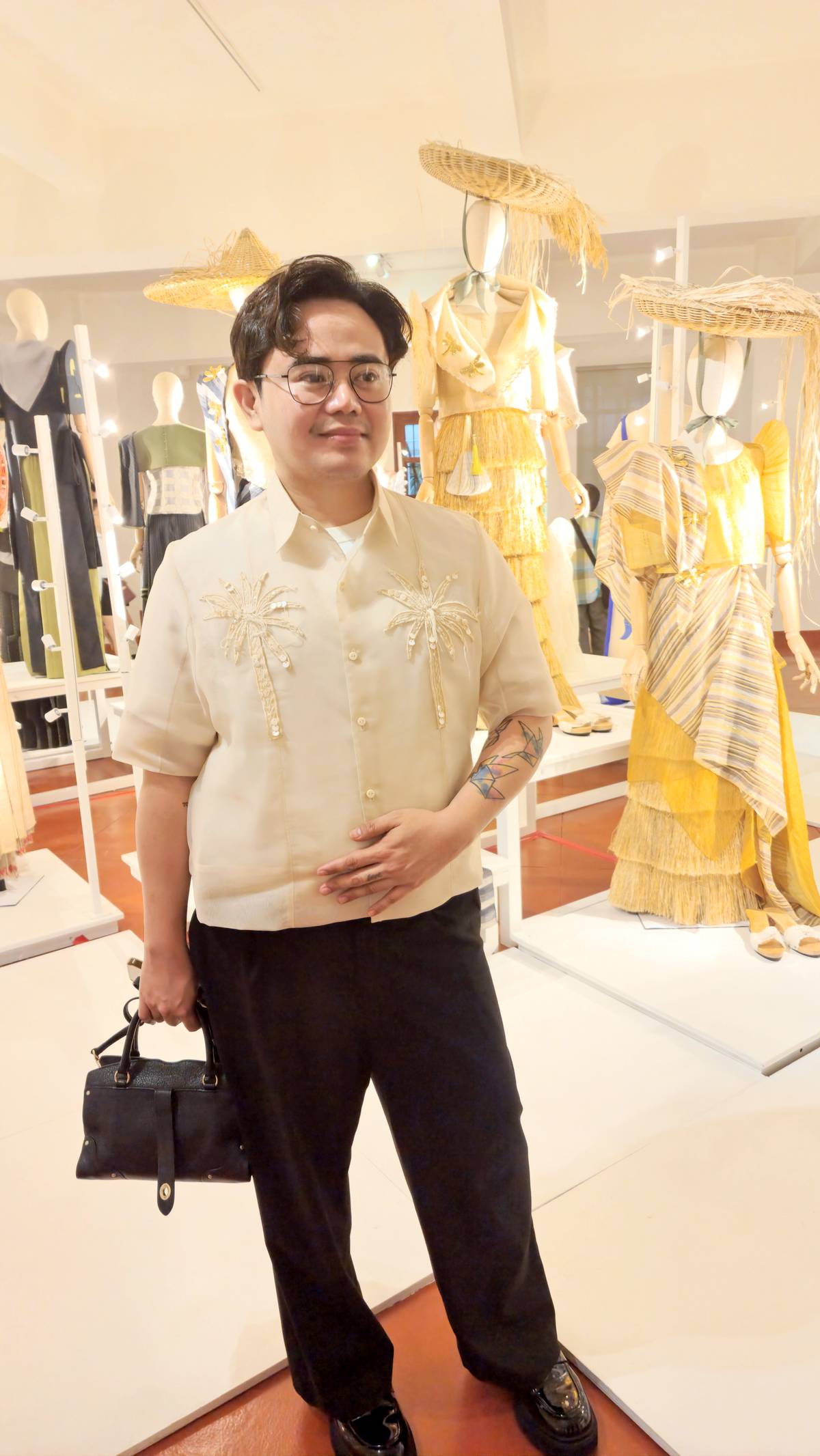
Ram Silva, winner of Gawad Ramon Valera (bronze medal) of TernoCon 2025.
Also on display are the works of TernoCon 2025 finalists Koko Gonzales from Mandaluyong City (inspired by the works of Onib Olmedo); Jared Servano from South Cotabato (inspired by the works of Nena Saguil); Lexter Badana from Capiz (inspired by the works of Ramon Orlina); Geom Hernandez from Batangas (inspired by the works of National Artist Hernando R. Ocampo); Patrick Lazol from Tarlac (inspired by the works of National Artist José Joya); Nina Gatan from Quezon City (inspired by the works of Imelda Pilapil); Irene Subang from Negros Occidental (inspired by the works of National Artist Benedicto “BenCab” Cabrera); and Jema Gamer from La Union (inspired by the works of National Artist Vicente Manansala).
Semi-finalist Noel Marin, who leaned into traditional materials used in enagua (petticoat), presents the national dress in pastel colors. Additionally, TernoCon 2023 gold medalist, Yssa Inumerable, also presents a capsule collection, inspired by the works of Anita Magsaysay-Ho.
On the other hand, the TernoCon mentors — Rhett Eala, Lulu Tan-Gan and Ezra Santos — also showcase their collections, inspired by Lao Lianben (for Eala), National Artist Ang Kiukok (for Tan-Gan), and National Artist Abdulmari Asia Imao (for Santos).
Accompanying the fashion creations are artworks by the artists including Magsaysay-Ho’s Three Women with Baskets; Lao Lianben’s Rain; Ocampo’s Abstract; Joya’s New York City No. 2; Kiukok’s Still Life: Table; and Ramon Orlina’s glass sculpture Elegance in Simplicity.
Supplementing the exhibit was the talk, “TernoCon 2025 X Conversations,” held on 29 April at the Sergio Osmeña Function Hall of the National Museum of Fine Arts. Open to the public, the event featured Garde, Peralta and Silva, who talked about their works, their creative processes and thoughts on different issues concerning the terno.
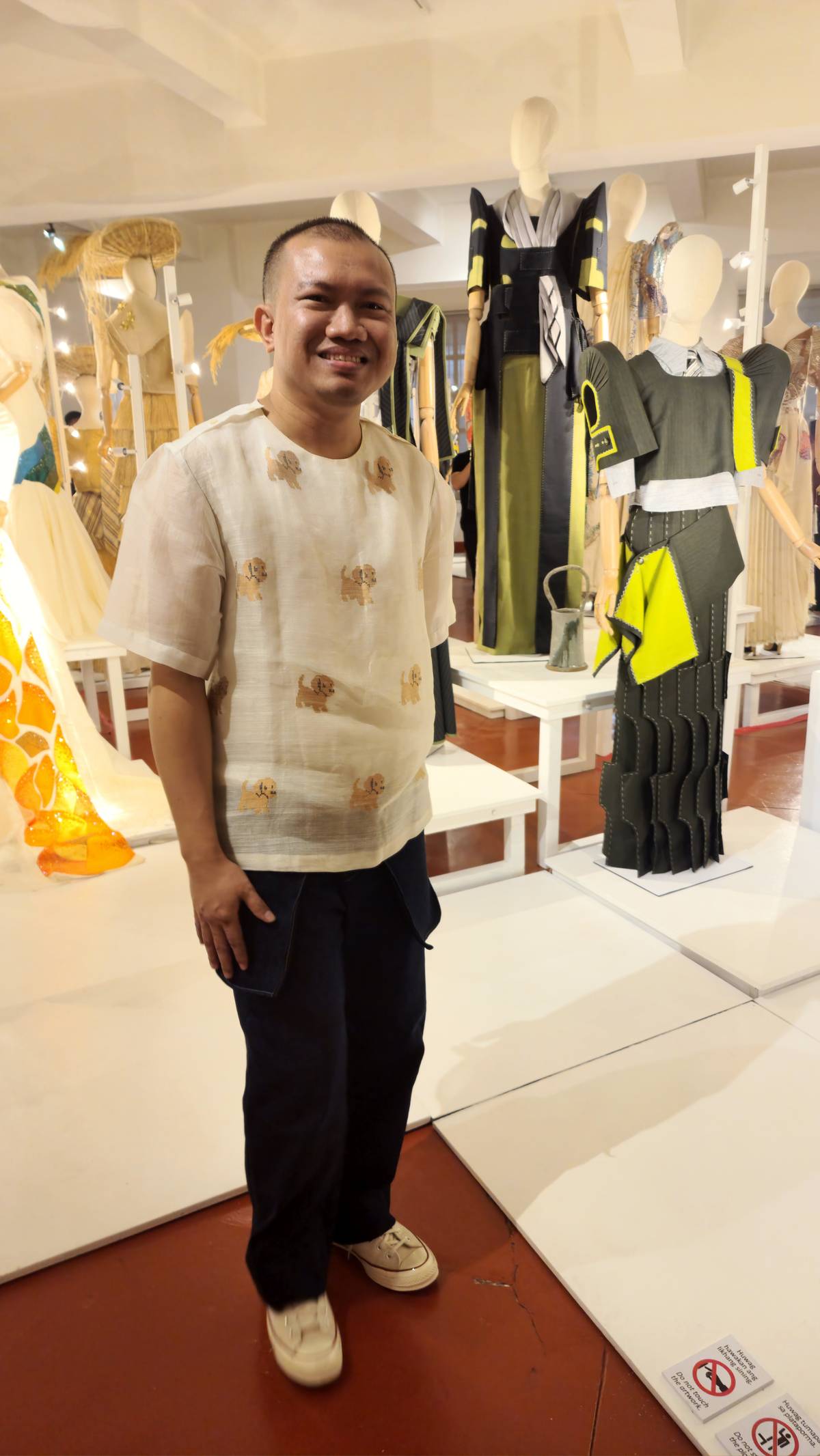
Peach Garde, winner of Gawad Pacita Longos (gold medal) of TernoCon 2025.
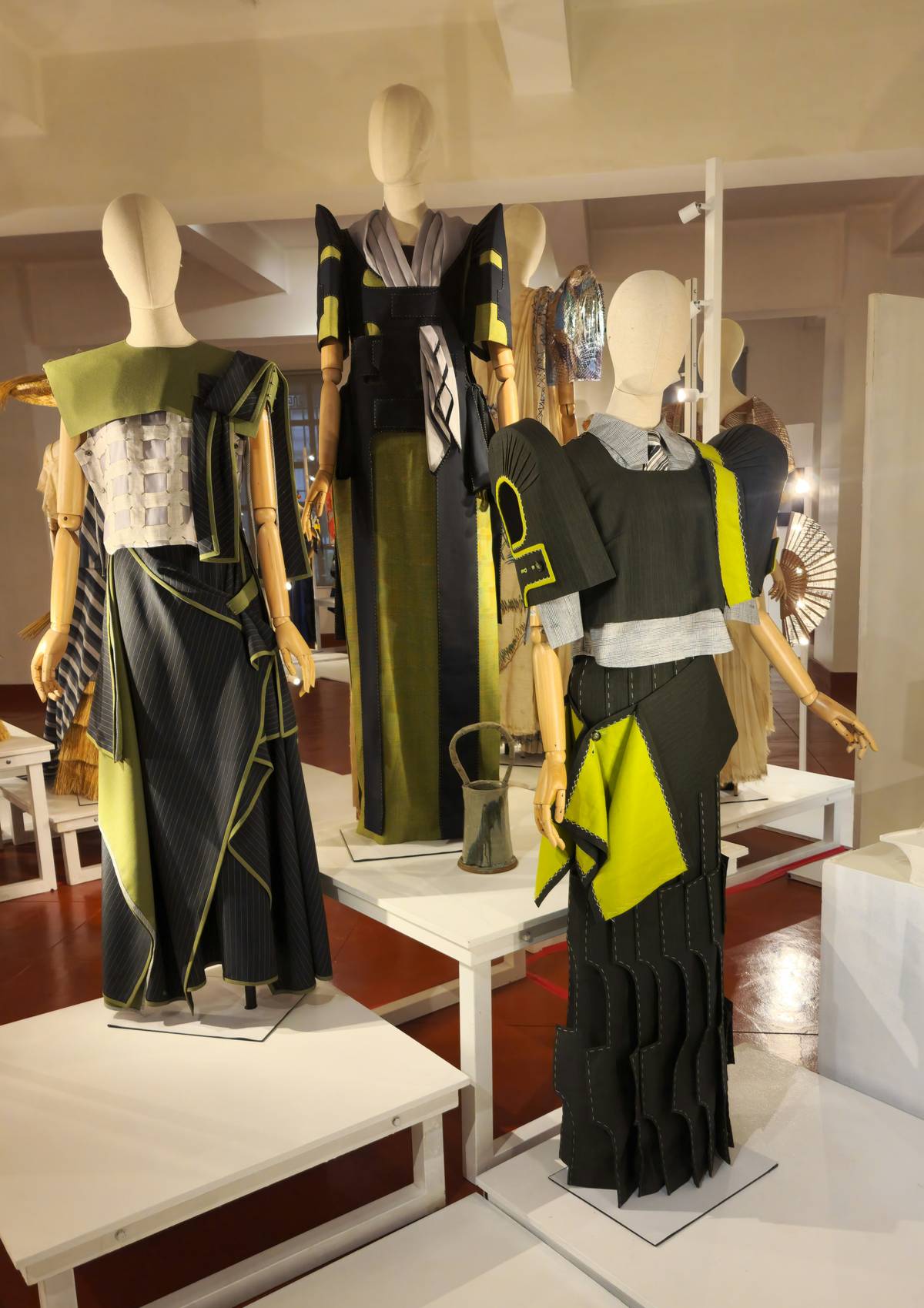
The winning capsule collection of Garde, inspired by the works of National Artist Leandro Locsin.
Peach Garde, winner of Gawad Pacita Longos (gold medal)
The visionary designer behind the brand Peach.Garde started out with a Bachelor of Science degree in Nursing. His pivot to fashion began with a stint at SM City Iloilo mall. He emerged as the champion in his university’s version of Project Runway and also won in a research competition. In 2018, he was the first runner-up in the Iloilo New Breed Fashion Challenge, and in the same year, graduated with a degree in Fashion Design and Merchandising.
Garde finished a British Bespoke Tailoring course at Slim’s Fashion and Arts School in 2023. He is a part-time instructor at the Iloilo Science and Technology University, and mentored a student who won the prestigious title in Stitch-Off: National Streetwear Competition in 2023.
The creative from Tapaz, Capiz, is also one of three winners at the recent Bench Design Awards 2025. Mentored by Eala at TernoCon, he explained his TernoCon capsule collection: “My strength in tailoring and handwork coupled with my interest in crisp and clean finishing of garments, gave me confidence to translate brutalism into fashion. I took inspiration from the bold silhouettes and structures, sharp edges and angular shapes of architect Leandro Locsin’s works and transformed them into wearable art through the lens of tailoring.”
Garde also revealed his winning work ethics and creative process: “The Pacita Longos Award is not just for my growth as a young designer, but I also dedicate it to my mother in heaven, my family, my mentors who kept on pushing me to join the competition, and to the young ones, especially my students from the province.
“Earlier in 2024, we had a fashion show in Iloilo (Iloilo New Breed Fashion Show) with brutalism as the theme. So, I still have residues of ideas from that show. Then, I looked for a brutalist artist in the twentieth century. I chose Leandro Locsin because of his sharp and precise lines, which I believed I can translate to clothing and wearable art. My style is known for being minimal, clean and tailored.
“The fabrics I used were sourced locally. They are mostly polyester suiting and shirting fabrics. I also have silk and natural piña for my kimona look.
“I believe that I have a strong idea about producing a brutalist collection. But there were so many suggestions and alterations from the mentors. I knew already which of my fabrics can really work with my tailoring skills, but the collection was really enhanced and improved through the help of the mentors.
“Before TernoCon, we had just started our RTW line. Now, we will push through with joining pop-ups.
“The award is not just a title now but a responsibility. As a fashion instructor also, I will do what I can to promote the terno starting with the young ones. And hopefully in the near future, I can represent the country in the international stage.”
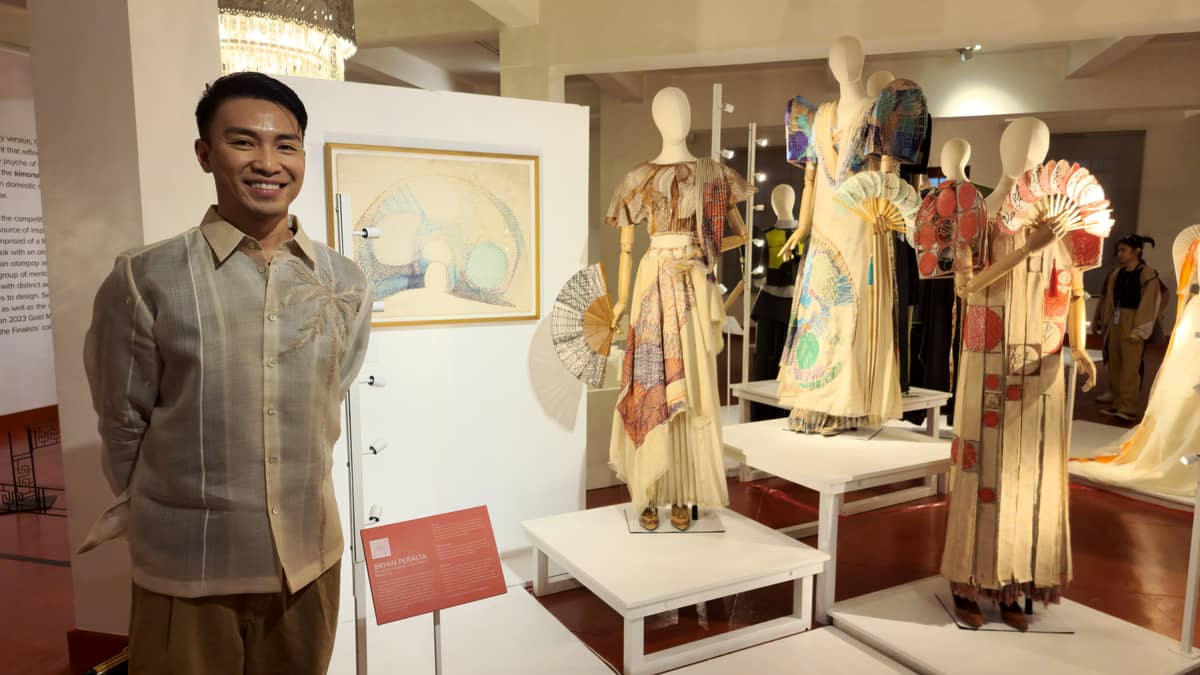
Bryan Peralta, winner of Gawad Pura Escurdia (silver medal) of TernoCon 2025.
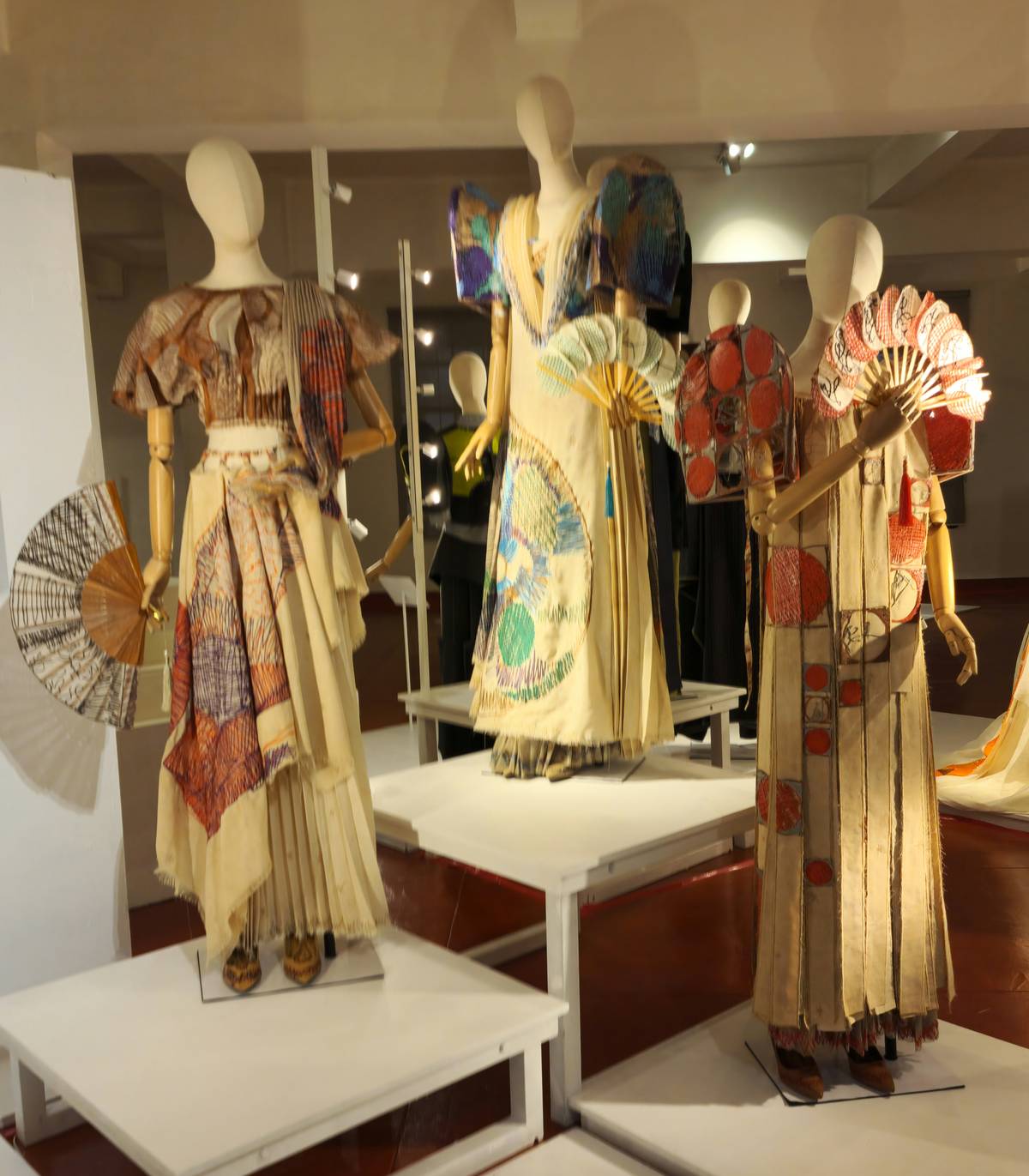
Peralta’s terno, balintawak and kimono, inspired by the works of National Artist José Joya.
Bryan Peralta, winner of Gawad Pura Escurdia (silver medal)
A product of the Fashion Institute of the Philippines, Peralta was recognized with his Third Best Collection and Garment Construction Awards. He worked as an intern for the renowned designer Veejay Floresca, who is now based in the United States, before launching his own design studio in Makati, Bryan Peralta Designs, he’s known for creating timeless, minimalist, and modern pieces for evening and bridal wears.
At TernoCon, he was mentored by Tan-Gan. Peralta shared his thoughts on being a promising designer and his passion for the craft of design: “We are standing on the shoulders of giants, the likes of Pacita Longos, Pura Escurdia, Ramon Valera, Joe Salazar most notably, but also of designers of more recent times, everyone who have created the most imaginative and exciting renditions of terno, balintawak, kimona and patadyong, from the beautifully traditional to the excitingly modern.
“As a winner, but also as finalists of TernoCon, our duty is to carry the torch and build on what these ‘imagineers’ have started. There are codes and components, but the language can be ours. Once we learn and respect those codes, then we can take ownership of it and get really creative!
“I’m often drawn to abstract expressionism and minimalist design so when I was doing my research and visiting museums I immediately gravitated towards the works of José Joya, our National Artist for Visual Arts who pioneered Abstract Expressionism in the Philippines in the early 1960s. Specifically, I was hypnotized by the seemingly random doodles of his New York Series found at the National Museum of Fine Arts.
“There is a certain quiet and austerity in them, just random zigzags forming shapes and creating shading and lighting, floating against its yellowing canvas. As an artist, José Joya is known for his gestural paintings and sweeping impastos, but I personally connected more towards his lesser known but equally impactful line drawings which he proliferated during his travels abroad.
“In the book Joya Drawings, I found a lot of his early abstract drawings based on coins, amulets, and artifacts he saw during his museum visits in New York. There were a lot of discs, circles and squares, and talisman-shaped drawings filled with various details, irregular shapes that looked primitive. In lieu of shadows, he used zigzag lines to created depth and form. He wasn’t afraid of colors either. And just as his paintings did, the drawings often exploded out of nowhere on the paper and then swiftly disappeared. All of these dictated the overall feel and look of my collection.
“I wanted to interpret the terno in a way that has been around for a while but in the myriad of ways that the terno has been created in the past, I felt like this could offer a fresh new visual to this singularly iconic Filipino garment, and that is by 3D printing! The idea was to interpret José Joya’s line drawings using different techniques and one of them is embroideries. I had to teach myself how to use an embroidery machine and copy the zigzagging lines he drew to create darker shades and lighter areas in the drawings. I also used waxed cords to add dimension and texture to the fabrics.
“However, I didn’t stop there, I had to think of another technique that could recreate the lines and push the narrative to another level, and that’s when I thought of using a 3D pen! Several iterations later, the idea totally evolved from just embroidering the line drawings on fabric to reimagining the terno sleeves and rendering it in full 3D printing. What I ended up with are three distinct looks that immerse themselves in all of Joya’s drawings using traditional and modern techniques.
“The task was two-fold. First, I knew from the very beginning that what I want to end up with are pieces that combined tradition and innovation to offer a new proposal. Second, I wanted the clothes to really capture Joya’s drawings to look like art. We were asked to draw inspiration from Filipino artists and their art so I would be remiss if I did not even attempt to make the clothes evoke the same feeling I felt looking at Joya’s art. These are what guided me through the whole process.
“The evolution of rendering the line drawings from flat embroideries to raised and textured cord, to 3D printing, it was all inspired by the idea of progression, much like Joya’s quest of finding his own style from being classically trained to discovering his Abstract Expressionist side. All the components like the enaguas, the panuelo, small details like scallop finishings, we made sure to include them in the treatments but done in the language of Joya’s art. Curved scallops turned into zigzags, foliage motifs found on Filipiniana fabrics were simplified into asterisks. It was all thoughtful and considered. The clothes all had to feel easy, often shapeless, and aged like those canvasses. I wanted them to look familiar, but the sleeves would take center stage (or maybe flanking the center because they’re technically on the sides).
“I want to start a small line of Filipiniana of thoughtfully designed terno, balintawak and kimona. There is a renewed love of everything Filipino especially with the youth, and I want to be a part of that. Also, I invite every designer to try joining TernoCon next season. As Filipino creatives, there is nothing more distinguishing than pulling from your own heritage. Fortunately, we have a beautiful one! Mabuhay ang kasuotang Filipino!”
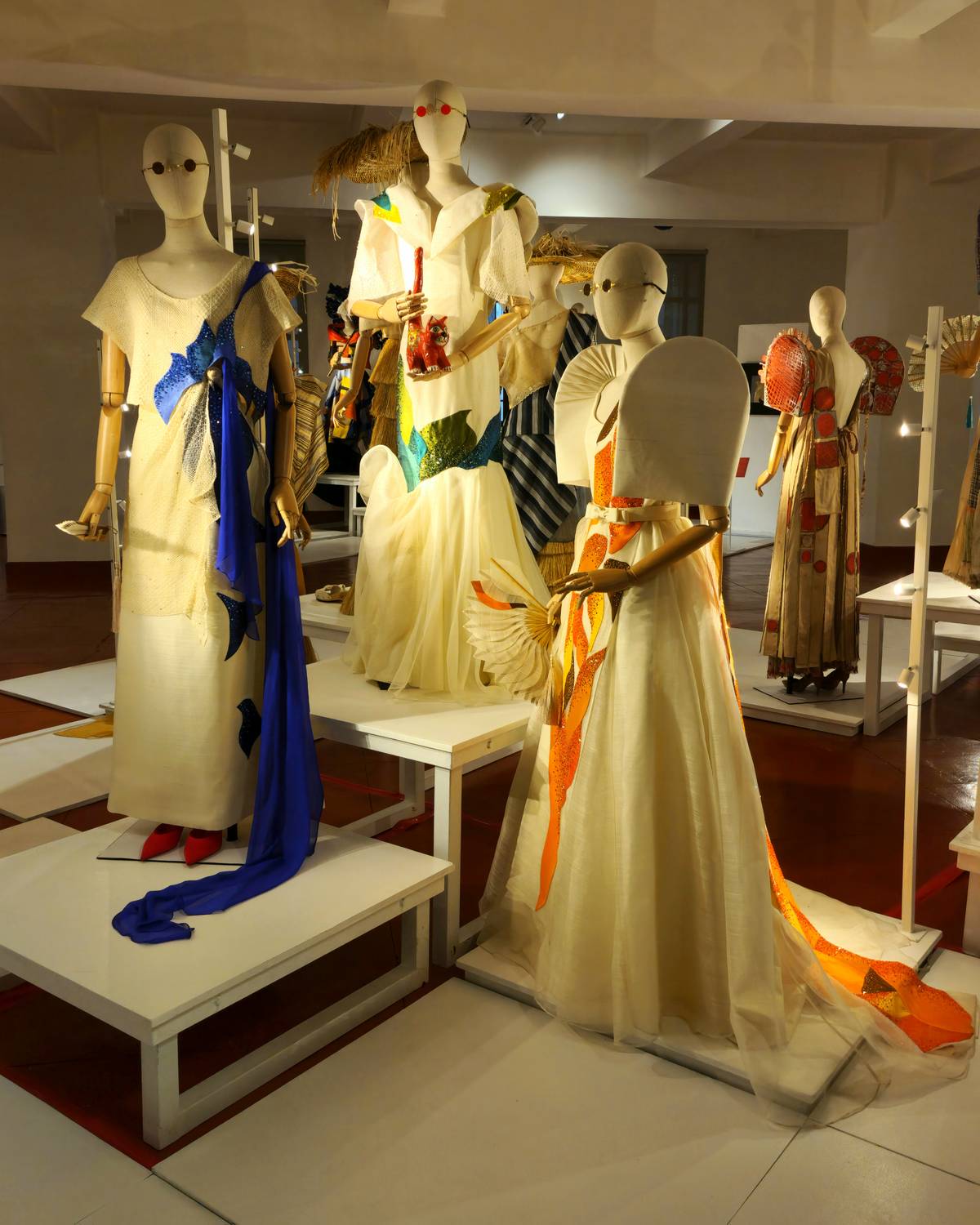
Inspired by the works of National Artist Hernando R. Ocampo, the collection by Windell Madis, winner of Gawad Joe Salazar of TernoCon 2025.
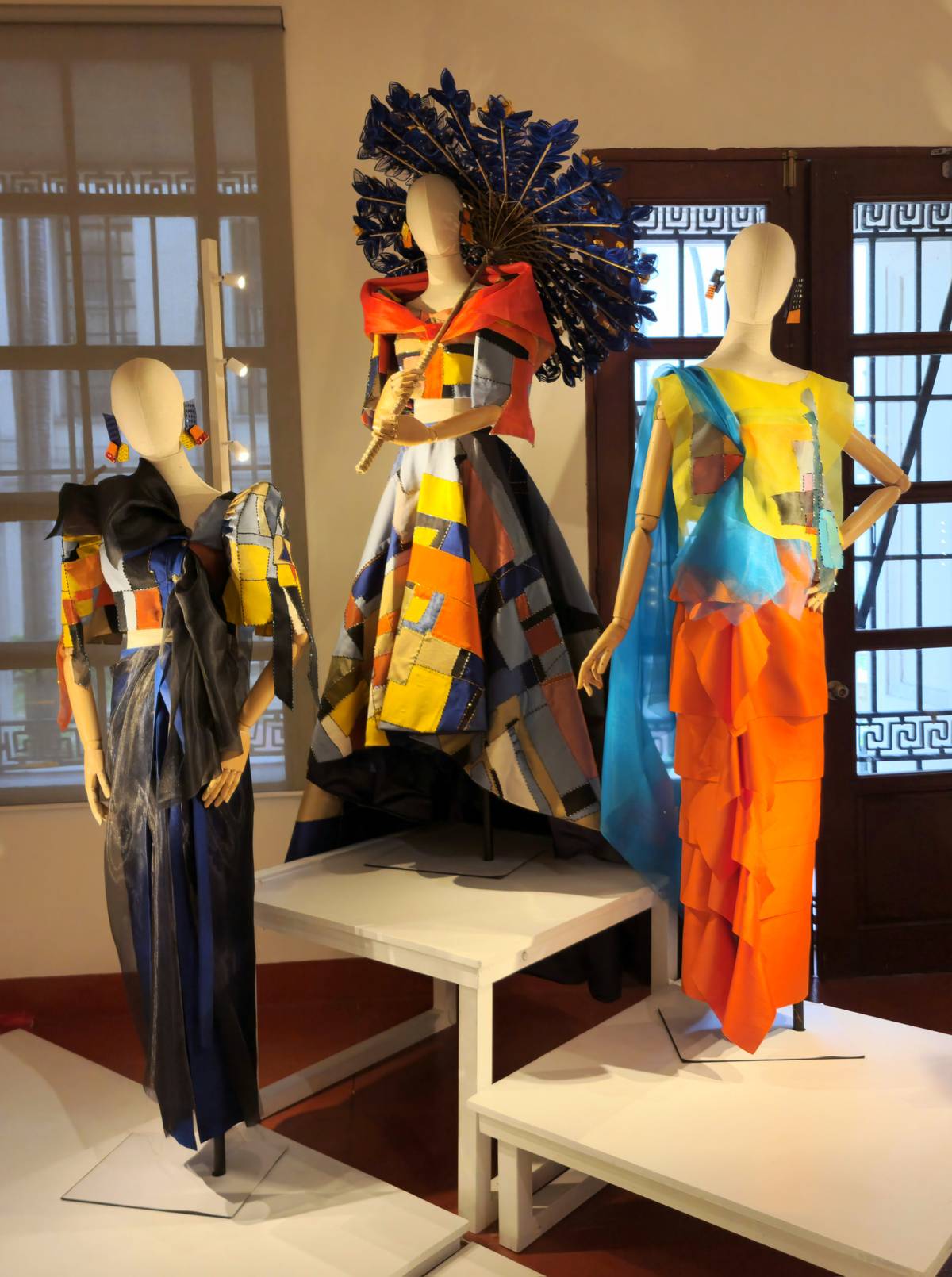
The capsule collection of TernoCon 2025 finalist Jema Gamer from La Union.
Windell Madis, winner of Gawad Joe Salazar (Chief Mentor’s Medal)
Madis’ fashion career started in 2015 when he became a finalist of on the third season of Project Runway Philippines. He was a finalist at TernoCon in 2020. His avant-garde and innovative flair attracted seasoned designer Jojie Lloren, for whom Madis worked as an assistant designer and project manager for five years.
Mentored by Eala, the rising talent from Batac City, Ilocos Norte, shared his thoughts on his winning collection, for which he used piña-seda, piña calado, dupioni silk, and Thai silk: “Winning the Joe Salazar’ Award for me is such a blessing. I’ve manifested this award. Thank goodness I received it. As a Filipino designer intimate with my heritage and proud of my roots, I love to help men and women express their individuality through fashion.
“The three-piece collection — terno, balintawak, kimono — is a visual and sartorial ode to the works of Hernando Ruiz Ocampo, the National Artist for Visual Arts, celebrated for his bold abstract paintings. The collection translates Ocampo’s biomorphic drawings, radiant color palettes and evocative landscapes into wearable art. Each garment pays homage to a specific masterpiece, intertwining Filipino heritage with contemporary abstraction.
“I love researching! I draw inspirations from the most unexpected of things. My design process is grounded on humor and curiosity. I am committed to evolving while staying true to my style. I love the creative freedom designing gives me
“I am a designer who thinks outside of the box. I don’t conform to what is new. I always think my design aesthetics are always classic, clean, yet effortlessly feminine. My design principle is the garments that I’m producing are somehow walking works of art.”
To be continued