




Trump 2.0’s impact on world affairs
“Obviously, funding fatigue among western donors and a partial Russian victory, sold as the best achievable outcome, are the greatest threats to Ukraine in 2025.

Text size
“Obviously, funding fatigue among western donors and a partial Russian victory, sold as the best achievable outcome, are the greatest threats to Ukraine in 2025.
Global think tanks assiduously monitoring geopolitical developments, current affairs and shifts in policies by world leaders see Donald Trump’s re-ascension to power as US President looming large over Asia in 2025 as the region’s leaders consider how far he’ll pursue a renewed trade war with China and what impact his unpredictable administration will have on such key flashpoints as the South China Sea, Taiwan and North Korea.
Known for his ambivalence, that is, shifting between being transactional and confrontational, President Trump could worsen the existing tensions with China over Taiwan and the South China Sea or, because he can do it, sell out the US allies and partners in Asia.
South Korea is currently going through political turmoil while the challenge posed by North Korea is intensifying with Kim Jong Un belligerent more than ever, sending soldiers to fight for Russia against Ukrainians while building nuclear armaments at home.
Ben Bland, director for the Asia Pacific Programme of the Royal Institute for International Affairs, the London-based think tank known as Chatham House, says the link between the US, China, Russia, North Korea and Europe will come into sharper view with Trump suggesting he may pursue a Ukraine peace deal with Vladimir Putin. Or he may cut support for Kyiv altogether.
In terms of the world economy, investors and governments are waiting for the realization of Trump’s proposed tariffs on China and the latter’s and the regions’ other trade-dependent nations’ response.
In China, meanwhile, Bland notes that “beyond tariffs, China’s leader Xi Jinping will face sluggish growth at home,” while faced with a private sector whose spirits have been crushed by Xi’s drive to tighten his control of the Chinese Communist Party.
Overall, Trump’s policy choices as his second term as US president gets under way will likely dominate the outlook for the global economy in 2025.
If he follows through on the threat he made during the campaign to slap 10 to 20-percent tariffs across the board on imports from other countries, and 60 percent on Chinese imports, the rest of the world will need to decide whether to retaliate with their own tariffs or seek to negotiate a deal with the US.
The deportation of millions of illegal immigrants expected to incur massive amounts of resources and Trump’s expansionary fiscal policy could lead to a resurgence of US inflation in the coming year and how the Federal Reserve responds will be critical for both US domestic financial markets and its currency, warns Chatham House’s Global Economy and Finance Program director Creon Butler.
Butler takes note of Trump’s apparent favoring of private digital currencies (cryptocurrency). “If combined with a push to deregulate financial services, that is, undoing post global financial crisis reforms, this could force other countries to take steps to protect their own financial systems, which could come to a head at the IMF/World Bank annual meetings in October,” he says.
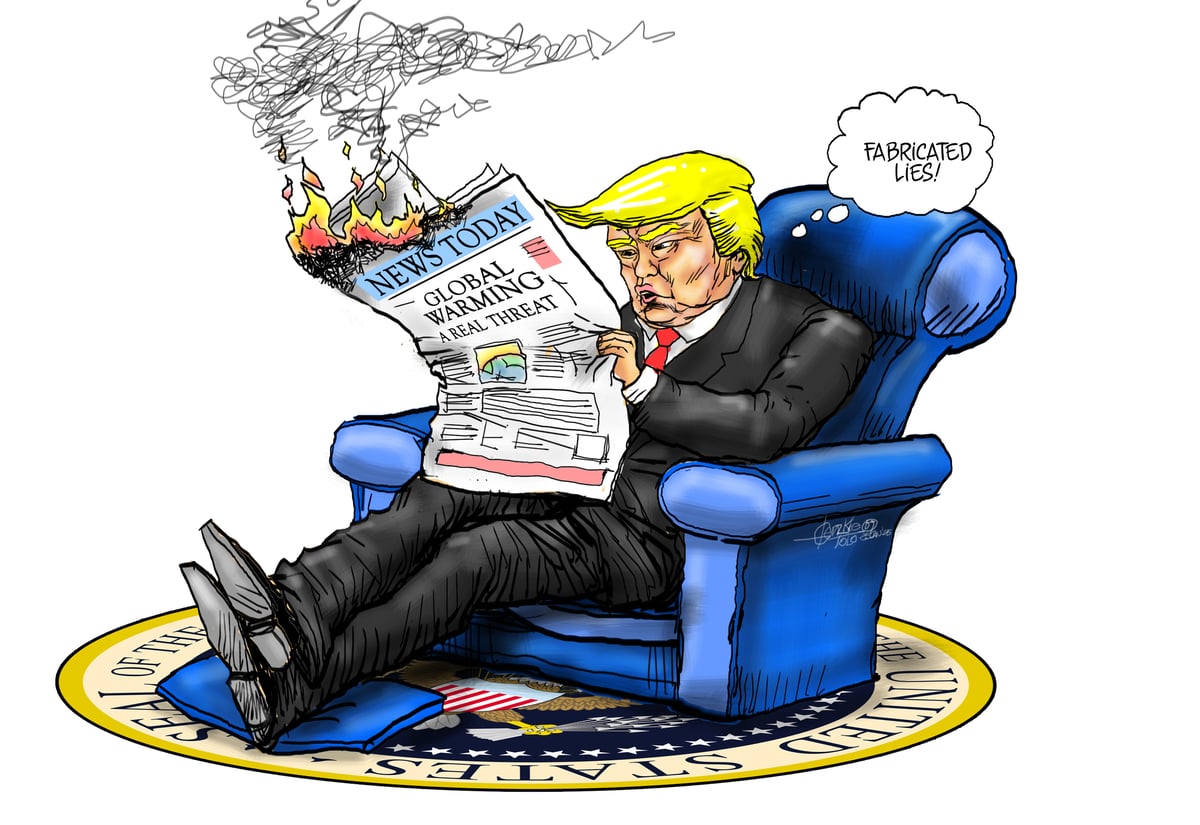
One other issue that could become even more critical than it is already is climate change. Its impact on the world economy is likely to become increasingly more apparent in 2025, forcing economic policymakers in central banks and finance ministries to factor climate change in policy making decisions.
What makes this a particularly worrisome subject is how Trump, the leader of a major superpower like the US, regards climate change with much skepticism.
That attitude, coupled with Trump’s isolationist stance, and his influence over the participation of governments in dealing with the threat of worsening climate change will be a difficult challenge to overcome in the efforts to marshal an effective global response in the runup to COP30, the climate change summit in Brazil this November.
Another concerning scenario is the West’s policy of keeping Ukraine in the war rather than helping it to win, which analysts contend will bring it — and by extension the Western world — to its knees at Russia’s feet.
A lessening of military assistance, an even more emboldened Russia and an absence of leadership in the West will only mean dimmer days for Ukraine this year. It is notably unfortunate that no western leader beyond the frontline states has called for Ukraine’s victory.
What seems to be an apparent belief among Western leaders that Ukraine cannot win the war against Russia will be more pervasive in 2025 and “will feed a self-reinforcing cycle of diminished support and greater military losses. But, stressed Chatham House’s Russia-Eurasia Programme director James Nixey, “it is important to remember that Russia is looking for control and not territory, per se.”
The reelection of Trump gives momentum to the push for a compromise deal. But, Nixey points out, “this will freeze rather than resolve the conflict and will likely entail territorial losses on Kyiv’s part.”
Obviously, funding fatigue among western donors and a partial Russian victory, sold as the best achievable outcome, are the greatest threats to Ukraine in 2025.
And yet, even though he’s made military advances in Ukraine recently, Putin is under tremendous pressure, particularly financially, to hold his position in the conflict.
Economists believe Putin has only between one year and 18 months to continue his current course of action against Ukraine before hard domestic decisions will have to be tackled. The Western world would do well to recognize these strains bearing down on Putin and see how best it can squeeze Russia in 2025.
Three decades after the Marcopper mining disaster devastated Marinduque’s waterways, the province is again pressing the…
Housing is probably the biggest issue affecting people the world over.
Malacañang on Monday called for a more thorough investigation into the questioned flood control projects in Taguig…
The defense on Monday backed the move by senator-judges to exclude a prosecution witness who testified on the firearms…
