




TRUMPETING TRUMP
“Trump’s previous stance of stricter controls and prioritizing American workers might also impact the Filipino diaspora in the US.

Text size
“Trump’s previous stance of stricter controls and prioritizing American workers might also impact the Filipino diaspora in the US.
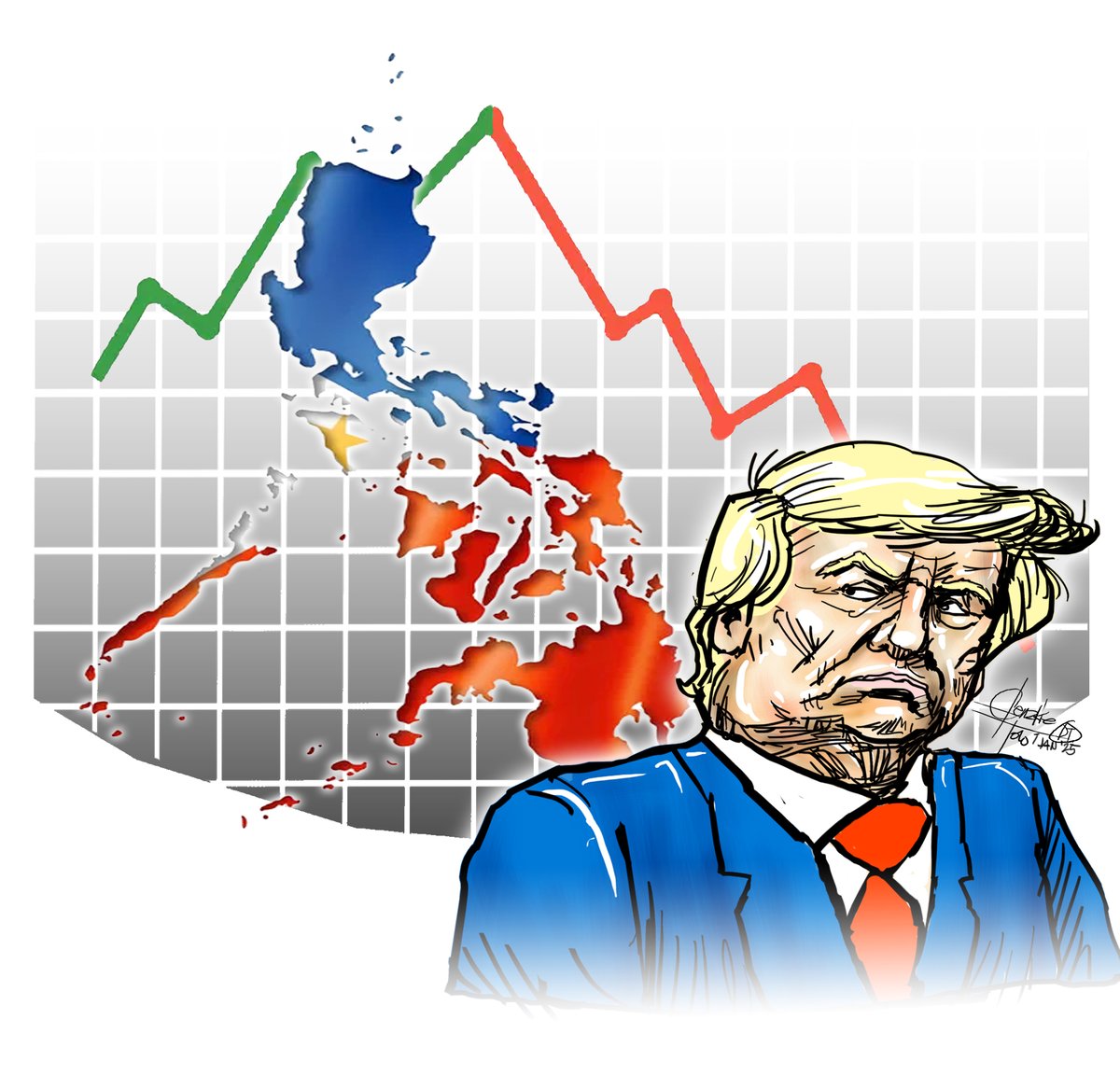
More than the geopolitical conflicts, the assumption of US President-elect Donald Trump on 20 January is the source of most global uncertainty, emanating from his aggressive nationalist inclinations.
At the moment, economic pundits are maintaining their bet that the Philippines will be the least affected by a second Trump era. According to the Asian Development Bank’s outlook, the growth forecast for the Philippines remains unchanged for 2024 and 2025.
Household consumption and investment continue to drive the economy, with both rising faster in the third quarter. Moderating inflation and monetary policy easing should continue to support growth. A buoyant services sector, construction, and manufacturing are contributing to overall growth.
Services will remain the dominant growth driver, with retail trade, tourism, and information technology–business process outsourcing as major contributors. The manufacturing purchasing managers’ index (PMI) stayed above the 50-point threshold at 53.8 in November — the highest in over two years — with strong upticks in production and employment.
Trump’s new administration is widely expected to pursue significant changes in several policy areas, which could produce substantial domestic and external effects through direct or indirect channels. These policies will likely build on measures implemented during his first term, which impacted the global, US and Asia-Pacific economies in multifaceted ways.
“Uncertainty remains significant about the type of policies the new Trump administration will pursue, their extent, and how rapidly they will be implemented,” the ADB indicated.
Trump rocked the global trade community when he declared that, on the first day of his new presidency, he would use executive orders to charge Canada and Mexico a 25 percent tariff on all their exports to the US to address illegal immigration and drug issues. He also stated that China would face 10 percent higher tariffs on its exports to the US, on top of existing tariffs.
Based on the ADB study, rising trade uncertainty itself could exert sizable economic impacts. Trump’s “America First” policies are likely to renew pressure on the Philippines to adapt to a more protectionist US economic approach. The emphasis on reshoring American jobs and curbing dependence on foreign labor could particularly affect the Philippines’ business process outsourcing industry, which relies heavily on American clients.
According to a Financial Executives Institute of the Philippines study, the Trump policy may encourage American companies to bring jobs back to the US, posing challenges for the significant domestic BPO sector, which employs millions of Filipinos and contributes over $30 billion annually in revenues.
Trump’s previous term from 2017 to 2021 saw him adopt a transactional foreign policy. A repeat could mean risks and opportunities for local businesses. Top executives describe the assumption of Trump to the US presidency as likely to usher in an uncertain and complex global situation.
Trump’s unpredictability and preference for aggressive renegotiations could make opportunities difficult to secure. Striking a bilateral agreement with the US could lead to more favorable conditions for exports, but any such deal would likely come with demands benefiting US companies and economic interests.
On foreign policy, Trump’s stance toward China also factors into Philippine concerns, particularly in the West Philippine Sea. Trump has oscillated between confrontational rhetoric and a pragmatic approach to China, prioritizing economic gains and competition over consistent regional support.
For the Philippines, which has sought US backing in its territorial disputes with China, a less predictable or diminished US presence could embolden China to assert its claims more aggressively, potentially destabilizing Philippine trade and security interests in the disputed territorial waters.
Trump’s previous stance of stricter controls and prioritizing American workers might also impact the Filipino diaspora in the US, which is substantial and has a significant economic impact on the Philippines through remittances. Stricter immigration policies could slow the flow of new Filipino workers to America. Remittances from overseas Filipino workers are a critical economic driver, accounting for nearly 10 percent of the country’s gross domestic product.
As a strategic ally of the US, the benefits from the Trump presidency are expected to outweigh the uncertainties. Trump, as is his wont, will spring several surprises that will make the next four years for humanity an interesting period.
Three decades after the Marcopper mining disaster devastated Marinduque’s waterways, the province is again pressing the…
Housing is probably the biggest issue affecting people the world over.
Malacañang on Monday called for a more thorough investigation into the questioned flood control projects in Taguig…
The defense on Monday backed the move by senator-judges to exclude a prosecution witness who testified on the firearms…
