




Mafia flexing muscle
The levy was designed to protect local producers, while proceeds from it are targeted to improve the efficiency of farmers.
Text size
The levy was designed to protect local producers, while proceeds from it are targeted to improve the efficiency of farmers.
Since the inception of the Rice Tariffication Law, or RTL, in 2019, the grains cartel, with the help of paid hacks, has waged an expensive battle to repeal the law. Now that the law is in its last year, the effort has intensified to return to their old profitable ways.
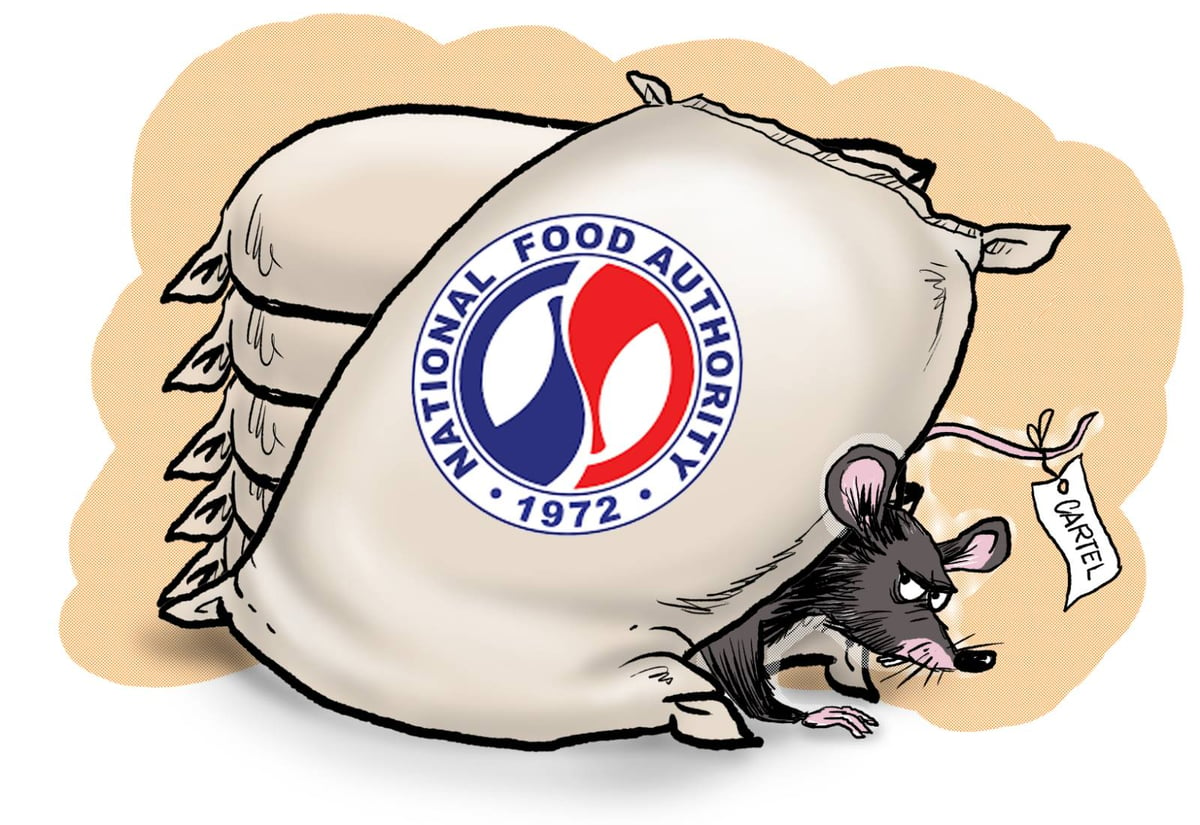
Bringing back the power to import to the National Food Authority that the cartel controls is a key element of the campaign against the RTL.
With their vast resources, the rice trading overlords could manipulate market conditions, including pricing, which was reduced under the RTL since traders could freely import at a 35-percent tariff.
The levy was designed to protect local producers, and its proceeds are targeted to improve farmers’ efficiency.
A Senate call for an investigation of Republic Act 11203, or the RTL, should also consider addressing the industry’s root problem: the manipulators who have long dominated it.
Among the goals of the law when it was enacted was breaking the cartel by removing the monopoly on importation from the NFA, which had centralized control of the market.
Scheming traders rode on the importation authority of the NFA to technically smuggle rice, which was done by an exclusive circle authorized by the agency.
A free market made it more tedious and costly for the cartel to exercise market control.
Industry experts pointed to collusion with NFA agents as one of the major causes of rice farmers’ poverty over the last half-century.
The RTL replaced the quantitative restrictions on imported rice with tariffs of 35 percent to 40 percent, the revenues from which fund the Rice Competitiveness Enhancement Fund.
The target was to lower the retail price of rice using the tariff, the maximum allowed under the World Trade Organization, to build up the RCEF to provide more assistance to farmers.
The RCEF comprises an annual appropriation of P10 billion to fund programs for farm mechanization, seed development, propagation and promotion, credit assistance, and extension services. It expires next year.
Those who designed the RCEF, particularly former Socioeconomic Planning Secretary Karl Chua, a former World Bank economist, said programs identified for RCEF funding were specifically designed to improve the productivity of rice farmers, reduce production costs, and link them to the value chain.
The excess revenue collection could then be allocated as direct financial assistance to rice farmers for the titling of agricultural lands, the expanded crop insurance program, and the crop diversification program.
In the first two years after the law was passed, the strict implementation of the provisions of the program resulted in the targets being achieved.
In 2021, palay production increased to 20 million metric tons, 3.5 percent higher than in 2020, despite the increase in rice imports to 2.9 MMT.
Under the RTL, a record-high output of 20.06 MMT of palay was achieved last year, higher than the 19.76 MMT rice production in 2022.
Rising productivity debunked the claims of the cartel’s hatchet men that the law liberalizing the grains industry hurt farmers. On the contrary, the law had shaken the monopolists.
The cartel fought back by keeping prices high through market collusion.
The law is squeezing the lifeblood of the monopolists who have been fighting back by creating an artificial market situation to justify the law’s removal.
Busting the mafia might be impossible but making life difficult for it would be the next best thing.
