




Leadership dearth
Thus, without any binding agreement, China has all the space to assert whatever it comes up with to uphold its interest in the WPS.
Text size
Thus, without any binding agreement, China has all the space to assert whatever it comes up with to uphold its interest in the WPS.
China found a good measure of success in depicting the current standoff with the Philippines in the West Philippine Sea which was its way of marginalizing the country’s maritime claims.
The argument is that the Philippines acts as a proxy of the United States, which is working to contain China’s economic and political influence in the region.
Such a philosophy reduces the conflict as a superpower rivalry and glosses over the pursuit of what claimants are entitled to.
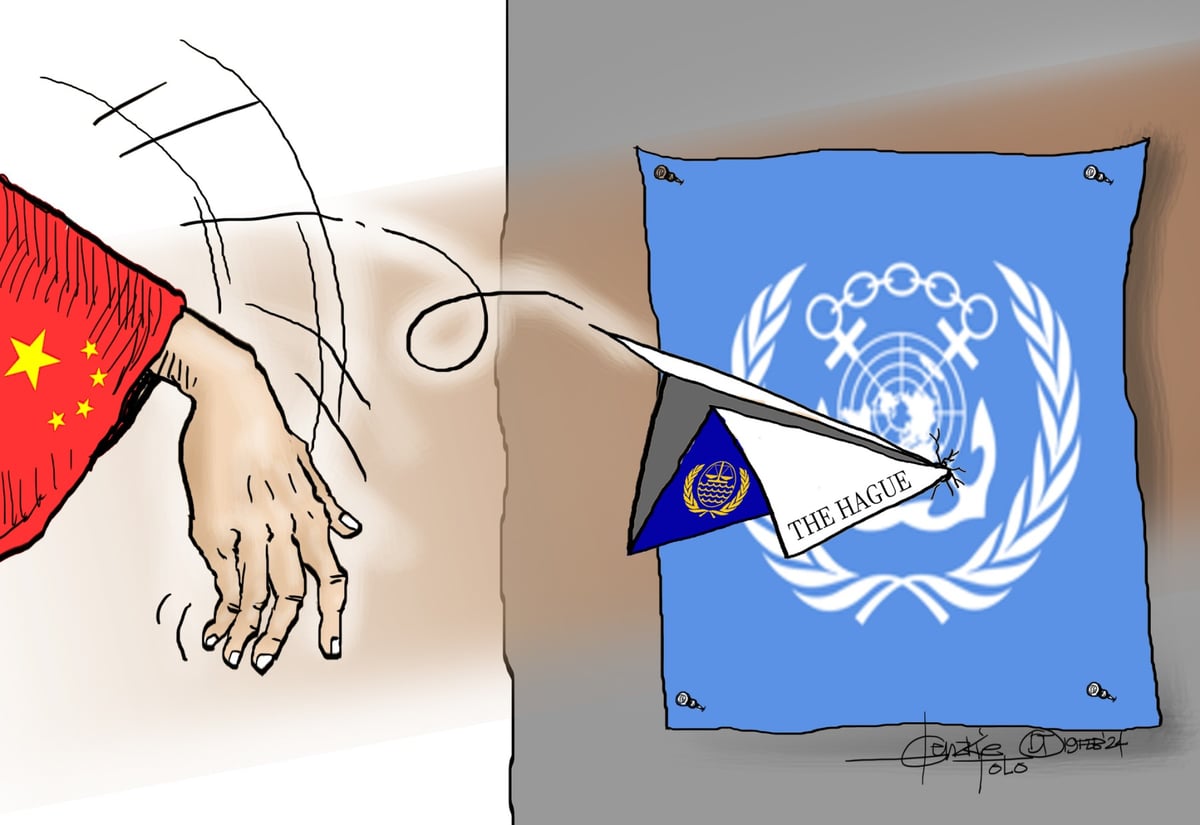
The Permanent Court of Arbitration, or PCA, which acted on the petition of the Philippines issued a 2016 ruling that invalidated the nine-dash line boundary which China said is based on historical data.
The Hague-based tribunal said that the demarcation has no basis and emphasized the United Nations Convention on the Law of the Sea or UNCLOS to settle the overlapping claims.
China, however, said that the ruling does not have any effect on its claims since it did not recognize it.
Neither was it helpful in crafting the Code of Conduct which would bind all the claimants which is an agreement languishing in endless discussions for the past 20 years.
Beijing only considers the so-called Declaration of the Conduct of Countries in the South China Sea which is an ad hoc agreement preparatory to the CoC and is non-binding among its signatories.
Thus, without any binding agreement, China has all the space to assert whatever it comes up with to uphold its interest in the WPS.
One of these tactics is to focus on the rivalry between the United States and China as the root of the bickering.
Foreign Secretary Enrique Manalo said such a strategy puts the distinct and legitimate rights and interests of countries such as the Philippines aside and makes them secondary to the interests of rivals.
The geopolitical configuration in the region is dominated by China’s aggressive move to consolidate its territory that encompasses the Taiwan question which it is susceptible to.
China’s insistence on a superpower rivalry play also obscures good judgment, actions that are illegal in international law and against the U.N. charter which Manalo said are sometimes rationalized under the pretext of the global competition.
The Philippines has embarked on a so-called aggressive transparency policy to address China’s increasingly belligerent moves in the areas of dispute. The Manila formula involves bringing the bullying of China before the international community resulting in international pressure and a loss of face which in Asian culture is unbearable.
In the latest incident, the BRP Teresa Magbanua, a 318-foot Philippine Coast Guard ship, conducted patrols on Bajo de Masinloc (Scarborough Shoal) and escorted 14 Filipino fishing boats.
Throughout the nine-day mission, four China Coast Guard ships shadowed the PCG boat on at least 40 occasions. The PCG said the CCG had conducted dangerous maneuvers to block the PCG vessel at least four times.
President Ferdinand “Bongbong” Marcos Jr. made it a policy to assert the country‘s rights based on the arbitral award and had increased defense engagements with Washington and other allies.
China is particularly anxious over the expanded Enhanced Defense Cooperation Agreement that increased the Philippine military bases that the US forces were given full access to.
A“reciprocal access agreement” with Japan is also under negotiation.
Had China shown good faith in dealing with its neighbors regarding the territorial friction and had led the way for the conclusion of the CoC, harmony would have been possible despite the diverse national interests of the claimants.
China thus far has failed to show that it can provide strong leadership in the region, a vacuum that other global powers are more than willing to fill.
