




DA gears support for local seaweed farmers

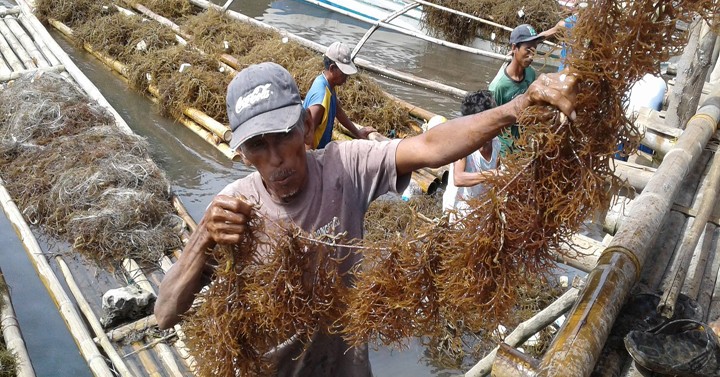
The Department of Agriculture stressed that to boost the potential of the local seaweed industry as the second biggest export earner after tuna, enhanced support for the seaweed farmers must be provided.
“We really need to support the industry,” said DA Sec. Francisco Tiu Laurel at a recent gathering of seaweed industry stakeholders. “Indonesia already surpassed our production…(but) we still have [an] unutilized area of 85,000 hectares. Until we reach that, we shouldn’t stop. If possible, we should accelerate the industry’s area expansion.”
Laurel said that the prime concerns raised by stakeholders are limited support for the industry and a lack of seedlings, which can be addressed by expanding tissue culture laboratories and having more technicians.
Logistics issues also need to be addressed, such as increasing the number of ports and power plants to resolve the high cost of power.
According to DA, most of the seaweed production is from Mindanao, but the processing facilities are in Cebu and Manila.
“There are a lot of dry containers in Zamboanga. I think we can solve the logistics issue there if we coordinate with other industries. It’s a matter of convergence,” said Laurel.
With this, support from the government will be extended to seaweed farmers, including the provision of seedlings, implements, lines, floaters, and counterweights to help seaweed farmers, ‘who could produce 70,000 metric tons of seaweed a year.’
According to Laurel, once the seaweed harvest dries, it would generate around 10,000 tons every year valued at P550 million—’a good return for the industry's total investment of P1 billion, including large tissue culture laboratories, dryers, warehouses, and training more technicians.’
According to the Bureau of Fisheries and Aquatic Resources, seaweed is among the most economically important fishery products in the Philippines, comprising 60 to 70 percent of the total aquaculture production. In 2019, it came second to tuna in export value, which increased to USD 250 million from USD 201 million in 2018.
During the pandemic in 2022, the local seaweed industry earned around USD 250 million and generated export sales of USD 3500 million.
Three decades after the Marcopper mining disaster devastated Marinduque’s waterways, the province is again pressing the…
Housing is probably the biggest issue affecting people the world over.
Malacañang on Monday called for a more thorough investigation into the questioned flood control projects in Taguig…
The defense on Monday backed the move by senator-judges to exclude a prosecution witness who testified on the firearms…
