




UN hands off SC
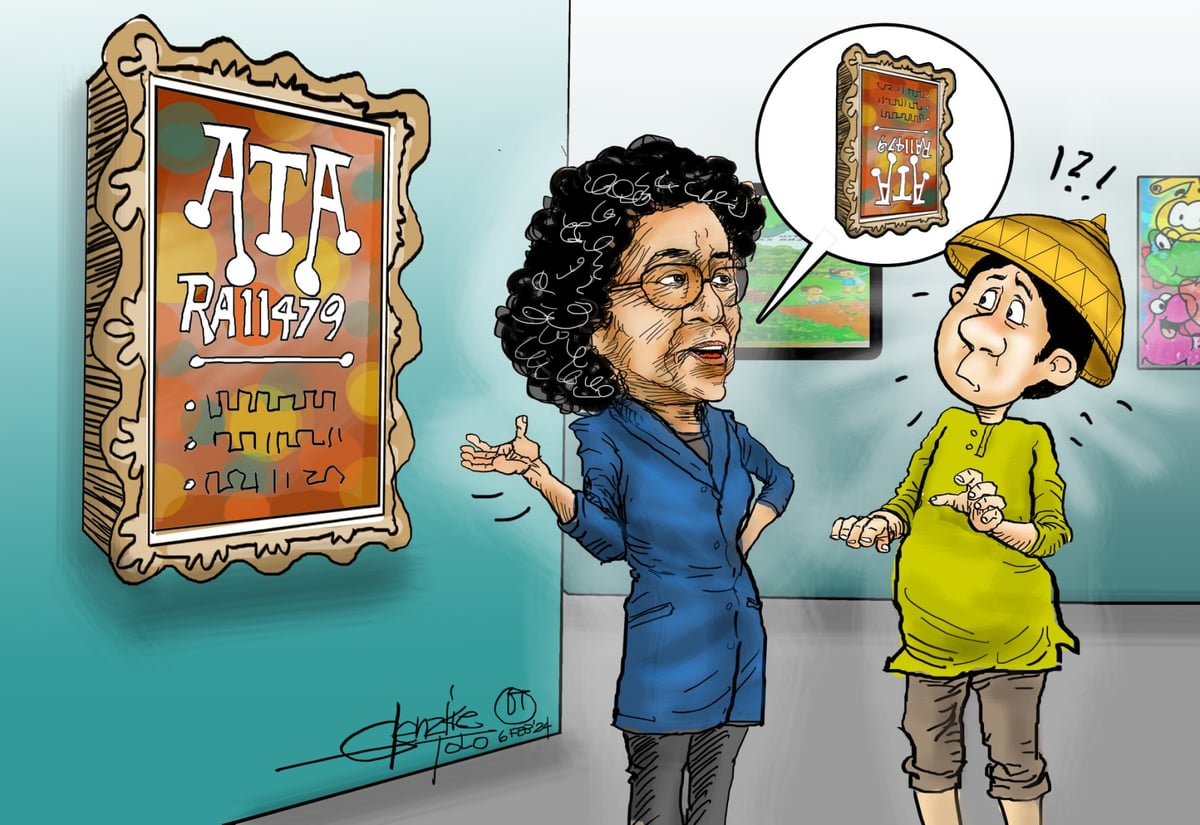
Her views clash with the ATA requirements to be an effective law.
Text size
Her views clash with the ATA requirements to be an effective law.
When United Nations Special Rapporteur Irene Khan presents a full report on freedom of expression in the country to the UN Human Rights Committee in June 2025, the recommendations will be intrusive to domestic affairs.
Khan is seeking the abolition of the National Task Force to End Local Communist Armed Conflict, which she has tagged as being mainly responsible for the so-called red-tagging of activists, including members of the House who have affiliations with the communist movement.
Based on the briefings and discussions she had with the media, among Khan’s recommendations is the rewriting of the Anti-Terrorism Act because of what she held as provisions that “are not aligned with international standards and guidance.”
Khan formed her conclusion during her 10-day visit after meetings with anti-government groups and those seeking a change in the status quo who naturally want laws that restrict their movements changed.
“I remain concerned that the law allows the Anti-Terrorism Council to allow the arrest of individuals designated as terrorists without first obtaining a judicial warrant, contradicting basic due process standards. Judicial oversight is necessary in all phases of the criminal justice system, even in terrorism cases,” Khan said.
“The Act also raises additional concerns regarding expanded surveillance, which is having a chilling effect on the legitimate activities of journalists, human rights defenders, civil society activists, and the enjoyment of the right to freedom of expression more broadly,” she added.
Her views clash with the ATA requirements to be an effective law. The first attempt at the edict was the reason for its failure, for being ineffective against terror groups, as cited by the Financial Action Task Force on money laundering.
One of the provisions of the initial ATA was a hefty fine imposed on authorities for false arrests that resulted in terror suspects being booked for ordinary crimes, instead of the terror law, to avoid the financial backlash.
Khan’s audacity was on full display when she indicated that she and the UN special rapporteur on human rights and counterterrorism would review “the recent rules published by the Supreme Court regarding the Anti-Terrorism Act.”
Such hypocrisy and show of omnipotence are the reasons the government must review future visits by representatives of international monitoring bodies who contribute nothing to the well-being of Filipinos.
Instead, they wield their supremacy by imposing norms not suitable to the local situation due to the different threats that the country faces.
The Supreme Court upheld the ATA on 7 December 2021, except for two provisions.
Last 15 January, the SC issued the new Rules on the Anti-Terrorism Act of 2020 and Related Laws that retired Chief Justice Artemio Panganiban said was necessary “given the need to suppress terrorism as a sui generis crime and to prevent its commission, more than merely punish its perpetrators.”
Panganiban said the rules recognize the awesome powers given by the ATA to the Anti-Terrorism Council and the Anti-Money Laundering Council to preempt terrorist acts, “and ipso facto grant the Court of Appeals and the Regional Trial Courts the extraordinary ex-parte authority.”
Ex-parte authority is when the court issues orders without notice to the respondents.
Panganiban said that, normally, judges are passive and rely mainly on the rapier minds of the contending counsels to ferret out the truth and to protect their clients.
“Thus, implicit in these powers is the mandate of the magistrates to be activists in protecting basic rights while helping prevent or suppress terrorism and ensuring that the legal requirements are met, the documents are scrutinized minutely, and the witnesses are examined personally by them,” according to Panganiban.
“Judicial activism,” he said, “is imposed by the Constitution as the solemn duty of the judiciary to strike down grave abuse of discretion and is a unique and indispensable characteristic of the system of checks and balances.”
Khan’s recommendations go entirely against the judicial activism implied by the law and instead seek to cripple the law against the designated terror groups that retain a huge clout among so-called rights defenders.
