
The crucial role of watershed management
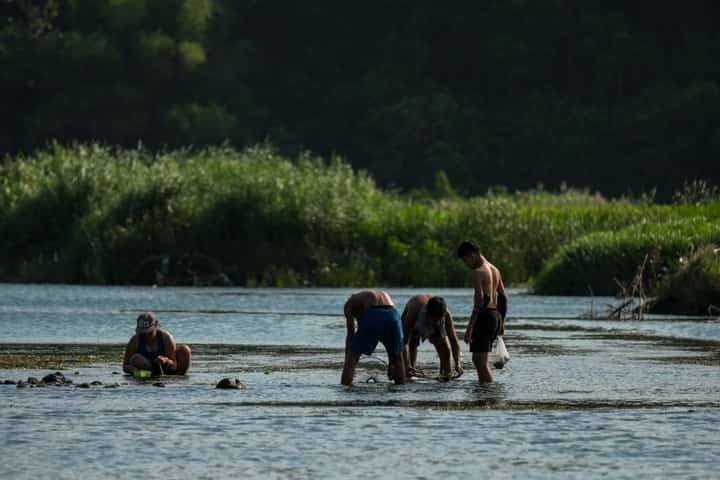
People residing beside the Angat River in Pugpog, Bulacan are repurposing the wire guard of an electric fan as they forage for freshwater snails and clams. The watercourse of the said river flows from the Sierra Madre Mountain range to Manila Bay and joins the Pampanga River at Calumpit via the Bagbag River. This river is so important as it supplies power and water to Metropolitan Manila. Photo by KING RODRIGUEZ.
Watersheds provide a range of ecosystem services and support plants, animals, and humans. Despite its crucial significance, watersheds face multiple threats, such as rapidly increasing population, disruption of hydrologic conditions, and biodiversity loss. Because of its importance, the sustainability and stability of the watersheds are at serious risk in the absence of appropriate interventions.
The Department of Environment and Natural Resources through the Ecosystems Research and Development Bureau, with co-sponsorship from the Asia Pacific Association of Forestry Research Institutions held a Congress on Sustainable and Climate Resilient Watershed Management through ecosystem-based approaches in the Asia-Pacific Region in Muntinlupa City.
This was the reason why the DENR-ERDB organized the congress to cover the dearth of information on how to sustain and develop climate-resilient watersheds. The event featured more than 50 oral and poster presentations on innovative solutions that merge sustainable practices with climate resilience based on the experiences of delegates from different countries like the Philippines, Bangladesh, Fiji, Nepal, Indonesia, India, Vietnam, Germany, Sri Lanka, and Thailand.
In her message, ERDB Director Maria Lourdes G. Ferrer emphasized the need to address critical issues on watersheds, forge partnerships, and work collectively to attain a more sustainable and resilient future. She called the participants to engage in fruitful collaborations to exchange valuable information.
To help achieve its objectives, the congress has four themes: Climate resilience and sustainable watershed management; Rehabilitation and restoration of degraded watersheds; Nature-based approach in watershed management; and Policies, legislations, and institutional arrangements.
The three-day event revolved around watershed management. Six plenary speakers who are experts on various topics on watershed management shared informative talks and experiences in the field.
Dr. Rex Victor Cruz of the University of the Philippines talked about climate resilience and sustainable watershed management while Dr. Shanker Kumar Sinnakaudan of the Universiti Teknologi MARA Pulao Pinang shared the rehabilitation and restoration of degraded watershed in the context of Malaysia.
A plenary talk was also given by the former ERDB Assistant Director and former Director of the River Basin Control, Dr. Antonio M. Dano which focused on the policies, legislations, and institutional arrangements that are critical to watershed management.
Two talks centered on experiences and best practices in terms of watershed management in the Philippines. Forester Percival Cardona of the DENR-Forest Management Bureau shared insights on the Enhanced National Greening Program, one of the initiatives that is substantial in sustaining watershed management in the Philippines. DENR Region 10 Executive Director Henry Adornado discussed the strategies and best practices for sustainable watershed management for the Cagayan de Oro River Basin.
The congress ended with a tour of the Upper Marikina watershed in Rizal province.