




NEDA thumbs down further interest rate hikes

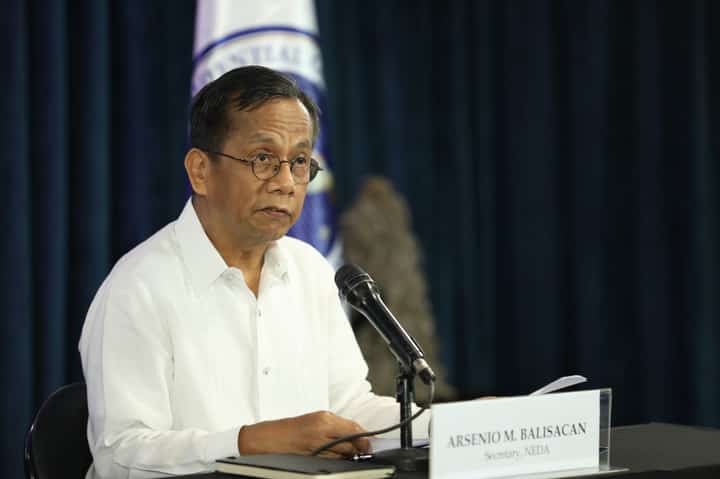
NEDA Secretary Arsenio Balisacan holds a press briefing in Malacañang on Thursday, 21 September. (Photo courtesy: Presidential Communications Office)
Text size
NEDA Secretary Arsenio Balisacan holds a press briefing in Malacañang on Thursday, 21 September. (Photo courtesy: Presidential Communications Office)
National Economic and Development Authority Secretary Arsenio Balisacan on Friday rejected future increases in interest rates, saying that they could harm consumers already facing high inflation.
While the economy might be able to survive additional monetary tightening from Bangko Sentral ng Pilipinas, Balisacan said in a press briefing that raising interest rates further is "not necessary."
Higher interest rates require businesses and consumers to spend more money to pay off credit cards, mortgages, and auto loans. As a result, there would be less demand, driving down the cost of products and services.
"If I were in the Monetary Board, I would say no," Balisacan said when asked if resuming the tightening cycle could stop the nagging inflation.
Balisacan said that the Bangko Sentral ng Pilipinas has been "the most aggressive" in the area, even reaching a 16-year high of 6.25 percent, which he said is "something we should be proud of."
He cautioned that doing so may harm manufacturers and consumers by raising production costs, "depressing" demand, and negatively impacting the economy.
According to Balisacan, higher interest rates might strengthen the peso and increase the cost of the nation's exports. He expressed concern about this effect.
"We know that raising the interest rates will hurt the economy, will hurt consumers, will hurt producers, and that also has long-term effects in succeeding 12 months," Balisacan said.
Even though the 2 to 4 percent inflation target appears to be "quite a challenge," NEDA assured that the government is working on interventions to manage inflation.
According to Balisacan, the economic team is still trying to meet the goal before the year ends.
Balisacan is sure that holiday spending will increase the nation's gross domestic product despite the high rate of inflation.
"Inflation has a negative effect on growth. On the other hand, there are positive developments. Government agencies with relatively high underspending in the first half of the year are addressing that issue. Christmas season is also around the corner. That also generates a lot of extra push. Remittances also remain stable," Balisacan said.
VP denies Gracioso’s cash-delivery allegations
Early-stage cancer can be more easily treated than in the later stages. That is why doctors recommend regular cancer…
‘As far as I recall and based on the record, there is no showing.’
President Ferdinand Marcos Jr. is flying to Singapore for a five-day working visit upon the invitation of Singaporean…
