
Supremo’s revolution resonates 130 years on
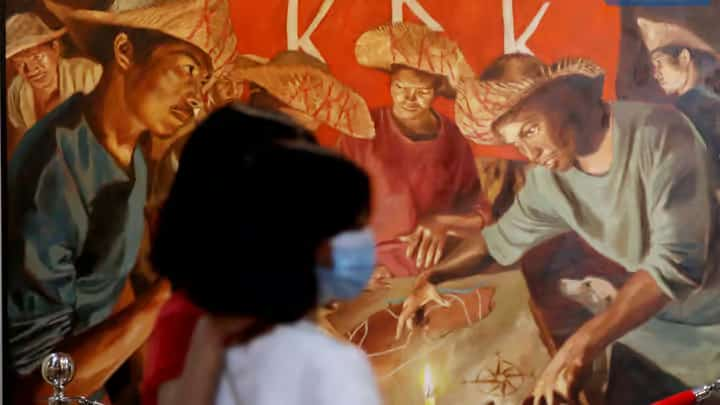
More than a century after he called on Filipinos to rise against Spanish rule, Andres Bonifacio’s 1896 revolution still resonates among those fighting for a more just and equitable country.
Remembered as the Father of the Philippine Revolution, Bonifacio, Supremo of the Katipunan, was a worker, organizer and revolutionary who believed ordinary Filipinos could shape their own destiny. This legacy makes a compelling case for recognizing him as Jose Rizal’s equal among national heroes.
As the Philippines marks his 163rd birth anniversary today, labor groups under the coalition Nagkaisa are invoking his ideals in calls for workers’ rights, economic reforms and government accountability.
“Workers struggle to plan even for the coming month because they do not know whether they will still have jobs,” the group said. “It is only fair that those with the greatest wealth in the country contribute more to public hospitals, schools and other services that the people depend on.”
The coalition and other groups will march toward Malacañang, demanding living wages, an end to contractual employment, political dynasties and oligarchic control of the economy, and higher taxes on the wealthiest Filipinos.
Manila closed portions of C.M. Recto Avenue, Legarda Street, Ayala Bridge, Magallanes Drive and Kalaw Avenue from 6 p.m. yesterday, while Caloocan closed roads around Bonifacio Monument Circle. The Metropolitan Manila Development Authority suspended number coding Monday.
Holiday pay
The Department of Labor and Employment reminded employers that workers on duty during the regular holiday must receive 200 percent of their daily wage for the first eight hours.
Born in Tondo, Manila, Bonifacio lost his parents early and left school to support his five younger siblings. Self-taught through reading, he joined the growing nationalist movement.
After joining Rizal’s La Liga Filipina, he founded the Kataastaasan, Kagalanggalangang Katipunan ng mga Anak ng Bayan (KKK) on 7 July 1892, convinced independence required revolution.
The Katipunan mobilized Filipinos against Spanish rule, culminating in the 1896 revolution. Internal divisions, however, led to Bonifacio’s trial and execution in Maragondon, Cavite, on 10 May 1897.
His contribution cannot be measured by the revolution’s outcome alone. He turned nationalist aspirations into organized resistance, bringing ordinary Filipinos into the struggle. While Rizal awakened national consciousness through education, literature and reform, Bonifacio translated it into action.
The National Commission for Culture and the Arts defines heroes as those who envision a nation, struggle for its freedom and contribute to its destiny, principles Bonifacio’s life reflects. He and Rizal were among nine figures recommended as national heroes in 1995.