
House hikes own budget by P5-B
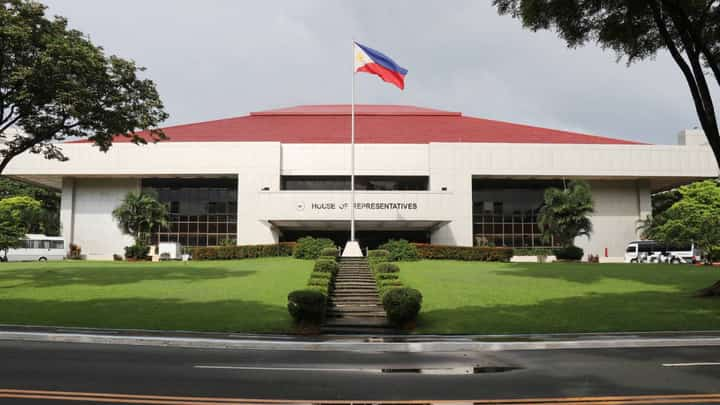
The budget allocated to the House of Representatives was increased by a flat P5 billion based on amendments that the chamber itself made which were included in its proposed fiscal blueprint for 2027.
Under the National Expenditure Program (NEP), the House earmarked a budget of P17.6 billion spread across its maintenance and other operating expenses (MOOEs), and personnel services (PS).
After it formally concluded its deliberations on the executive’s proposal in October, however, the chamber saw its budget increase to P22.6 billion, including an amount allocated for capital outlays (CO) which saw no funding in the NEP.
It is worth noting that the initial fund that the House was allocated was the amount that it had directly requested from the Department of Budget and Management (DBM).
Comparing the NEP and the House General Appropriations Bill (HGAB), the line item that saw the largest increase was with respect to its operating expenses, which jumped from P10.93 billion to P12.89 billion.
Among the items that saw an increase in its budget were “other maintenance and operating expenses” that got P658 million, traveling expenses by P457 million, and P225 million for communication expenses.
The chamber also boosted its funding for its personnel services, going from P7.22 billion to P8.12 billion—a difference of P906 million.
Much of the increases went to the P237 million that was added for the salaries while combined P20 million was earmarked for the mid-year and year-end bonuses of employees.
A separate amount of P1.14 billion was also allocated for the terminal leave benefits for its personnel.
Also included in the House’s budget was a flat P1.6 billion amount for its capital outlays, with no clear indication on how the chamber intended to utilize the fund.
Even with the proposed increase, the proposal marked the lowest ask of Congress in recent years, as it received a budget of P33.67 billion in 2025 and P27.70 billion for 2026.
Unwillingness to disclose budget allocations
During the deliberations of the House of Representatives on the HGAB, lawmakers from the minority requested for the chamber’s budget to be subjected to the same standards of transparency and accountability it expected from other government agencies.
The requests were blocked, with the budget for Congress being approved in just a few minutes last 17 September without any objections or interpolations from lawmakers.
Days after the budgets approval, Navotas Rep. Toby Tiangco raised concerns over the development, particularly pointing out the fact that the schedule of deliberations for the budget were unexpectedly moved.
Asked by the DAILY TRIBUNE regarding the observed budget bump, he stated that he was unable to comment since there were no presentations that were made on why the House was requesting the said budget and presenting how it spent previous allocations.
“That was supposed to be presented in the pre-plenary during the Committee on Appropriations but the House budget did not pass pre-plenary and was not interpolated also in the plenary,” Tiangco said in a viber message.
The DAILY TRIBUNE has attempted to reach out to a member from the House Committee on Appropriations to get a comment on the matter.
No CoA disallowances
Looking into the audit findings of the Commission on Audit (CoA) for fiscal year 2025, it was noted that the House of Representatives received an unmodified opinion from state auditors.
CoA also noted that the lower chamber received no notices for suspension, disallowance, or charge for the said period and previous years.
A matter that the auditing agency did flag, however, was the lack of property acknowledgment receipts for 454 property equipment items that the lower chamber had, amounting to P156.335 million.
State auditors expressed that the need for such receipts was crucial in establishing accountability for government property and to ensure accurate and reliable property records.