
Wage hike, economic headwinds spike prices of supermarket goods
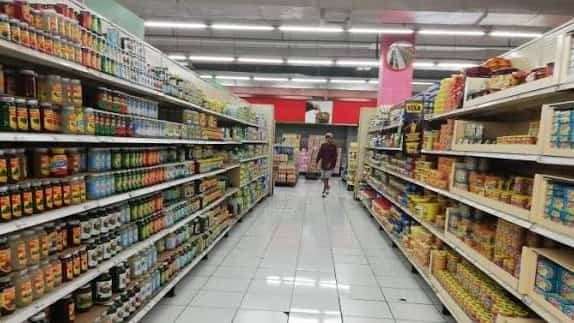
THE Philippine Amalgamated Supermarkets Association says prices of goods sold in supermarkets have been jacked up because, overall, operating costs of retailers, among other various key reasons, have significantly risen.
Philippine News Agency
The Philippine Amalgamated Supermarkets Association said supermarket owners have to increase prices of basic goods following the wage hike imposed by the government, along with the weakening peso and high interest rates recently set by the Bangko Sentral ng Pilipinas.
However, the group’s executive director Steven Cua clarified that only goods outside the stock-keeping units (SKUs) being regulated by the Department of Trade and Industry (DTI) are those that increased prices.
To date, the DTI regulates more than 190 SKUs, including canned goods, milk, bread, noodles, salt, bottled water, detergent soap, laundry soap, batteries, candles and condiments
No choice
“We have no choice but to adjust prices because of the 9.5 percent increase in wages, and another round next year. We have to adjust our margins also,” he said in an interview on Tuesday.
The Regional Tripartite Wages and Productivity Board-NCR (RTWPB-NCR) earlier announced the approval of Wage Order No. NCR-28, raising the minimum wage for non-agricultural workers from P695 to P755 and granting the same P60 daily increase to agricultural workers, effective 26 September 2026.
To cover this, Cua said that a supermarket with around 50 employees needs to produce around P100,000 to P150,000 in sales, apart from their operating expenses.
He said even if the DTI earlier assured that there is no price increase on the 204 SKUs being monitored by the DTI until the end of the year, not all manufacturers heeded to that request, as some manufacturers that produce goods outside the SKUs have already implemented price adjustments, a management decision and strategy that the government cannot interfere with.
“There are thousands of items inside supermarkets. And only some brands of sardines, coffee, and other goods are under the regulation of the DTI. Not all brands are being monitored by the DTI. The DTI order is not a sweeping statement,” according to Cua.
Cua further said the rising cost of fuel and raw materials, plus the weakening peso against the United States dollar and the high interest rates, are key factors in why they are raising prices.
The Philippine peso, during intraday trading on Tuesday, was stronger at P63.5 against the US dollar from Friday’s P63.73 close.
The BSP’s governing Monetary Board last month raised its benchmark interest rate by 50 basis points to 5.50 percent, while the country’s official headline inflation rate stood at 7.2 percent for September 2026, up from 6.1 percent in August 2026.
On Tuesday, another round of price surges was greenlit by the Department of Energy, with gasoline increasing by P3.50 per liter, with a rollback of P1.00 per liter in diesel, and a decrease of P1.90 per liter in kerosene, heavily driven by continuing supply tightness in the Asian regional market alongside global market movements.
Asked for comment, Palace Press Officer, Presidential Communications Office Undersecretary Claire Castro, quoting a report from the DTI, urged consumers to choose goods that are economical for them or those that are within their budget.