
When energy security becomes a household concern, solar takes on a different role
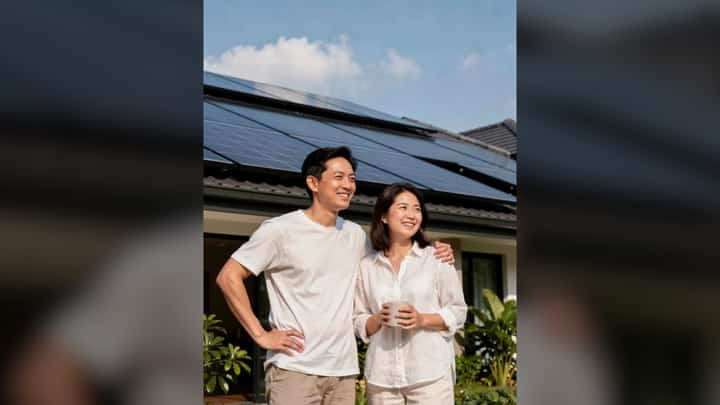
FOR households, the cost of a complete solar installation can be substantial. BDO’s sustainability initiatives include financing for solar-panel acquisition and installation under its Home Loan, allowing homeowners to spread the cost of the investment over time. The facility can finance up to 80 percent of an appraised property’s value, with terms of up to 25 years.
PHOTOGRAPH COURTESY OF BDO
For most Filipinos, the conflict in the Middle East may have seemed like a distant geopolitical crisis. Yet events often serve as a reminder of how global energy developments can eventually affect households and businesses closer to home.
Then it started showing up at the gas pump.
On March 24, President Ferdinand Marcos Jr. declared a state of national energy emergency, citing the conflict in the Middle East, disruptions to global supply chains and the concerns over key energy transit routes as potential threats to the country's energy supply. The measure was intended to address concerns over the availability and price of energy.
The episode offered a reminder that energy security is not simply a matter for policymakers. Changes in global fuel markets can eventually affect household budgets, business costs and the price of keeping the lights on.
That has given solar power a somewhat different proposition.
From lower bills to resilience
Solar has long been promoted as a way to reduce electricity costs and emissions. But recent events have added another consideration: resilience.
A rooftop system will not make a home or business completely independent of the grid. Still, generating a portion of one's electricity locally can reduce exposure to conventional energy costs while making use of a resource available in abundance in the Philippines.
The challenge is often the initial investment.
For households, the cost of a complete solar installation can be substantial. BDO's sustainability initiatives include financing for solar-panel acquisition and installation under its Home Loan, allowing homeowners to spread the cost of the investment over time. The facility can finance up to 80% of an appraised property's value, with terms of up to 25 years.
For businesses, the calculation is different. A factory, warehouse or commercial establishment may require a substantially larger system, making solar a capital investment rather than simply a property improvement.
That makes access to financing an important part of the broader transition.
Making the investment work
The growing interest in solar is also changing the financial conversation around renewable energy. Rather than treating installation as a one-time expense, households and businesses can look at it as a long-term asset with costs and potential savings spread across several years.
BDO's Multipurpose Loan, for example, recognizes solar-panel installation as a sustainability-related use. Qualified borrowers can use eligible real estate as collateral, with Term Loan amounts ranging from P1 million to P20 million, with payment terms up to 10 years. Businesses with recurring financing requirements can also use the facility.
For qualifying online applications, BDO offers rates below its standard Multipurpose Loan rates. Sustainability-related uses such as solar installation may also qualify for enhanced waivers of appraisal and registration fees of up to P40,000.
For households looking at smaller installations, BDO's sustainability report notes partnerships with solar providers that offer qualified credit-card customers 0% installment plans of up to 12 months.
The significance goes beyond one bank's financing options. As solar becomes more accessible, the decision to adopt it increasingly involves not just technology but how households and businesses manage the investment over time.
An asset worth protecting
There is another part of the equation that can be easy to overlook.
Once installed, solar equipment becomes a valuable asset exposed to weather, fire, accidental damage and other risks. For a large commercial facility, damage can mean not only repair costs but also operational and financial disruption.
Insurance consequently becomes part of the longer-term investment conversation.
BDO Insure has worked on insurance programs for both installation and operational phases of renewable-energy facilities, including solar, hydro and wind power risks, as well as floating-solar installations. Its work also includes risk assessment intended to identify vulnerabilities that could affect renewable-energy assets and operations.
The energy emergency will eventually pass. Oil markets will adjust, geopolitical tensions will shift and supply routes will normalize.
But the question it has raised will remain: how can households and businesses become less vulnerable to energy shocks beyond their control?
Solar is unlikely to be the whole answer. But for those willing to invest, generating more power locally—and treating the system as a long-term asset worth financing and protecting—can be one practical way to build resilience.
In an uncertain energy market, having more options may itself be a form of security.