




Experts flay Marcos’ ‘north star’ deviation

Text size
Share
Economists have warned that the country’s growing borrowings will soon outpace the education budget, supposedly the largest item in the yearly appropriations, pointing to the flood control corruption scandal as feeding the debt addiction.
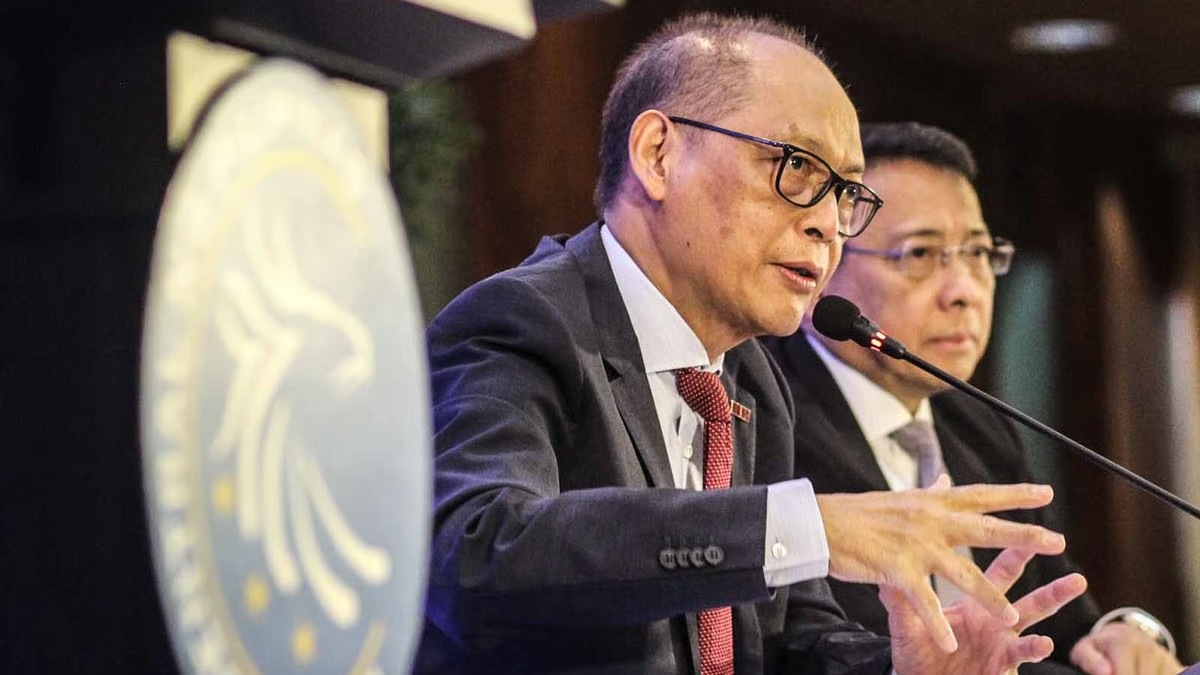
Former Bangko Sentral ng Pilipinas Governor Benjamin Diokno said in a television interview that debt servicing now eats up 15 percent of the national budget in interest payments alone.
Add amortization, he said, and the figure could exceed half. Education spending, by contrast, sits at 18 percent.
“The problem has really gone that far,” Diokno said. “We are now setting aside a bigger chunk of the budget for interest payments and servicing of our domestic and foreign debt. That’s not good.”
The numbers mark a sharp break from the fiscal targets the Marcos administration set for itself in 2022.
The medium-term fiscal framework, which Diokno called the “north star” of the administration, targeted a debt-to-gross domestic product (GDP) ratio of 56.6 percent at the outset, tapering to 51.1 percent by 2028.
Diokno said it could hit 64 percent by the end of President Marcos Jr.’s term, a wide gap from the original plan.
He traced the drift to politics arriving too early in the term, disrupting what should have been a straight run at fiscal consolidation.
“We have deviated from the north star,” he said, though he added the administration still has two years to correct its course.
Infrastructure spending has also fallen short of target, down to roughly 4 percent of GDP instead of the 5 to 6 percent goal — a target Diokno set himself as budget secretary under the Duterte administration, after finding the Philippines had spent barely 2 percent of GDP on infrastructure for fifty years, trailing regional neighbors Singapore, Indonesia, Malaysia and Thailand.
Chilling effect
That underspending, Diokno said, is a direct casualty of the flood control scandal. Agencies have grown “gun-shy” about big infrastructure outlays as investigators dig into an estimated P1-trillion web of anomalies tied to the Department of Public Works and Highways, implicating high government officials.
Congress, he said, is now trying to restore a P100-billion flood mitigation allocation through legislative insertion, a move he called constitutionally suspect, since lawmakers cannot increase the President’s proposed budget without taking funds from somewhere else.
“That’s not polite,” he said. “That’s not respecting the President. That’s the President’s budget.”
Diokno urged the government not to retreat from infrastructure spending altogether because of the scandal, calling a pullback “the wrong response.”
He said the goal should remain 5 to 6 percent of GDP, funded properly through the executive budget process rather than congressional maneuvering.
