
DOE pares LPG stocks as costs mount
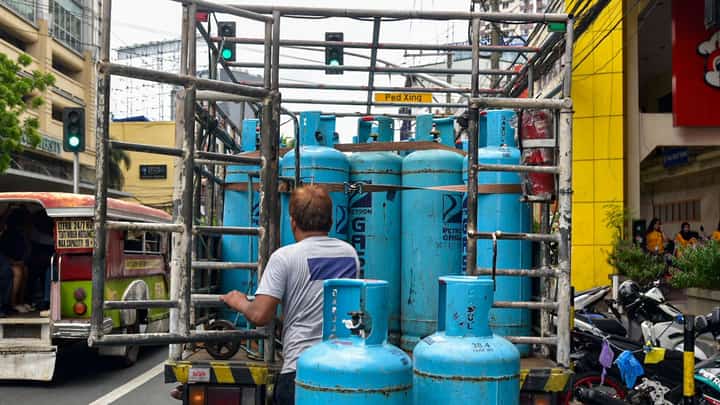
The Department of Energy (DOE) is unloading the government’s liquefied petroleum gas (LPG) stocks to cut mounting storage costs, as improved supply conditions ease the need for a large state-held buffer.
Energy Secretary Sharon Garin said Monday the Philippine National Oil Co. (PNOC) has started drawing down its LPG inventory, with storage fees continuing to accumulate for as long as the stocks remain unsold.
“We have to do the math because we don't want to spend too much. Because while we have it, we have to pay for storage. I mean, the rent of the space to store it. So, the longer we keep it, the more expensive the storage,” Garin told reporters.
“So, we're starting to unload to lessen the rent costs,” she added.
The government earlier bought 21,000 metric tons of LPG from the international market under its emergency energy security program as geopolitical tensions threatened fuel supplies.
The cargo, split equally between propane and butane, arrived from Texas in May.
Garin said the government generally tries to sell the stocks below prevailing market prices to speed up their disposal, although actual selling prices still depend on international prices.
Once the inventory is depleted, the DOE does not immediately plan to replenish it, with domestic LPG supply currently deemed sufficient.
“For LPG, so far, no need. Because we really have enough,” Garin said.
The improved supply outlook also reflects efforts by local companies to diversify their sources beyond traditional suppliers in Southeast Asia and the Middle East.
“Now, they're buying from America. So, luckily, our companies have learned to be resilient and to spread their risk. So, we have many sources,” Garin said.
More import and storage capacity is also coming online. The newly built Isla Import Terminals facility in Batangas has a nominal storage capacity of 25 kilotons for propane, butane, and mixed LPG. It can receive shipments from very large gas carriers.
Still, LPG is not yet part of the government’s planned strategic petroleum reserve.
Garin said LPG storage is more complicated than keeping conventional liquid fuels such as diesel and gasoline because it requires tighter pressure and temperature controls. The DOE also sees less urgency to build an LPG reserve given adequate domestic supply.
The government is taking a different approach to diesel, keeping its stocks as uncertainty over the Strait of Hormuz continues to threaten global supply flows.
Diesel is considered more critical because about 60 percent of domestic consumption goes to transportation, leaving the sector more exposed to potential shortages if imports are disrupted.
The DOE is separately developing a strategic petroleum reserve to give the government its own buffer against major supply shocks, in addition to inventories maintained by private oil companies.
Garin said the government expects its first reserve facility to be ready by the first quarter of 2028. It plans to start with one facility because of budget and time constraints.
PNOC has already funded and begun studies for at least one oil storage tank, while the government is exploring financing and participation from state and private investors for the broader reserve program.